
The Role of Carbide Bur Die Grinder Tool Bits in Aerospace Manufacturing
In the intricate world of aerospace manufacturing, where precision and reliability are non-negotiable, carbide bur die grinder tool bits play a pivotal role. These high-performance tools are specifically engineered to handle the advanced materials and complex geometries essential for crafting aircraft components, ensuring they meet the rigorous standards required for safety and efficiency. In an industry where every detail counts, the durability and precision machining capabilities of carbide burs make them indispensable for achieving the tight tolerances needed in aerospace tools. As we delve into their significance, we’ll uncover how these tools not only enhance the quality of aerospace manufacturing but also contribute to the overall innovation and advancement of the industry. For more information, visit this page.
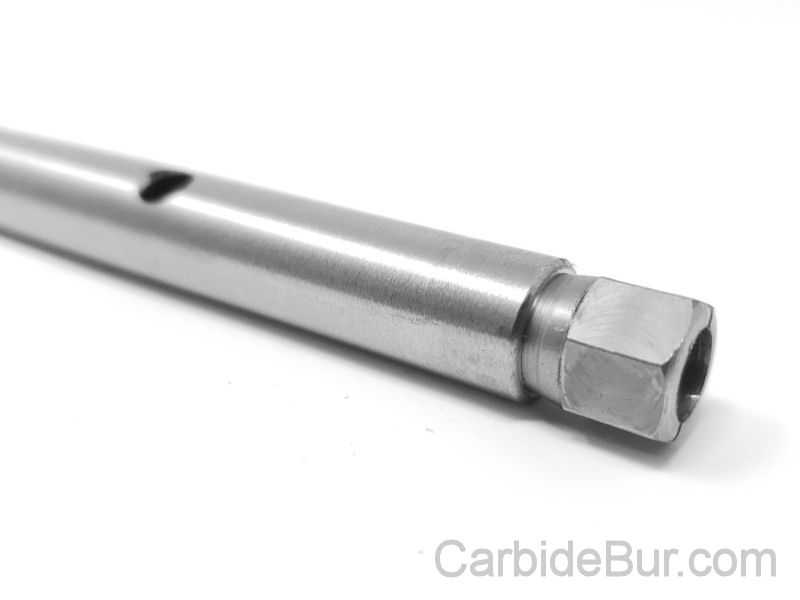
Need a longer reach?
Try our 4″ and 9″ extension tool for your carbide bur bits

Importance of Carbide Tools in Aerospace
The aerospace industry demands tools that can deliver precision and durability. Carbide tools excel in these areas, making them indispensable in aerospace manufacturing. This section explores the crucial role these tools play in meeting the industry’s high standards.
Precision Machining Aerospace Needs
Precision is non-negotiable in aerospace manufacturing. Carbide tools meet these demands by offering exceptional sharpness and stability, critical for machining parts with intricate details. They can handle tough materials like titanium and composites, which are common in aerospace.
The accuracy of carbide tools ensures that each component fits perfectly, reducing the risk of failure. This precision contributes to overall aircraft safety and performance, which is why carbide tools are favored in the industry.
Their effectiveness in precision machining allows manufacturers to produce high-quality components efficiently. This not only saves time but also reduces costs, as fewer parts are rejected for failing to meet specifications.
Visit Empire Abrasives for more insights on tool applications.
Durability in Aerospace Tools
In aerospace manufacturing, tools face extreme conditions. Carbide tools are highly durable, withstanding high temperatures and intense wear. Their longevity makes them a cost-effective choice for manufacturers.
The durability of carbide tools means they require fewer replacements, minimizing downtime and maintenance costs. This reliability is crucial in an industry where every minute counts.
Moreover, the toughness of carbide tools allows them to maintain their cutting edge longer than other materials. This ensures consistent performance, which is vital for maintaining the quality of aerospace components.
For an in-depth understanding of tungsten carbide burrs, check out Dental Bur.
High-Performance Tools for Aircraft
Aircraft manufacturing demands tools that perform at the highest level. Carbide tools deliver this performance, enabling precise and efficient machining of critical components.
Their high-speed capabilities allow for faster production cycles, increasing overall productivity. This efficiency is essential for meeting the deadlines typical in aerospace projects.
Carbide tools also provide superior surface finishes, reducing the need for additional processing. This not only saves time but also enhances component performance, contributing to the safety and reliability of aircraft.
For more on the high-performance capabilities of carbide tools, visit Carbide Burr.
Precision and Tolerance in Manufacturing
Precision and tolerance are the cornerstones of aerospace manufacturing. This section delves into how carbide tools ensure components meet the necessary standards and handle complex designs.
Meeting Aerospace Standards
Aerospace components must adhere to strict standards. Carbide tools are engineered to achieve the tight tolerances these standards require, ensuring components fit together perfectly.
Meeting these standards is vital for safety and performance. Carbide tools provide the consistency needed to meet quality control parameters, minimizing errors and rework.
The capability of carbide tools to maintain precision across large production runs ensures reliability and efficiency. This consistency is critical for maintaining the quality and safety of aerospace products.
Intricate Geometries and Design
Aerospace designs often feature intricate geometries. Carbide tools excel in machining these complex shapes, thanks to their precision and stability.
Their ability to cut challenging materials allows for innovative designs, pushing the boundaries of aerospace technology. This versatility supports the development of lighter, more efficient aircraft.
Carbide tools enable designers to execute their visions accurately, ensuring that even the most intricate parts meet specifications. This capability is essential for advancing aerospace design.
Advanced Materials and Carbide Tools
Aerospace manufacturing increasingly relies on advanced materials. Carbide tools are uniquely suited to work with these materials, providing the performance needed for modern aerospace applications.
Compatibility with Aerospace Materials
Aerospace components are often made from advanced materials like composites and titanium. Carbide tools are compatible with these materials, providing the cutting power needed to machine them effectively.
Their toughness allows for efficient machining without compromising the material’s integrity. This ensures components maintain their strength and performance, crucial for aerospace applications.
Carbide tools also minimize wear when cutting abrasive materials, extending the tool’s life. This reduces costs and downtime, important factors in aerospace manufacturing.
Why Carbide Bur is Preferred
Carbide burrs are preferred for their versatility and effectiveness. They offer precise control and can handle a variety of materials, making them ideal for aerospace applications.
Their ability to produce fine finishes enhances the performance and aesthetics of components. This is particularly important for parts exposed to harsh environmental conditions.
Carbide burrs’ durability ensures they can withstand the rigors of aerospace manufacturing, maintaining performance over time. This reliability is why they are a staple in the industry.
Safety and Reliability in Flight
Safety and reliability are paramount in aerospace. Carbide tools contribute significantly to these aspects by ensuring component integrity and resilience under extreme conditions.
Ensuring Component Integrity
Component integrity is crucial for aircraft safety. Carbide tools maintain this integrity by providing precise machining that ensures parts meet design specifications.
Their capability to produce consistent, high-quality parts reduces the risk of failure. This reliability is essential for maintaining the safety and performance of aircraft.
Regular inspection and maintenance of carbide tools ensure they continue to perform optimally, further supporting component integrity. This ongoing attention to quality is vital in aerospace.
Role in Extreme Condition Resilience
Aircraft operate under extreme conditions. Carbide tools contribute to component resilience, helping parts withstand high temperatures and pressures.
Their ability to maintain cutting performance under stress ensures parts remain reliable throughout their lifespan. This resilience is critical for the safety and durability of aerospace components.
Carbide tools’ toughness and precision make them essential for manufacturing parts that can endure the harsh environments encountered in flight. This capability ensures the ongoing reliability of aircraft.
Future Trends in Aerospace Tooling
The aerospace industry is constantly evolving, and so are the tools used within it. This section explores upcoming trends in carbide technology and aerospace tooling.
Innovations in Carbide Technology
Innovations in carbide technology continue to enhance tool performance. New coatings and manufacturing techniques improve durability and cutting efficiency.
These advancements enable tools to handle new materials and designs, supporting the development of next-generation aircraft. This ongoing innovation ensures carbide tools remain at the forefront of aerospace manufacturing.
The adoption of advanced carbide tools will drive further improvements in manufacturing processes and product performance, paving the way for future aerospace advancements.
Evolving Aerospace Manufacturing Tools
Aerospace manufacturing tools are evolving to meet new challenges. The integration of digital technologies and automation is transforming how tools are used and maintained.
These advancements increase efficiency and precision, allowing for more complex designs and faster production times. This evolution supports the increasing demands of the aerospace industry.
As technology advances, the role of carbide tools will continue to grow, ensuring they remain crucial to aerospace manufacturing. This ongoing evolution will drive the industry’s future success.
Our carbide bur die grinder bits and cutting tools are widely used in the aerospace industry. We will explain more about what aerospace is below.
What is Aerospace?
Aerospace is the human effort in science, engineering, and business to fly in the atmosphere of Earth (aeronautics) and surrounding space (astronautics). Aerospace organizations research, design, manufacture, operate, or maintain aircraft or spacecraft. Aerospace activity is very diverse, with a multitude of commercial, industrial and military applications.
Aerospace is not the same as airspace, which is the physical air space directly above a location on the ground. The beginning of space and the ending of the air is considered as 100 km above the ground according to the physical explanation that the air pressure is too low for a lifting body to generate meaningful lift force without exceeding orbital velocity.
Overview
In most industrial countries, the aerospace industry is a cooperation of public and private industries. For example, several countries have a civilian space program funded by the government through tax collection, such as National Aeronautics and Space Administration in the United States, European Space Agency in Europe, the Canadian Space Agency in Canada, Indian Space Research Organisation in India, Japanese Aeronautics Exploration Agency in Japan, myanmar, RKA in Russia, China National Space Administration in China, SUPARCO in Pakistan, Iranian Space Agency in Iran, and Korea Aerospace Research Institute (KARI) in South Korea.
Along with these public space programs, many companies produce technical tools and components such as spaceships and satellites. Some known companies involved in space programs include Boeing, Cobham, Airbus, SpaceX, Lockheed Martin, United Technologies, MacDonald Dettwiler and Northrop Grumman. These companies are also involved in other areas of aerospace such as the construction of aircraft.
History
Modern aerospace began with Engineer George Cayley in 1799. Cayley proposed an aircraft with a “fixed wing and a horizontal and vertical tail,” defining characteristics of the modern airplane.
The 19th century saw the creation of the Aeronautical Society of Great Britain (1866), the American Rocketry Society, and the Institute of Aeronautical Sciences, all of which made aeronautics a more serious scientific discipline. Airmen like Otto Lilienthal, who introduced cambered airfoils in 1891, used gliders to analyze aerodynamic forces. The Wright brothers were interested in Lilienthal’s work and read several of his publications. They also found inspiration in Octave Chanute, an airman and the author of Progress in Flying Machines (1894). It was the preliminary work of Cayley, Lilienthal, Chanute, and other early aerospace engineers that brought about the first powered sustained flight at Kitty Hawk, North Carolina on December 17, 1903, by the Wright brothers.
War and science fiction inspired scientists and engineers like Konstantin Tsiolkovsky and Wernher von Braun to achieve flight beyond the atmosphere. World War II inspired Wernher von Braun to create the V1 and V2 rockets.
The launch of Sputnik 1 in October 1957 started the Space Age, and on July 20, 1969 Apollo 11 achieved the first manned moon landing. In April 1981, the Space Shuttle Columbia launched, the start of regular manned access to orbital space. A sustained human presence in orbital space started with “Mir” in 1986 and is continued by the “International Space Station”. Space commercialization and space tourism are more recent features of aerospace.
Manufacturing
Aerospace manufacturing is a high-technology industry that produces “aircraft, guided missiles, space vehicles, aircraft engines, propulsion units, and related parts”. Most of the industry is geared toward governmental work. For each original equipment manufacturer (OEM), the US government has assigned a Commercial and Government Entity (CAGE) code. These codes help to identify each manufacturer, repair facilities, and other critical aftermarket vendors in the aerospace industry.
In the United States, the Department of Defense and the National Aeronautics and Space Administration (NASA) are the two largest consumers of aerospace technology and products. Others include the very large airline industry. The aerospace industry employed 472,000 wage and salary workers in 2006. Most of those jobs were in Washington state and in California, with Missouri, New York and Texas also being important. The leading aerospace manufacturers in the U.S. are Boeing, United Technologies Corporation, SpaceX, Northrop Grumman and Lockheed Martin. These manufacturers are facing an increasing labor shortage as skilled U.S. workers age and retire. Apprenticeship programs such as the Aerospace Joint Apprenticeship Council (AJAC) work in collaboration with Washington state aerospace employers and community colleges to train new manufacturing employees to keep the industry supplied.
Important locations of the civilian aerospace industry worldwide include Washington state (Boeing), California (Boeing, Lockheed Martin, etc.); Montreal, Quebec, Canada (Bombardier, Pratt & Whitney Canada); Toulouse, France (Airbus/EADS); Hamburg, Germany (Airbus/EADS); and São José dos Campos, Brazil (Embraer), Querétaro, Mexico (Bombardier Aerospace, General Electric Aviation) and Mexicali, Mexico (United Technologies Corporation, Gulfstream Aerospace).
In the European Union, aerospace companies such as EADS, BAE Systems, Thales, Dassault, Saab AB and Leonardo S.p.A. (formerly Finmeccnica)[5] account for a large share of the global aerospace industry and research effort, with the European Space Agency as one of the largest consumers of aerospace technology and products.
In India, Bangalore is a major center of the aerospace industry, where Hindustan Aeronautics Limited, the National Aerospace Laboratories and the Indian Space Research Organisation are headquartered. The Indian Space Research Organisation (ISRO) launched India’s first Moon orbiter, Chandrayaan-1, in October 2008.
In Russia, large aerospace companies like Oboronprom and the United Aircraft Building Corporation (encompassing Mikoyan, Sukhoi, Ilyushin, Tupolev, Yakovlev, and Irkut which includes Beriev) are among the major global players in this industry. The historic Soviet Union was also the home of a major aerospace industry.
The United Kingdom formerly attempted to maintain its own large aerospace industry, making its own airliners and warplanes, but it has largely turned its lot over to cooperative efforts with continental companies, and it has turned into a large import customer, too, from countries such as the United States. However, the UK has a very active aerospace sector, including the second largest defence contractor in the world, BAE Systems, supplying fully assembled aircraft, aircraft components, sub-assemblies and sub-systems to other manufacturers, both in Europe and all over the world.
Need a longer reach?
Try our 4″ and 9″ extension tool for your carbide bur bits
Canada has formerly manufactured some of its own designs for jet warplanes, etc. (e.g. the CF-100 fighter), but for some decades, it has relied on imports from the United States and Europe to fill these needs. However Canada still manufactures some military aircraft although they are generally not combat capable. Another notable example was the late 1950s development of the Avro Canada CF-105 Arrow, a supersonic fighter-interceptor that was cancelled in 1959 a highly controversial decision.
France has continued to make its own warplanes for its air force and navy, and Sweden continues to make its own warplanes for the Swedish Air Force—especially in support of its position as a neutral country. (See Saab AB.) Other European countries either team up in making fighters (such as the Panavia Tornado and the Eurofighter Typhoon), or else to import them from the United States.
Pakistan has a developing aerospace engineering industry. The National Engineering and Scientific Commission, Khan Research Laboratories and Pakistan Aeronautical Complex are among the premier organizations involved in research and development in this sector. Pakistan has the capability of designing and manufacturing guided rockets, missiles and space vehicles. The city of Kamra is home to the Pakistan Aeronautical Complex which contains several factories. This facility is responsible for manufacturing the MFI-17, MFI-395, K-8 and JF-17 Thunder aircraft. Pakistan also has the capability to design and manufacture both armed and unarmed unmanned aerial vehicles.
In the People’s Republic of China, Beijing, Xi’an, Chengdu, Shanghai, Shenyang and Nanchang are major research and manufacture centers of the aerospace industry. China has developed an extensive capability to design, test and produce military aircraft, missiles and space vehicles. Despite the cancellation in 1983 of the experimental Shanghai Y-10, China is still developing its civil aerospace industry.
The aircraft parts industry was born out of the sale of second-hand or used aircraft parts from the aerospace manufacture sector. Within the United States there is a specific process that parts brokers or resellers must follow. This includes leveraging a certified repair station to overhaul and “tag” a part. This certification guarantees that a part was repaired or overhauled to meet OEM specifications. Once a part is overhauled its value is determined from the supply and demand of the aerospace market. When an airline has an aircraft on the ground, the part that the airline requires to get the plane back into service becomes invaluable. This can drive the market for specific parts. There are several online marketplaces that assist with the commodity selling of aircraft parts.
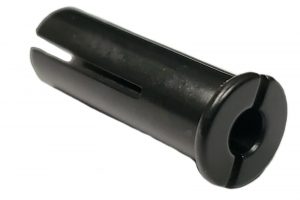
Try our 1/4” to 1/8” Collet Reducer
Allows you to use 1/8” shank carbide bits in your 1/4” collet router
All our USA made carbide bur cutting tools ship SAME DAY ordered by USPS Mail with online tracking.
We can also dropship the carbide bur die grinder bits, if interested in joining our FREE dropship program.

We accept debit and all major credit card payments including Visa, MasterCard, Discover, American Express and PayPal. Fast and easy secure checkout with no account or login required. If you have any questions, visit our FAQ page or contact us here.

Follow us on Facebook, Twitter and Instagram

Return to CarbideBur.com
Carbide Burs – 1/4″ on 1/8″ Shanks – Accessories – Aluminum Cut – Bur Sets – End Mills – Long Shank – Solid Burs