Carbide Burr vs. Grinding Stone: Which Is Better for Metal Removal?
When you need to remove metal, smooth a rough edge, or shape a metal component, two common options are carbide burrs and grinding stones. Both can be useful for metalworking, but they remove material in different ways. Choosing the right tool can make a noticeable difference in control, cutting performance, and the final surface.
Understanding the differences between a carbide burr vs grinding stone helps you select the right accessory for welding, fabrication, automotive work, casting cleanup, and other metalworking projects.

Do you need a longer reach for your die grinder tool bits?
What Is a Carbide Burr?
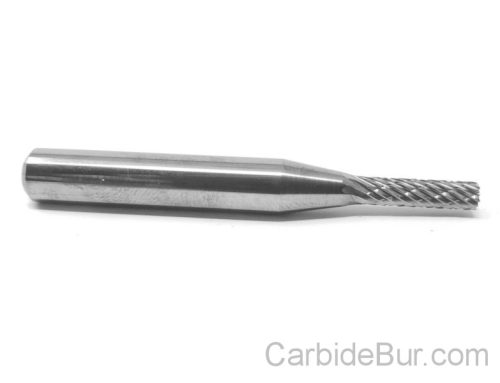
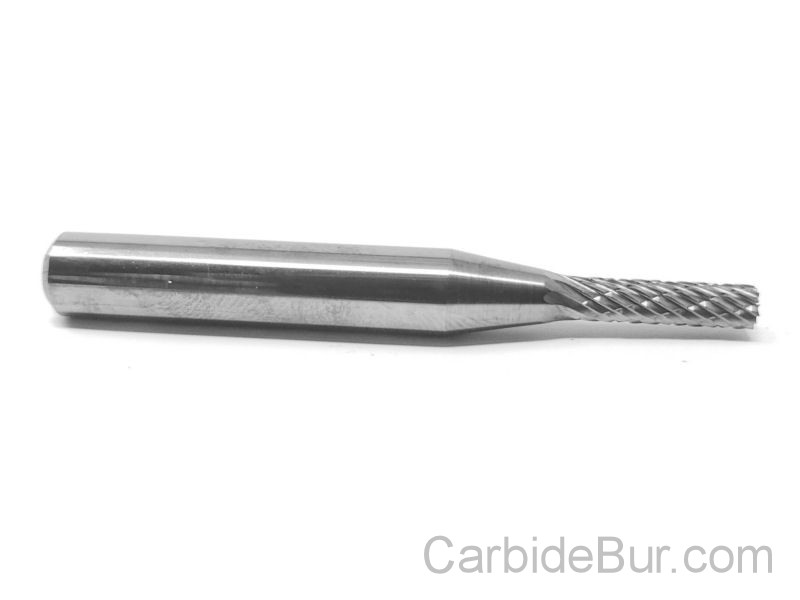
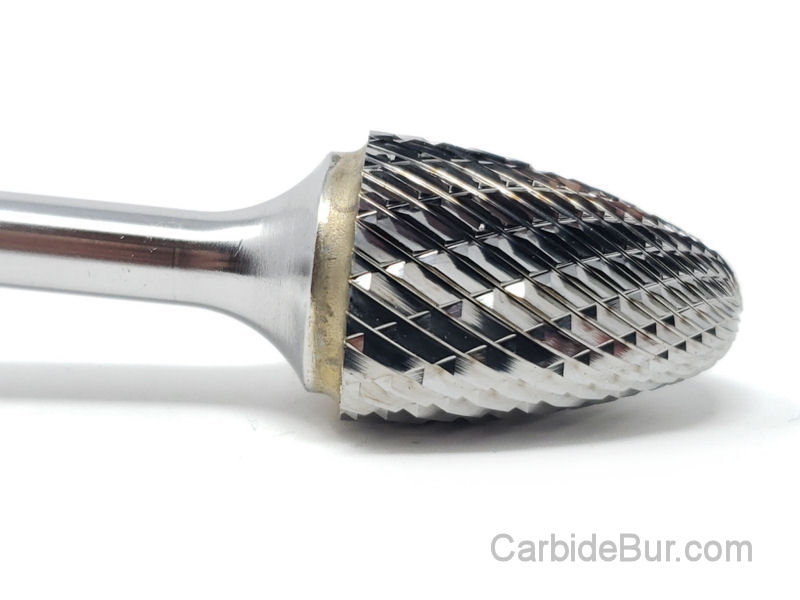
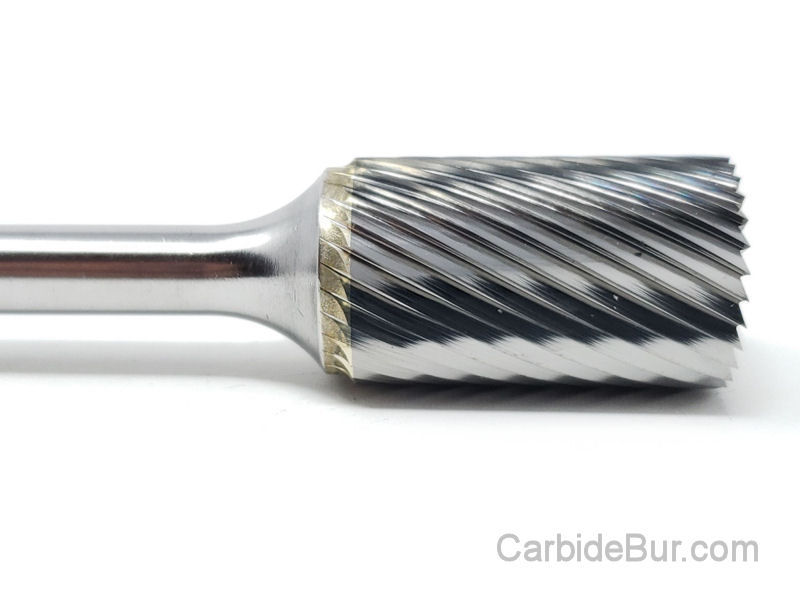
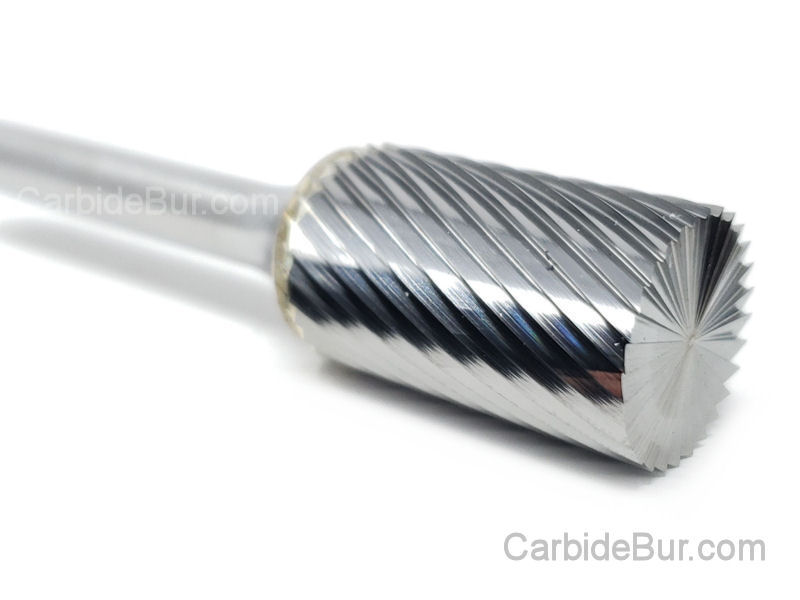
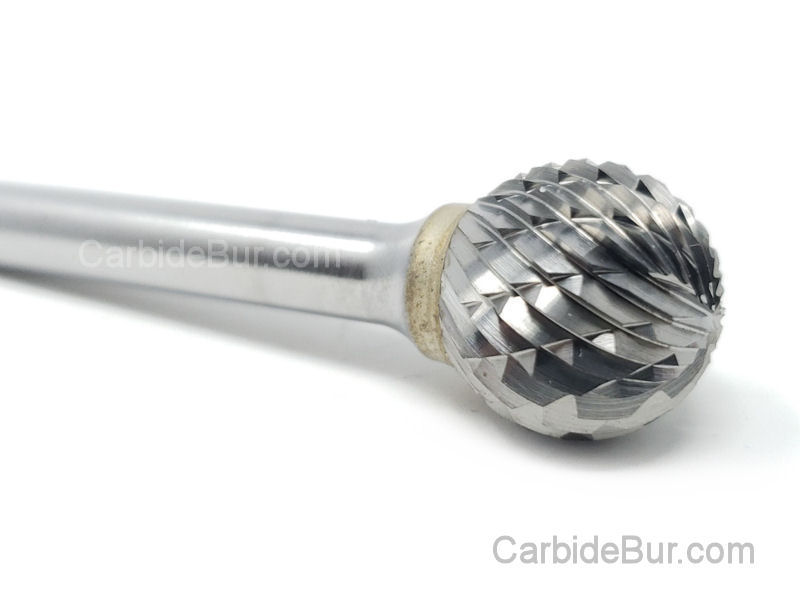
A carbide burr is a rotary cutting tool with sharp flutes machined into its cutting head. As the burr rotates, those cutting edges remove material in the form of small chips.
Carbide burrs are commonly used with compatible die grinders and rotary tools. Depending on the burr’s shape, cut, and size, they can be useful for shaping metal, enlarging openings, cleaning up welds, removing casting imperfections, and reaching areas that are difficult to access with larger grinding accessories.
Common carbide burr profiles include:
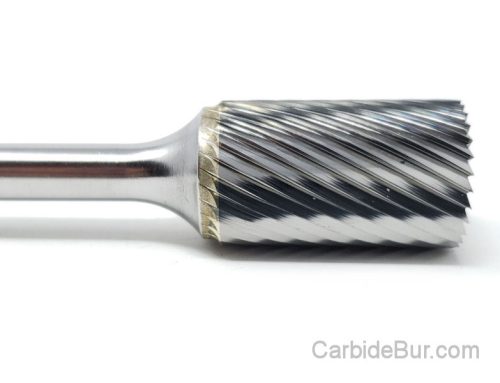
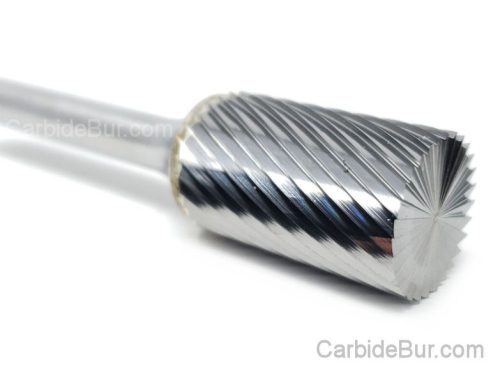
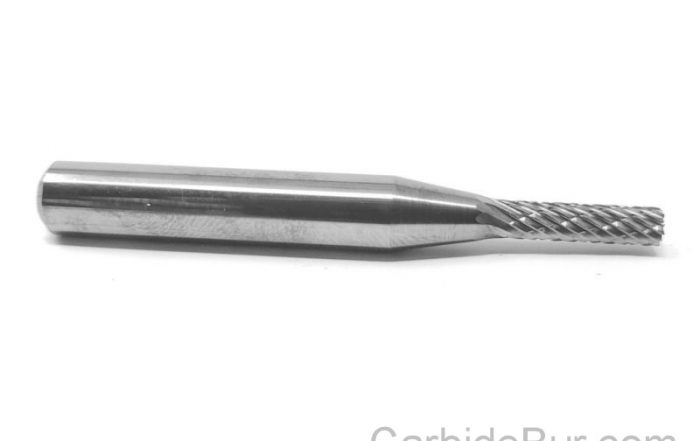
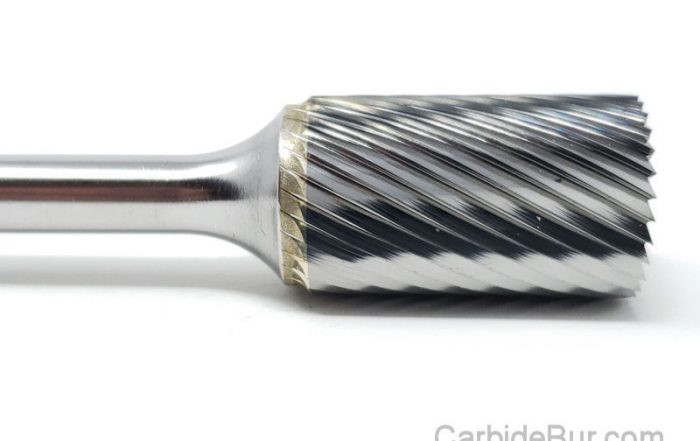
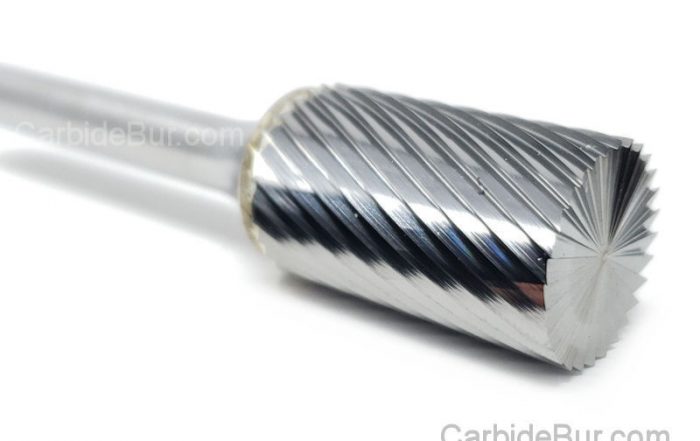
- Cylindrical burrs: Useful for working on flat surfaces, slots, and edges.
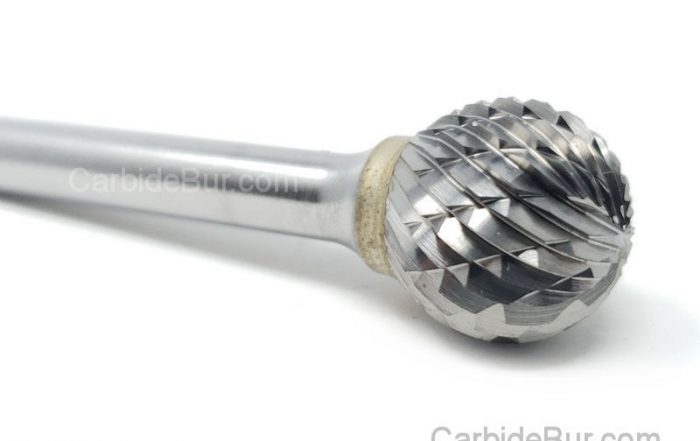
- Ball burrs: Helpful for rounded contours, curved surfaces, and recessed areas.
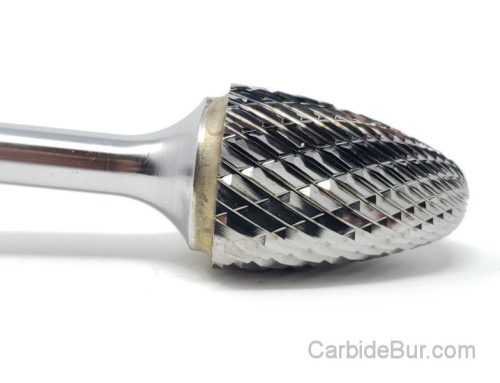
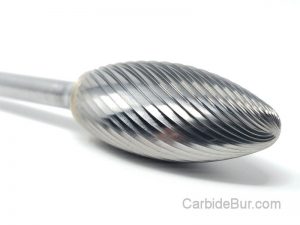
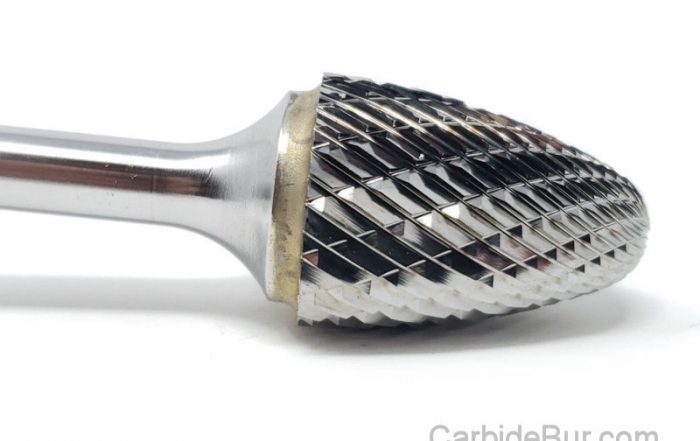
- Oval burrs: Suitable for shaping curved surfaces and smoothing transitions.
- Tree-shaped burrs: Useful for working along angled surfaces, corners, and contours.
The main advantage of a carbide burr is its cutting action. Rather than relying solely on abrasion, its flutes cut into the workpiece and remove small chips of material.
What Is a Grinding Stone?
A grinding stone is an abrasive accessory made from bonded abrasive grains. As the stone rotates against the workpiece, those grains grind away the material through abrasion.
Grinding stones are available in different abrasive compositions, shapes, and hardnesses for different materials and applications. They are often used for general grinding, removing small imperfections, smoothing edges, and preparing surfaces.
A grinding stone may be a good choice when you need an abrasive surface rather than a cutting tool with defined flutes. The result depends on the stone’s abrasive type, grit, shape, condition, and the technique used.
Like carbide burrs, grinding stones must be matched to the material and the operating requirements of the equipment.
Carbide Burr vs. Grinding Stone: The Main Differences
Although both tools remove material, their cutting mechanisms produce different results.
| Feature | Carbide burr | Grinding stone |
|---|---|---|
| Material removal | Sharp flutes cut and form chips | Abrasive grains grind material away |
| Shaping | Well suited to controlled shaping and contouring | Useful for general grinding and some shaping |
| Edge cleanup | Can remove unwanted metal and refine edges | Can grind down rough edges and protrusions |
| Surface finish | Depends on cut, pressure, speed, and technique | Depends on abrasive grit, stone type, and technique |
| Complex contours | Available in many cutting profiles for detailed work | Depends on the stone’s shape and accessibility |
| Tool compatibility | Requires a compatible collet, shank, and rated tool | Requires a compatible mounting system and rated tool |
| Best application | Cutting, profiling, and controlled material removal | Abrasive grinding and suitable surface preparation |
Neither tool is automatically better for every job. The best choice depends on what you need to remove, how much control you need, and the finish you want to achieve.
1. Material Removal: Cutting Flutes vs. Abrasive Grinding
One of the biggest differences in the carbide burr vs grinding stone comparison is how each accessory removes metal.
A carbide burr’s cutting flutes engage the workpiece and produce small chips. With the right profile and cutting style, this makes it useful for removing material from specific areas, modifying contours, and working around features that require attention to detail.
A grinding stone uses abrasive grains to wear away the surface. This can be effective for general grinding and removing protruding material, depending on the stone and the application.
For example, if you need to remove a raised area from a metal casting or modify the shape of an opening, a suitable carbide burr may give you the cutting geometry you need. If you need to grind down a small protrusion or perform general abrasive cleanup, a grinding stone may be appropriate.
In either case, use controlled pressure and check your progress frequently. Removing too much material can affect dimensions, fit, and the strength or function of the component.
2. Shaping Metal and Reaching Difficult Areas
Carbide burrs are particularly useful when the task involves shaping a specific area rather than simply grinding a surface.
Different burr profiles allow you to work on flat areas, internal contours, curved surfaces, slots, and corners. This flexibility can be valuable for fabricators, welders, automotive technicians, and metalworkers who need to remove material from a particular location.
Grinding stones also come in different shapes, but their abrasive working surfaces serve a different purpose. Depending on the stone’s geometry, they may be better suited to general grinding than to detailed cutting in a tight or complex area.
Consider a fabrication project where a bracket has an irregular edge. A carbide burr with a suitable profile may help you refine that edge while maintaining control over where material is removed. A grinding stone may be useful for subsequent abrasive cleanup if the surface and desired finish call for it.
Always choose an accessory that provides adequate clearance and can be used safely with your equipment.
3. Weld Cleanup and Edge Preparation
Both carbide burrs and grinding stones can be useful in metal fabrication, but they serve different roles.
A carbide burr can help remove small amounts of unwanted metal around a weld, shape an edge, or clean up localized irregularities. Its cutting flutes can be useful when you need to focus material removal on a particular area.
A grinding stone can help with general grinding and removing raised areas, provided its abrasive type is suitable for the material and the task.
For example, after welding a metal assembly, you might use a carbide burr to work on a tight corner or refine a specific contour. A suitable abrasive accessory may then be used if additional surface finishing is needed.
The right sequence depends on the part’s geometry, the amount of material to remove, and the required finish. Avoid grinding or cutting into a weld or base material more than necessary, especially when the component is structural or safety-critical.
4. Which Tool Produces the Better Surface Finish?
Neither a carbide burr nor a grinding stone guarantees a better finish in every situation.
A carbide burr is primarily a cutting tool. Depending on its flute geometry and technique, it can leave a clearly defined machined surface. A coarse cut, excessive pressure, or poor control can leave visible marks that require additional finishing.
A grinding stone creates an abrasive-ground surface. The resulting texture depends on the abrasive grain, bond, stone condition, and how the tool is used. A suitable fine abrasive may be preferable when the goal is a more uniform ground finish.
If appearance matters, consider whether the surface needs to be shaped, ground, blended, or polished. A carbide burr can perform the initial shaping, while a separate finishing accessory may be more appropriate for refining the surface.
The key is to match the tool to the stage of the job. Material removal and final finishing are not always best handled by the same accessory.
5. Choosing the Right Tool for Different Metals
The workpiece material also affects your choice.
Steel and stainless steel: Carbide burrs can be useful for shaping, edge cleanup, and localized material removal. Choose a suitable burr cut and follow the manufacturer’s guidance for the material and tool speed.
Aluminum: Aluminum can build up on cutting flutes if the burr geometry and technique are unsuitable. A carbide burr designed for aluminum can help reduce loading and improve cutting performance. Avoid excessive pressure and heat.
Cast iron: Carbide burrs can help remove casting imperfections and shape selected areas. Use a burr suitable for the material and control dust and debris carefully.
Other alloys: Confirm that the accessory is appropriate for the particular alloy and application rather than assuming every burr or grinding stone will perform the same way.
For any material, use an accessory rated for your equipment and application. Follow the tool manufacturer’s speed limits and the accessory manufacturer’s safety instructions.
6. Equipment, Technique, and Safety Matter
Even the right accessory can perform poorly when used with incompatible equipment or incorrect technique.
Before starting, check the following:
- Confirm the accessory’s shank or mounting system matches your tool.
- Verify the accessory’s maximum rated RPM is appropriate for the operating speed.
- Secure the workpiece firmly before grinding or cutting.
- Use light, controlled pressure instead of forcing the tool.
- Keep the cutting area clear and inspect the accessory for damage before use.
- Wear appropriate eye and face protection, hearing protection, and other protective equipment required for the task.
- Control metal chips, dust, and sparks, and keep flammable materials away from the work area.
Never use an accessory with a damaged cutting head, cracked abrasive stone, or incompatible mounting system. Do not exceed the manufacturer’s operating-speed limits.
When Should You Choose a Carbide Burr?
A carbide burr is a useful option when your project calls for controlled cutting and shaping rather than only general abrasive grinding.
Consider a carbide burr when you need to:
- Shape a metal component or modify a contour
- Remove localized imperfections from a casting
- Clean up selected areas around a weld
- Refine edges or openings
- Reach a recessed area with an appropriately shaped burr
- Remove material from a specific location with a rotary cutting tool
A grinding stone may be a better fit for other jobs, particularly when general abrasive grinding or a particular ground surface is the priority.
For some projects, these tools complement each other rather than compete. A carbide burr can handle controlled material removal, while an appropriate abrasive accessory can help with later surface refinement.
Find USA-Made Carbide Burr Tools at CarbideBurr.net
If your metalworking projects require controlled cutting, contouring, and localized material removal, carbide burrs are worth considering.
At CarbideBurr.net, we offer USA-made carbide burr tools for welders, fabricators, automotive enthusiasts, and other metalworking applications. Choose from suitable burr profiles for your work, and confirm the shank size and compatibility requirements before ordering.
Whether you are cleaning up a weld, shaping a metal component, or removing casting imperfections, selecting the right cutting tool can help you work more effectively.
Explore our USA-made carbide burr tools at CarbideBurr.net and find an option suited to your next metalworking project.
Looking for Carbide Bur Tools?
Check out our entire selection of USA made carbide bur die grinder tool bits
Follow us on Twitter

Return to CarbideBur.com
Carbide Burs – 1/4″ on 1/8″ Shanks – Accessories – Aluminum Cut – Bur Sets – End Mills – Long Shank – Solid Burs
Carbide Burr vs. Grinding Stone: Which Is Better for Metal Removal?
Carbide Burr vs. Grinding Stone: Which Is Better for Metal Removal? When you need to remove metal, smooth a rough edge, or shape a metal component, two common options are carbide burrs and grinding stones. [...]
Carbide Burr Safety: RPM, Eye Protection, and Common Mistakes
Carbide Burr Safety: RPM, Eye Protection, and Common Mistakes Carbide burrs are versatile cutting tools used for metal fabrication, welding cleanup, engine porting, deburring, and general material removal. When used correctly, they can help remove [...]
How to Stop Aluminum from Clogging Your Carbide Burr
How to Stop Aluminum from Clogging Your Carbide Burr Aluminum is widely used in automotive work, welding, metal fabrication, aerospace components, and general machining. It is lightweight, relatively easy to machine, and versatile across many [...]
Carbide Burrs for Intake Manifolds: Shaping, Cleanup, and Fitment
Carbide Burrs for Intake Manifolds: Shaping, Cleanup, and Fitment Intake manifold work often involves more than simply bolting a component onto an engine. Depending on the application, metal intake components may have casting irregularities, rough [...]
Why Long-Shank Carbide Burrs Are Useful for Hard-to-Reach Areas
Why Long-Shank Carbide Burrs Are Useful for Hard-to-Reach Areas When working on metal parts, the area that needs grinding or shaping is not always easy to reach. Recessed openings, deep cavities, interior surfaces, and complicated [...]
Choosing Carbide Burrs for Stainless Steel Fabrication
Choosing Carbide Burrs for Stainless Steel Fabrication Stainless steel is widely used in fabrication because of its corrosion resistance, strength, and durability. However, those same properties can make it challenging to machine and finish. Removing [...]
Can You Use Carbide Burrs in a Dremel? Shank Sizes Explained
Can You Use Carbide Burrs in a Dremel? Shank Sizes Explained If you use a Dremel or another rotary tool for detail work, metal shaping, or small fabrication projects, you may wonder whether you can [...]
How to Choose the Best Carbide Burr for Welding and Metal Fabrication
How to Choose the Best Carbide Burr for Welding and Metal Fabrication Welding and metal fabrication often require more than joining two pieces of metal together. Once the welding is finished, fabricators frequently need to [...]
Carbide Burrs for Cylinder Heads: What Automotive Enthusiasts Need to Know
Carbide Burrs for Cylinder Heads: What Automotive Enthusiasts Need to Know Cylinder head work is an important part of engine building, restoration, and performance machining. Whether you are cleaning up casting imperfections, refining port surfaces, [...]
Engine Porting 101: How Carbide Burrs Help Shape Cylinder Head Ports
Engine Porting 101: How Carbide Burrs Help Shape Cylinder Head Ports Engine performance enthusiasts, automotive machinists, and engine builders often look for ways to improve airflow through an engine's cylinder heads. One technique used in [...]
When to Use a 4-Inch or 9-Inch Die Grinder Extension
When to Use a 4-Inch or 9-Inch Die Grinder Extension Metal fabrication, welding, automotive repair, and engine building often require working in places where a standard die grinder and carbide burr cannot easily reach. Recessed [...]
Why Buy USA-Made Carbide Burr Tools? What Buyers Should Compare
Why Buy USA-Made Carbide Burr Tools? What Buyers Should Compare When shopping for carbide burr tools, it's tempting to compare products based on price alone. However, professionals who use rotary cutting tools for welding, metal [...]