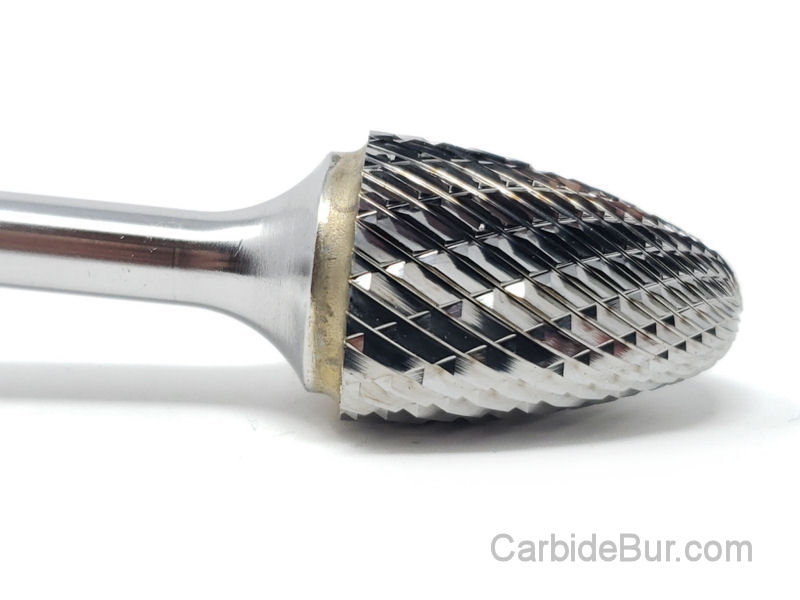
How to Stop Aluminum from Clogging Your Carbide Burr
Aluminum is widely used in automotive work, welding, metal fabrication, aerospace components, and general machining. It is lightweight, relatively easy to machine, and versatile across many applications. However, anyone who has used a rotary cutting tool on aluminum knows that it can create a frustrating problem: aluminum buildup on the cutting flutes.
When aluminum accumulates on a carbide burr, the cutting edges can become less effective, material removal may slow down, and the tool can produce more heat than expected. This makes choosing the right carbide burr for aluminum especially important for welders, fabricators, machinists, and automotive enthusiasts.
The good news is that suitable burr geometry, proper operating technique, and selecting a tool designed for aluminum can help reduce flute loading and improve cutting performance.

Do you need a longer reach for your die grinder tool bits?
Why Does Aluminum Clog Carbide Burrs?
Aluminum behaves differently from harder metals such as many grades of steel. Although it is relatively soft, it can be sticky during machining. Instead of consistently separating into chips and clearing away from the cutting edges, aluminum may adhere to the flutes as the tool rotates.
Several factors contribute to this problem.
1. Aluminum Can Stick to Cutting Flutes
During cutting, the burr’s edges shear material away from the workpiece. Aluminum can adhere to these edges and accumulate in the spaces between the flutes.
As the buildup increases, the cutting edges become less exposed. The burr may begin rubbing against the workpiece rather than cutting efficiently.
This can result in slower material removal, a rougher finish, and additional heat.
2. Excessive Pressure Can Make Loading Worse
Pressing too hard against aluminum may seem like a way to speed up the job, but excessive pressure can interfere with effective chip formation and increase friction.
Instead of allowing the cutting flutes to remove material efficiently, forcing the burr into the workpiece can encourage aluminum buildup and make the tool harder to control.
Use steady, controlled passes and let the cutting edges do the work.
3. Too Much Heat Can Cause Problems
Heat is another factor that can contribute to aluminum loading. Friction from excessive pressure, unsuitable speed, or an inappropriate cutting tool can increase the temperature at the cutting interface.
When aluminum becomes more prone to adhering to the cutting edges, the burr can lose effectiveness and require more frequent inspection and cleaning.
Choosing the correct burr and following the manufacturer’s speed recommendations can help manage heat during cutting.
4. The Burr May Not Be Designed for Aluminum
Not all carbide burrs have the same cutting geometry. A flute pattern that works well for a particular steel application may not be the best choice for aluminum.
If you regularly work with aluminum castings, brackets, cylinder heads, intake manifolds, or fabricated components, selecting a burr specifically designed for aluminum is worth considering.
How Flute Geometry Helps Reduce Aluminum Buildup
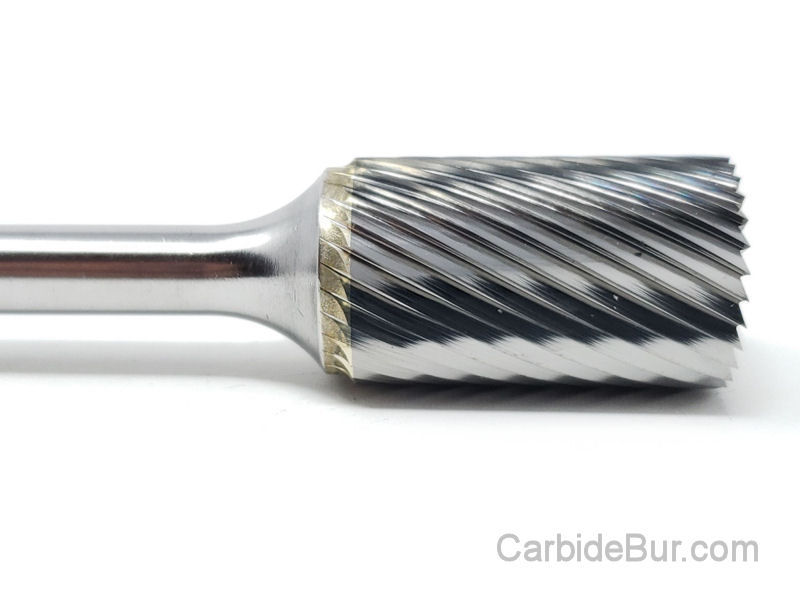
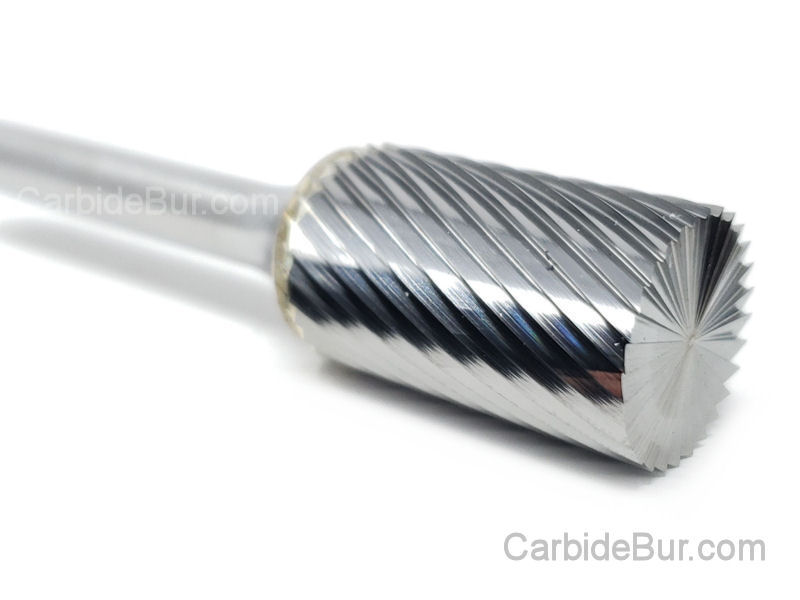
One of the most important factors in choosing a carbide burr for aluminum is the shape and design of its cutting flutes.
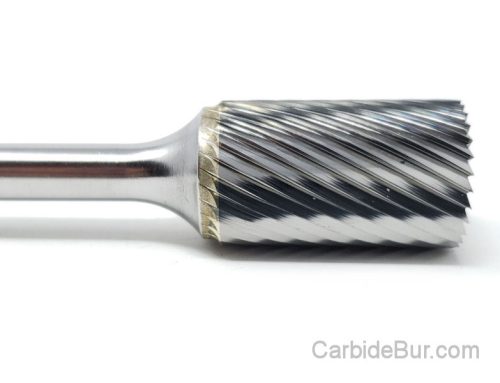
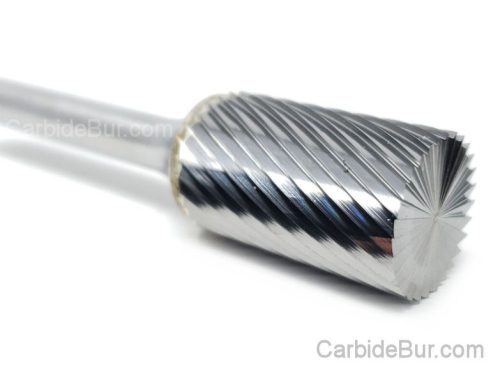
Flutes are the grooves and cutting edges formed into the burr’s head. They determine how the tool engages the material and help provide space for the resulting chips.
Burrs designed for aluminum often use cutting geometry intended to promote efficient chip formation and evacuation. Depending on the design, the flute configuration can help reduce the tendency for soft aluminum to accumulate on the cutting edges.
This can be particularly useful when removing material from larger aluminum castings or performing extended fabrication and automotive work.
However, flute geometry alone cannot eliminate every instance of loading. Results also depend on the aluminum alloy, the cutting conditions, tool speed, applied pressure, and the condition of the burr.
For this reason, the best approach is to combine a suitable tool with proper operating technique.
Why Choose a Carbide Burr Specifically Designed for Aluminum?
If aluminum is a regular part of your work, using a suitable aluminum-cut burr can make an important difference in your workflow.
More Suitable Cutting Geometry
A burr designed for aluminum is intended to address the material’s tendency to stick to cutting edges. Its flute geometry can help improve chip formation and reduce buildup under appropriate operating conditions.
More Consistent Material Removal
When the cutting edges remain effective, the tool can continue removing material without the performance losses associated with excessive loading.
This is useful when shaping aluminum parts, cleaning up casting irregularities, or refining fabricated components.
Less Time Spent Dealing with Buildup
A suitable burr may reduce how frequently you need to stop and address accumulated aluminum. This can help make repetitive work more efficient, although inspection and cleaning may still be necessary.
Useful for Automotive and Fabrication Projects
Aluminum is common in intake manifolds, cylinder heads, brackets, housings, and custom fabricated parts. A burr suited to aluminum can be a valuable addition to a toolkit used for these applications.
The key is selecting a tool designed for the actual material and cutting task rather than assuming every carbide burr will perform identically.
Five Tips to Help Prevent Aluminum from Clogging Your Carbide Burr
Even when you’re using an appropriate burr, your technique matters. The following practices can help reduce aluminum buildup and improve your results.
1. Select an Aluminum-Cut Carbide Burr
Start with the right tool for the material. An aluminum-cut burr has cutting geometry designed for working with aluminum and helping manage the chips produced during material removal.
If aluminum is a regular part of your workload, consider keeping dedicated aluminum-cut burrs available rather than relying on a general-purpose tool for every application.
2. Use Controlled Pressure
Avoid forcing the burr into the workpiece. Excessive pressure can increase friction, generate heat, and make it more difficult for the cutting flutes to clear material.
Instead, use controlled passes and allow the tool to cut at its intended rate. If the burr is not cutting effectively, reassess the tool condition, speed, and cutting geometry rather than simply pressing harder.
3. Follow the Recommended Operating Speed
Higher speed does not automatically mean faster or better cutting. The appropriate speed depends on the burr diameter, tool design, material, and equipment.
Always follow the manufacturer’s speed limits and operating instructions. If the tool begins to load or overheat, stop and reassess the setup rather than continuing to grind.
4. Inspect the Burr Frequently
Periodically inspect the cutting head for aluminum buildup, worn flutes, or damage.
If the burr becomes loaded, stop the grinder and disconnect or otherwise safely isolate the power source according to the manufacturer’s instructions before inspecting or cleaning the accessory.
Use an appropriate cleaning method recommended by the tool manufacturer. Never attempt to remove buildup while the burr is rotating, and do not continue using a damaged accessory.
5. Keep the Workpiece Secure
A stable workpiece makes it easier to maintain consistent tool contact and controlled cutting pressure.
Secure the component appropriately, maintain a comfortable grip on the grinder, and avoid awkward positions that encourage excessive side loading. These precautions are particularly important when working inside castings or other recessed areas.
Common Mistakes to Avoid When Cutting Aluminum
Some habits can make aluminum machining more difficult than necessary.
Using a general-purpose burr for every material: Different metals have different cutting characteristics. A tool designed for aluminum may be more appropriate when loading is a recurring problem.
Applying too much pressure: Forcing the cutting head can increase heat and friction instead of improving material removal.
Ignoring a loaded burr: Aluminum buildup can reduce cutting effectiveness. Stop and inspect the tool when performance changes.
Exceeding the recommended speed: Operating beyond the tool’s rated limits can create dangerous conditions and accelerate tool damage.
Assuming every aluminum alloy behaves the same: Different alloys and workpiece conditions can affect cutting performance, so the correct approach may vary from one job to another.
Continuing with a damaged tool: Cracked, chipped, or otherwise damaged burrs should not be used. Inspect accessories before operation and follow the manufacturer’s replacement guidance.
Avoiding these mistakes can help you get more consistent results from your carbide burrs.
Carbide Burrs for Aluminum in Automotive and Metal Fabrication Work
Aluminum-cut carbide burrs are useful across a range of projects where controlled metal removal is required.
Aluminum Cylinder Heads and Intake Manifolds
Automotive enthusiasts and engine builders may use suitable burrs for selected porting, shaping, and casting cleanup tasks. Because these components contain critical dimensions and thin sections, material should be removed gradually and according to the requirements of the engine design.
Welding and Fabrication
Fabricators may need to refine aluminum components, remove selected irregularities, or shape parts during custom projects. A suitable burr can provide access to areas where larger grinding accessories are difficult to maneuver.
Aluminum Castings and Brackets
Cast aluminum components may contain irregularities that require localized cleanup. The right burr profile can help reach specific areas and remove material in a controlled manner.
General Aluminum Machining
For shops that regularly work with aluminum, having dedicated aluminum-cut burrs can help ensure the tool selection matches the job.
Across all these applications, the goal is to achieve controlled material removal without unnecessarily increasing heat, damaging the workpiece, or compromising critical dimensions.
Find Aluminum-Cut Carbide Burrs at CarbideBurr.net
If you regularly work with aluminum and find that ordinary rotary burrs accumulate material on their cutting flutes, switching to a burr designed for aluminum is worth considering.
At CarbideBurr.net, you can explore USA-made carbide burr tools, including aluminum-cut options designed to help address loading during aluminum machining and fabrication.
Choosing the appropriate flute geometry can help reduce aluminum buildup, support effective chip removal, and maintain more consistent cutting performance. While no burr is completely immune to clogging under every condition, selecting the right tool can help make aluminum work more manageable.
Whether you’re working on automotive components, aluminum castings, fabricated parts, or custom metal projects, start by matching the burr to the material and application.
Explore our aluminum-cut, anti-clog carbide burr options at CarbideBurr.net and find the right cutting tool for your next project.
With appropriate tooling, controlled pressure, and proper operating technique, you can reduce frustrating buildup and get more out of your aluminum metalworking jobs.
Looking for Carbide Bur Tools?
Check out our entire selection of USA made carbide bur die grinder tool bits
Follow us on Twitter

Return to CarbideBur.com
Carbide Burs – 1/4″ on 1/8″ Shanks – Accessories – Aluminum Cut – Bur Sets – End Mills – Long Shank – Solid Burs
How to Stop Aluminum from Clogging Your Carbide Burr
How to Stop Aluminum from Clogging Your Carbide Burr Aluminum is widely used in automotive work, welding, metal fabrication, aerospace components, and general machining. It is lightweight, relatively easy to machine, and versatile across many [...]
Carbide Burrs for Intake Manifolds: Shaping, Cleanup, and Fitment
Carbide Burrs for Intake Manifolds: Shaping, Cleanup, and Fitment Intake manifold work often involves more than simply bolting a component onto an engine. Depending on the application, metal intake components may have casting irregularities, rough [...]
Why Long-Shank Carbide Burrs Are Useful for Hard-to-Reach Areas
Why Long-Shank Carbide Burrs Are Useful for Hard-to-Reach Areas When working on metal parts, the area that needs grinding or shaping is not always easy to reach. Recessed openings, deep cavities, interior surfaces, and complicated [...]
Choosing Carbide Burrs for Stainless Steel Fabrication
Choosing Carbide Burrs for Stainless Steel Fabrication Stainless steel is widely used in fabrication because of its corrosion resistance, strength, and durability. However, those same properties can make it challenging to machine and finish. Removing [...]
Can You Use Carbide Burrs in a Dremel? Shank Sizes Explained
Can You Use Carbide Burrs in a Dremel? Shank Sizes Explained If you use a Dremel or another rotary tool for detail work, metal shaping, or small fabrication projects, you may wonder whether you can [...]
How to Choose the Best Carbide Burr for Welding and Metal Fabrication
How to Choose the Best Carbide Burr for Welding and Metal Fabrication Welding and metal fabrication often require more than joining two pieces of metal together. Once the welding is finished, fabricators frequently need to [...]
Carbide Burrs for Cylinder Heads: What Automotive Enthusiasts Need to Know
Carbide Burrs for Cylinder Heads: What Automotive Enthusiasts Need to Know Cylinder head work is an important part of engine building, restoration, and performance machining. Whether you are cleaning up casting imperfections, refining port surfaces, [...]
Engine Porting 101: How Carbide Burrs Help Shape Cylinder Head Ports
Engine Porting 101: How Carbide Burrs Help Shape Cylinder Head Ports Engine performance enthusiasts, automotive machinists, and engine builders often look for ways to improve airflow through an engine's cylinder heads. One technique used in [...]
When to Use a 4-Inch or 9-Inch Die Grinder Extension
When to Use a 4-Inch or 9-Inch Die Grinder Extension Metal fabrication, welding, automotive repair, and engine building often require working in places where a standard die grinder and carbide burr cannot easily reach. Recessed [...]
Why Buy USA-Made Carbide Burr Tools? What Buyers Should Compare
Why Buy USA-Made Carbide Burr Tools? What Buyers Should Compare When shopping for carbide burr tools, it's tempting to compare products based on price alone. However, professionals who use rotary cutting tools for welding, metal [...]
How to Use 1/8-Inch Rotary Bits with a Die Grinder
How to Use 1/8-Inch Rotary Bits with a Die Grinder Die grinders are popular tools for metalworking, fabrication, deburring, and precision material removal. However, many die grinders use a 1/4-inch collet, while smaller rotary tools [...]

Can You Use a Carbide Burr With an Electric Die Grinder?
Can You Use a Carbide Burr With an Electric Die Grinder? Most people don’t realize how much a carbide burr can change the way an electric die grinder works. Using the right burr type can [...]