When to Use a 4-Inch or 9-Inch Die Grinder Extension
Metal fabrication, welding, automotive repair, and engine building often require working in places where a standard die grinder and carbide burr cannot easily reach. Recessed openings, deep housings, narrow passages, and complicated metal assemblies can make grinding and shaping difficult without the right equipment.
A carbide burr extension for die grinder can provide the additional reach needed to access these areas. However, choosing the right extension matters. A 4-inch extension may offer better control for moderately recessed work, while a 9-inch extension can help reach deeper or more obstructed locations.
Understanding the differences between these two lengths can help you select the right tool for your project and work more efficiently.

Do you need a longer reach for your die grinder tool bits?
What Is a Die Grinder Extension?
A die grinder extension is an accessory designed to extend the reach of a compatible rotary cutting tool. Depending on its design, it allows a suitable carbide burr to reach farther into an opening or around an obstruction than a standard setup permits.
Extensions can be useful when working on automotive components, fabricated metal assemblies, castings, and other parts with difficult-to-access surfaces.
Instead of trying to maneuver a full-size grinder into a cramped space, an appropriate extension can help position the cutting head where the work needs to be done.
Common applications include:
- Reaching recessed metal surfaces and internal cavities.
- Cleaning up selected areas inside housings.
- Shaping metal in narrow or obstructed locations.
- Performing certain cylinder-head porting and automotive machining tasks.
- Refining hard-to-reach areas during welding and fabrication cleanup.
The correct extension depends on the required reach, tool compatibility, operating speed, and level of control needed.
When to Use a 4-Inch Die Grinder Extension
A 4-inch die grinder extension is a useful option when you need additional reach but still want a relatively compact setup.
It can help access areas that are slightly recessed or partially obstructed without introducing as much additional length as a longer extension.
1. Reaching Moderately Recessed Areas
Some metal components have openings that sit behind a lip, flange, or surrounding structure. A standard carbide burr may struggle to reach the desired surface without the grinder body contacting nearby parts.
A 4-inch extension can provide enough additional clearance to position the cutting head more effectively.
2. General Metal Fabrication
Fabricators often work with brackets, housings, welded assemblies, and custom metal components that contain awkward corners or recessed areas.
When the cutting location is not particularly deep, a shorter extension can provide useful access while keeping the overall setup relatively manageable.
3. Automotive Repair and Component Cleanup
Automotive parts frequently have recesses, internal contours, and narrow openings that can make localized material removal challenging.
A 4-inch extension may be suitable for selected cleanup tasks where a standard burr is too short but a much longer setup is unnecessary.
4. Jobs Where Control Is a Priority
All else being equal, a shorter extension generally creates a more compact setup than a longer one. This can make positioning and handling easier in some applications.
However, actual control also depends on the extension’s design, the grinder, the burr, the workpiece, and the operator’s technique.
Choose a 4-inch extension when you need moderate additional reach without adding unnecessary length to the tool setup.
When to Use a 9-Inch Die Grinder Extension
A 9-inch die grinder extension is intended for applications where additional reach is the main requirement.
It can help access deeper recesses and areas where surrounding structures prevent the grinder itself from getting close enough to the work.
1. Deep Housings and Recessed Components
Some metal assemblies have internal surfaces located well behind the opening. A shorter extension may not provide enough reach to position the burr where needed.
A suitable 9-inch extension can help bridge that distance, provided the tool and extension are designed for the application.
2. Difficult-to-Reach Fabrication Areas
Complex fabricated assemblies may contain tubes, channels, recessed joints, and other features that limit access.
A longer extension can help reach selected internal surfaces without requiring the grinder body to fit directly beside the cutting location.
3. Certain Engine Porting Applications
Engine builders sometimes need to work on recessed areas inside intake or exhaust passages. A longer-reach setup may help access certain areas of a cylinder head when the tool geometry and port design permit.
Porting requires particular care because excessive material removal can compromise port geometry, wall thickness, valve-seat areas, and sealing surfaces. Use appropriate measurements and remove material gradually.
4. Components With Significant Obstructions
When surrounding metal prevents a direct approach, a longer extension may allow the cutting head to reach the target surface from a more suitable position.
Before choosing a 9-inch extension, verify that it can be operated safely in the available space. Longer setups can be more sensitive to vibration, deflection, and side loading.
Choose a 9-inch extension when the job genuinely requires deeper access that a shorter setup cannot provide.
4-Inch vs. 9-Inch Die Grinder Extensions: What’s the Difference?
| Feature | 4-inch extension | 9-inch extension |
|---|---|---|
| Reach | Moderate additional reach | Greater additional reach |
| Typical applications | Recessed edges, brackets, housings | Deep cavities, internal passages, obstructed assemblies |
| Handling | More compact setup | Longer setup requiring careful control |
| Best use | When a little extra clearance is sufficient | When the cutting area is significantly farther away |
| Main consideration | Ensure it reaches the target | Ensure the extra length is necessary and safe |
Neither length is universally better. The best extension is the one that reaches the work area while maintaining an appropriate, stable, manufacturer-approved setup.
If your projects involve a mixture of general fabrication and deeper internal work, having both lengths available may help you select the right option for each job.
Choosing the Right Carbide Burr for Your Extension
An extension is only part of the setup. You also need a compatible carbide burr that suits the material and cutting task.
Consider the Burr Shape
Different profiles are useful for different surfaces.
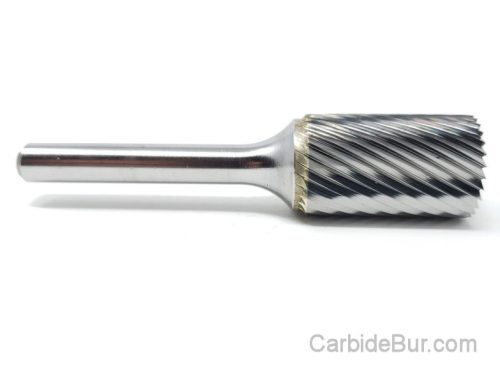
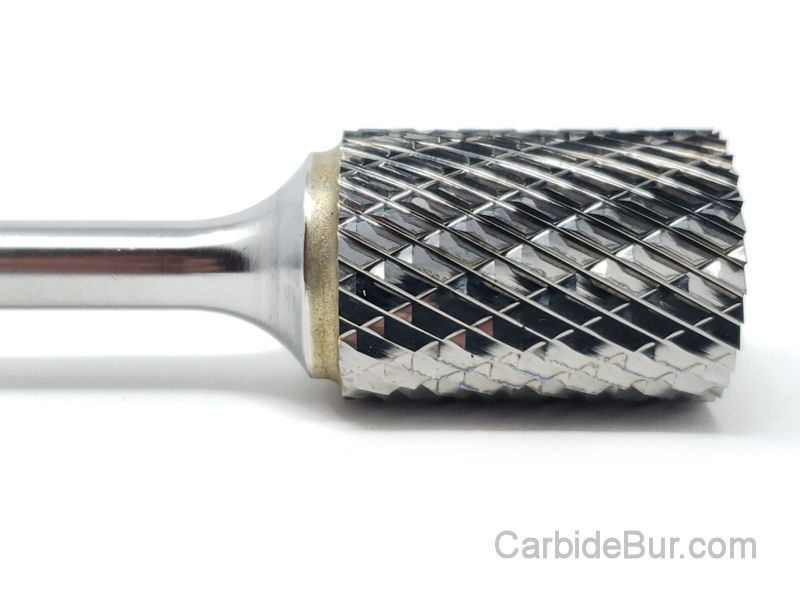
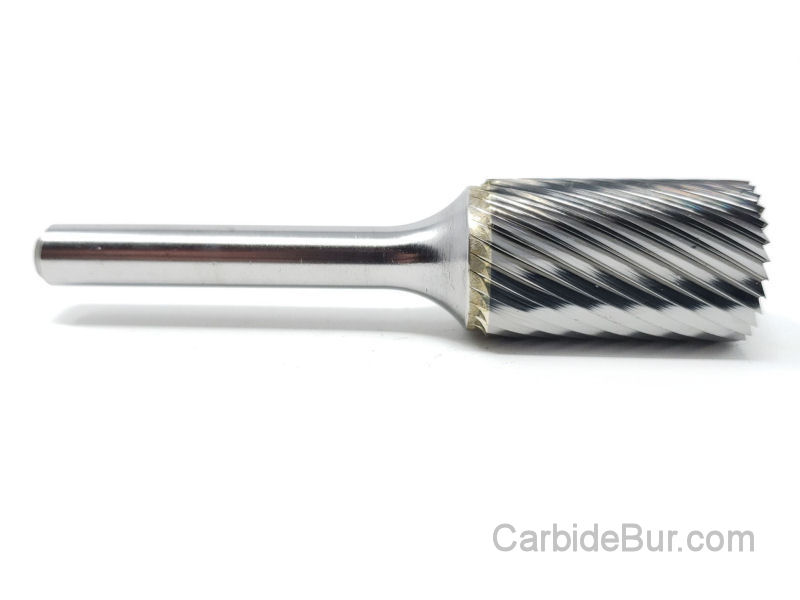
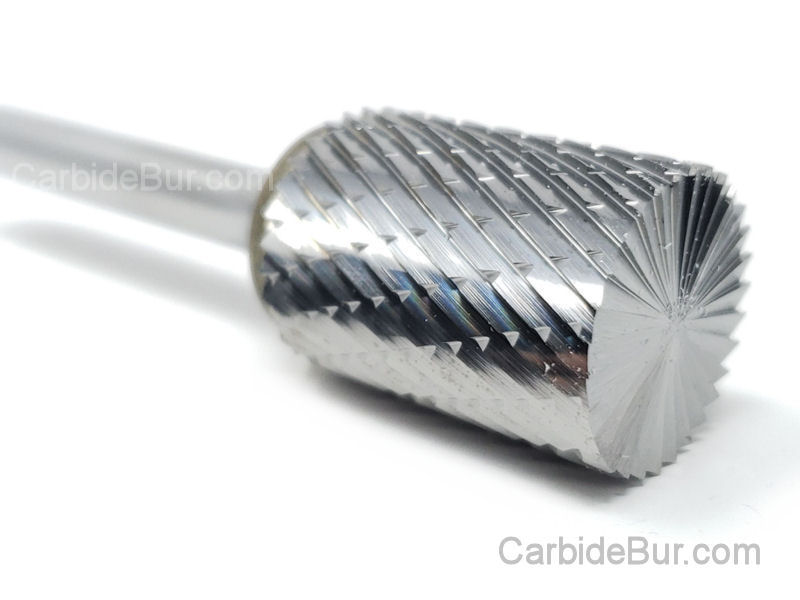
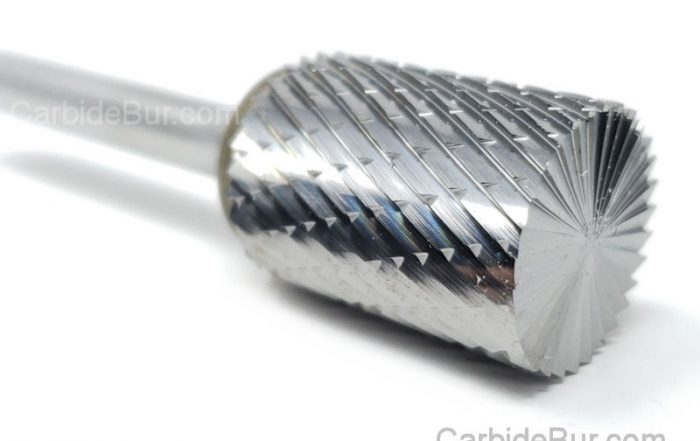
- Cylindrical burrs: Useful for selected flat surfaces and relatively straight sections.
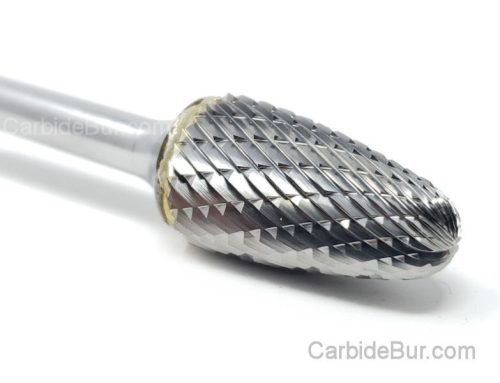
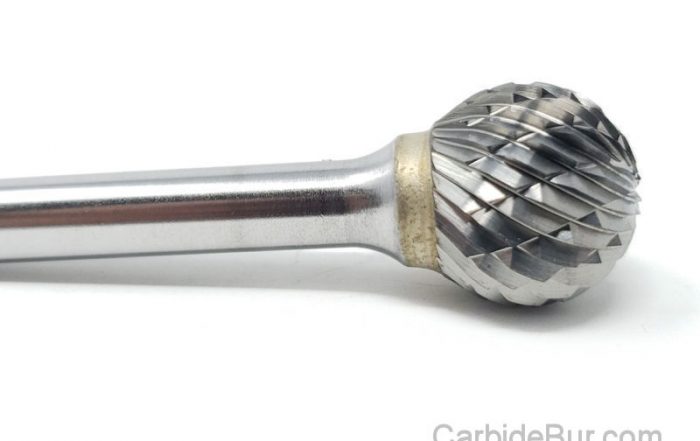
- Ball burrs: Helpful for rounded contours and localized shaping.
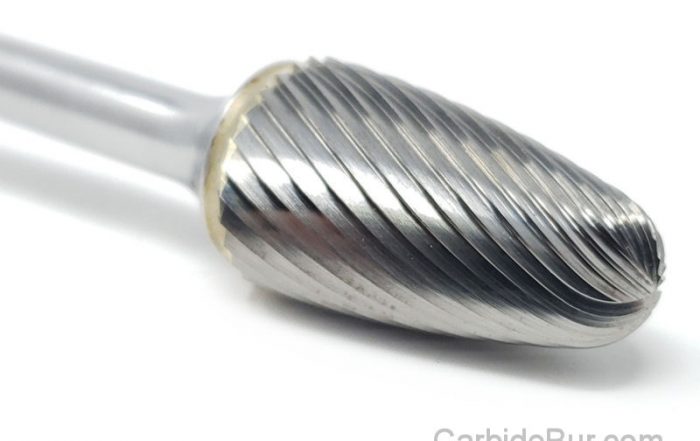
- Oval burrs: Useful for certain curved surfaces and transitions.
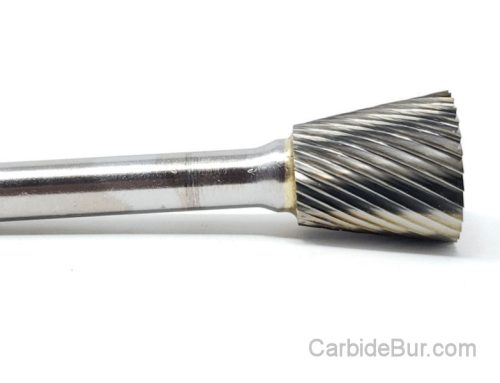
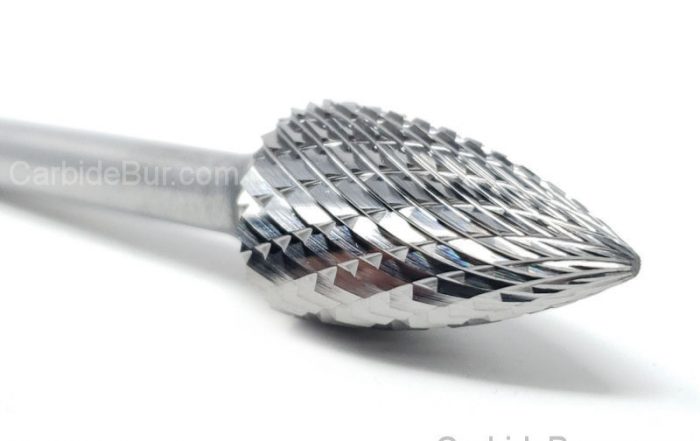
- Tree-shaped burrs: Helpful for selected angled areas and corners.
The correct profile depends on the geometry of the workpiece and the access available.
Check the Shank and Connection
Not every extension is compatible with every die grinder or carbide burr. Before purchasing, verify the connection type, shank diameter, collet requirements, and any restrictions specified by the manufacturer.
Never assume that an extension designed for one tool system can safely be installed on another.
Match the Burr to the Material
Steel, stainless steel, cast iron, and aluminum have different cutting characteristics. Choose a burr suited to the material, and consider aluminum-cut geometry when working with aluminum that tends to accumulate on cutting flutes.
The extension provides reach; the burr’s geometry determines how it engages and removes material.
Safety Considerations When Using Die Grinder Extensions
Because extensions change the geometry of a rotary tool setup, safe operation is especially important.
Verify speed ratings. Follow the manufacturer’s maximum operating speed for the extension and carbide burr, as well as the grinder’s requirements. Do not exceed the lowest applicable limit.
Inspect the equipment. Check the extension, connections, burr, and grinder for wear, damage, looseness, or other problems before use.
Avoid excessive side pressure. Longer setups may be more susceptible to deflection and vibration. Use controlled passes and avoid forcing the burr against the workpiece.
Secure the workpiece. Clamp the part appropriately so it cannot shift during cutting.
Wear appropriate protection. Use suitable eye and face protection, manage metal chips and dust, and keep sparks away from combustible materials.
Maintain a stable grip. Keep your hands clear of the rotating accessory and avoid awkward positions that make the tool difficult to control.
Stop if the tool vibrates or behaves unusually. Disconnect or safely isolate the power source according to the manufacturer’s instructions before inspecting the setup.
Never use an extension simply because it fits. It must be specifically suitable for the intended grinder, burr, speed, and application.
Why Keep Both 4-Inch and 9-Inch Extensions in Your Shop?
Metalworking projects rarely involve identical access requirements. One job may require cleaning up a recessed edge, while another may involve reaching deep inside a housing.
A 4-inch extension can be a practical choice for moderate reach requirements. A 9-inch extension can provide additional access for deeper or more obstructed locations.
Having both options available may reduce the need to improvise with an unsuitable setup. It also allows you to select an extension based on the workpiece instead of trying to make one length handle every situation.
For welding shops, automotive repair facilities, engine builders, and general fabricators, matching the extension to the task is an important part of building a versatile tool collection.
Find Die Grinder Extensions at CarbideBurr.net
If your work regularly involves recessed surfaces, deep housings, or difficult-to-reach metal assemblies, the right extension can help you access areas that a standard carbide burr setup cannot easily reach.
At CarbideBurr.net, you can explore our 4-inch and 9-inch die grinder extensions for suitable metalworking and automotive applications. These options provide different reach lengths so you can choose according to the clearance and access requirements of your project.
Whether you are smoothing selected weld areas, cleaning up metal components, or working on an appropriate engine porting project, selecting a compatible extension and carbide burr helps you build a setup suited to the job.
Before ordering, check the product specifications and verify compatibility with your grinder and burr.
Choose the Right Extension for Your Next Project
The decision between a 4-inch and a 9-inch die grinder extension comes down to how far you need to reach and how safely you can control the setup.
Choose a 4-inch extension when moderate additional reach is enough. Consider a 9-inch extension when deeper access is necessary and the equipment is rated for that configuration.
Explore the 4-inch and 9-inch die grinder extensions at CarbideBurr.net to find the reach you need for your metal fabrication, automotive, and industrial projects.
Looking for Carbide Bur Tools?
Check out our entire selection of USA made carbide bur die grinder tool bits
Follow us on Twitter

Return to CarbideBur.com
Carbide Burs – 1/4″ on 1/8″ Shanks – Accessories – Aluminum Cut – Bur Sets – End Mills – Long Shank – Solid Burs
When to Use a 4-Inch or 9-Inch Die Grinder Extension
When to Use a 4-Inch or 9-Inch Die Grinder Extension Metal fabrication, welding, automotive repair, and engine building often require working in places where a standard die grinder and carbide burr cannot easily reach. Recessed [...]
Why Buy USA-Made Carbide Burr Tools? What Buyers Should Compare
Why Buy USA-Made Carbide Burr Tools? What Buyers Should Compare When shopping for carbide burr tools, it's tempting to compare products based on price alone. However, professionals who use rotary cutting tools for welding, metal [...]
How to Use 1/8-Inch Rotary Bits with a Die Grinder
How to Use 1/8-Inch Rotary Bits with a Die Grinder Die grinders are popular tools for metalworking, fabrication, deburring, and precision material removal. However, many die grinders use a 1/4-inch collet, while smaller rotary tools [...]

Can You Use a Carbide Burr With an Electric Die Grinder?
Can You Use a Carbide Burr With an Electric Die Grinder? Most people don’t realize how much a carbide burr can change the way an electric die grinder works. Using the right burr type can [...]
How to Deburr Holes With a Carbide Burr
How to Deburr Holes With a Carbide Burr Most people think any tool will do for deburring holes. The truth is, using the right carbide burr with the correct size and shape changes everything. In [...]
How to Choose the Correct Carbide Burr Shank Size
How to Choose the Correct Carbide Burr Shank Size Many machinists lose hours troubleshooting tool issues caused by the wrong carbide burr shank size. Using a shank that doesn’t fit your grinder can lead to [...]
How to Remove Casting Flash With a Carbide Burr
How to Remove Casting Flash With a Carbide Burr Casting flash ruins the look and fit of your metal parts. You’ve tried sanding or grinding, but the results aren’t clean or fast enough. Learning how [...]
Best Carbide Burr for Enlarging a Hole in Metal
Best Carbide Burr for Enlarging a Hole in Metal When you need to enlarge a hole in metal, grabbing the wrong carbide burr can turn a simple task into a frustrating mess. Picking the best [...]
Carbide Burr Safety: 15 Mistakes That Can Cause Injury or Damage
Carbide Burr Safety: 15 Mistakes That Can Cause Injury or Damage Carbide burr safety is often overlooked until a costly mistake happens. Many metalworkers and DIYers make the same errors that lead to injuries or [...]
Can You Use a Carbide Burr in a Drill?
Can You Use a Carbide Burr in a Drill? Most people think a standard drill can’t handle a carbide burr, but that’s not true. Using carbide burr in the right drill can speed up your [...]
Carbide Burrs for Removing Rust: What Works Best?
Carbide Burrs for Removing Rust: What Works Best? Rust can turn your favorite tools into useless junk faster than you expect. Removing it without ruining the metal underneath takes more than just elbow grease—it demands [...]
How Much Pressure Should You Use With a Carbide Burr?
How Much Pressure Should You Use With a Carbide Burr? Most people think pressing harder with a carbide burr speeds up the job. That’s not true—too much pressure wears out your tool and ruins the [...]