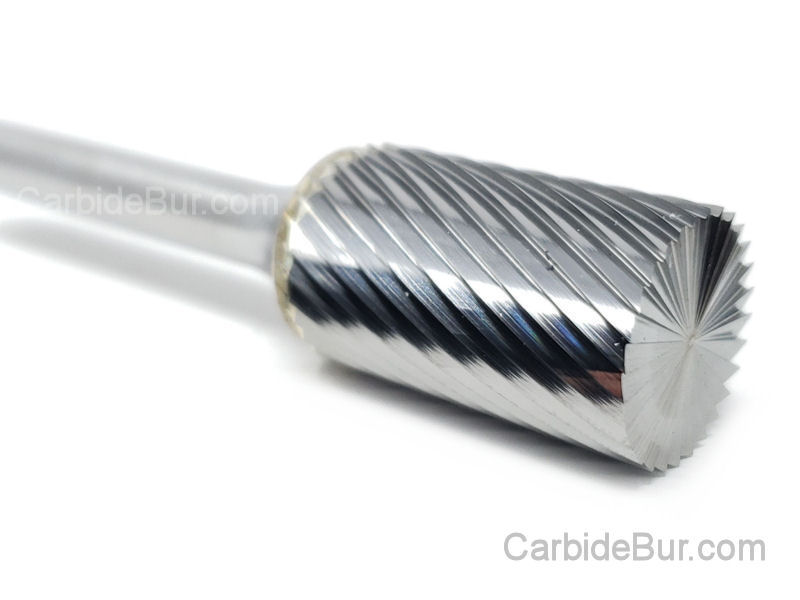
Why Long-Shank Carbide Burrs Are Useful for Hard-to-Reach Areas
When working on metal parts, the area that needs grinding or shaping is not always easy to reach. Recessed openings, deep cavities, interior surfaces, and complicated fabricated assemblies can make it difficult to position a standard carbide burr where it is needed. A long shank carbide burr can help extend your reach and make certain metalworking tasks easier without requiring you to reposition or disassemble the workpiece as often.
For welders, fabricators, machinists, and automotive enthusiasts, choosing the right long-reach tool can improve access to difficult areas. However, longer does not automatically mean better. The right choice depends on the depth of the work area, the tool setup, the material, and how much control you can maintain.

Do you need a longer reach for your die grinder tool bits?
What Is a Long-Shank Carbide Burr?
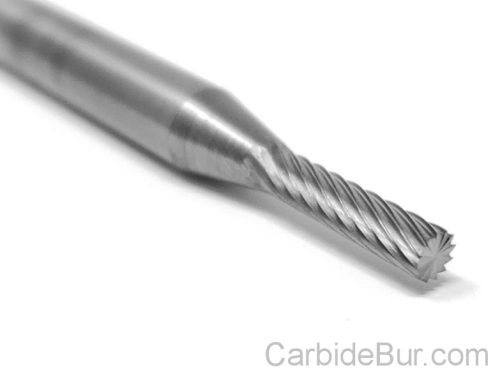
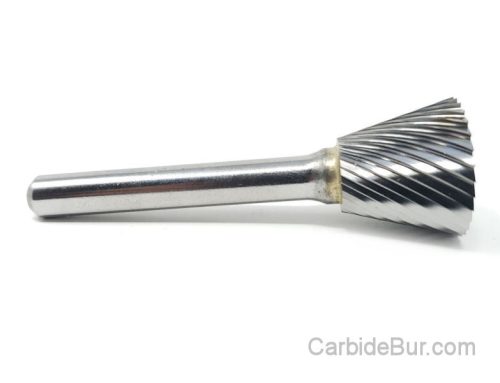
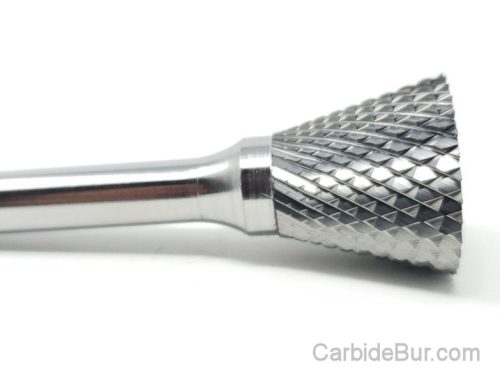
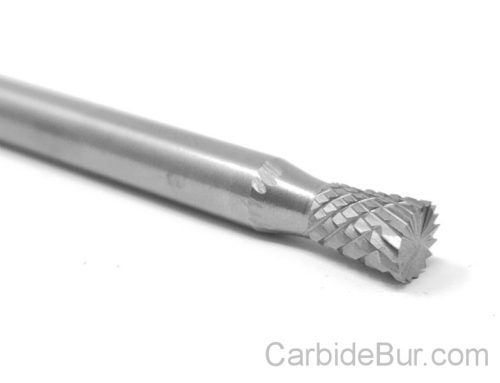
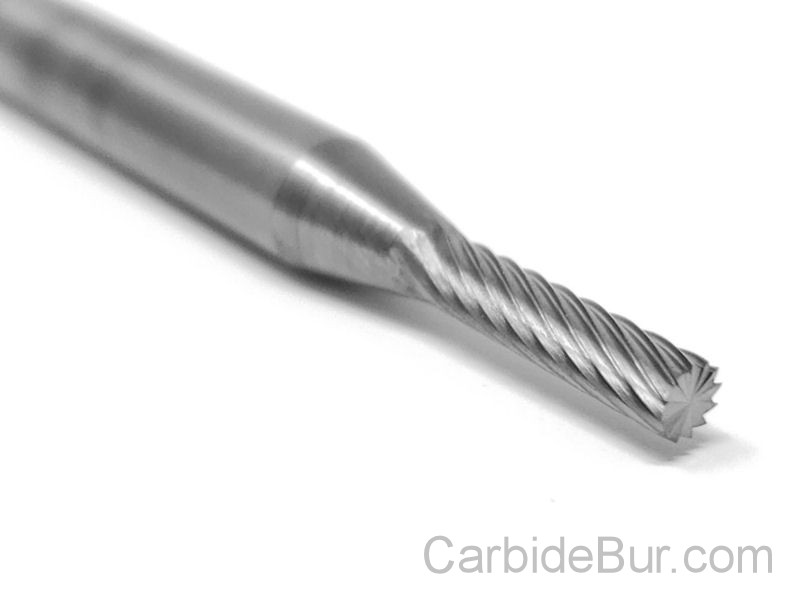
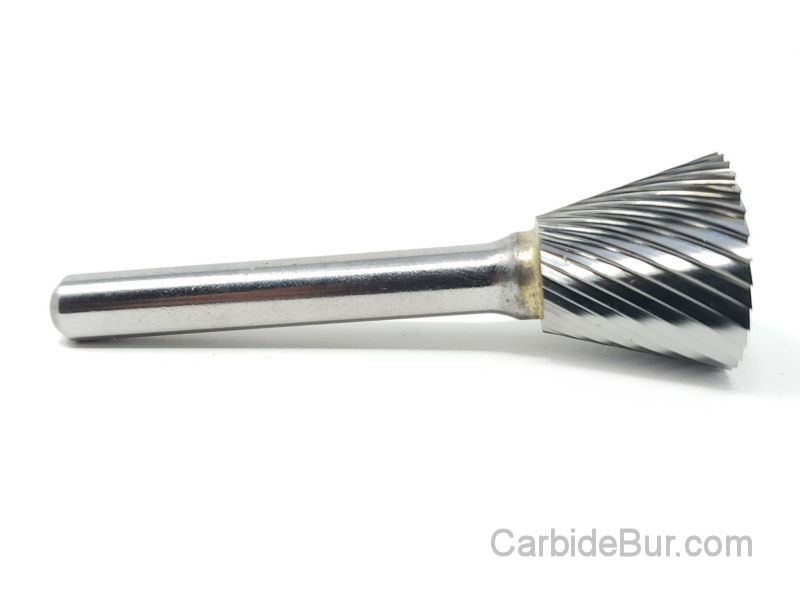
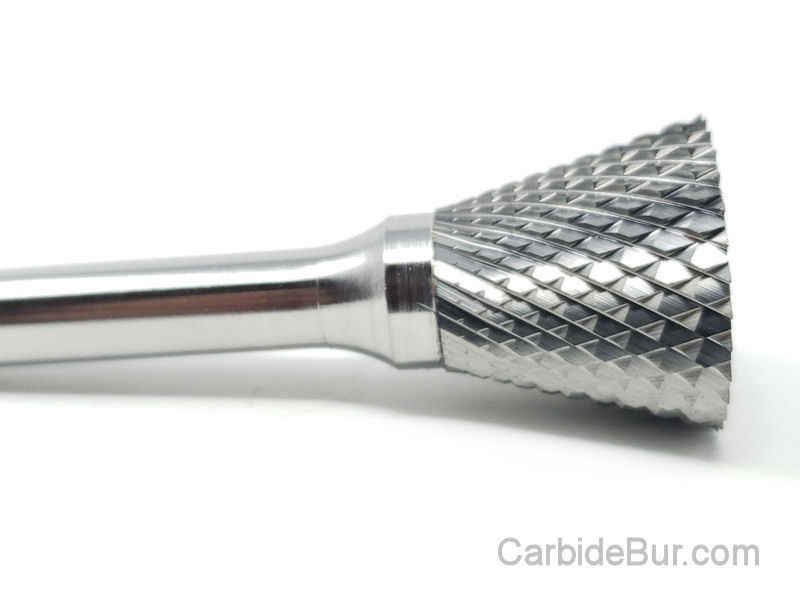
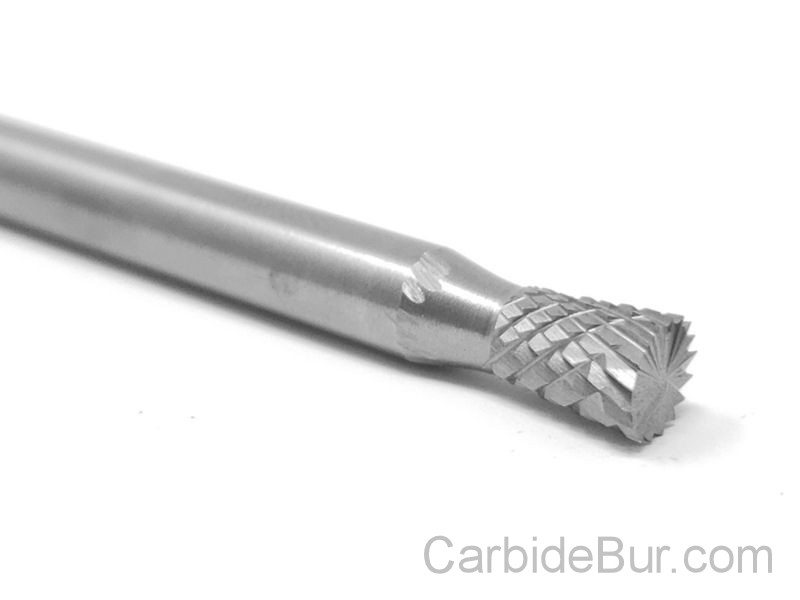
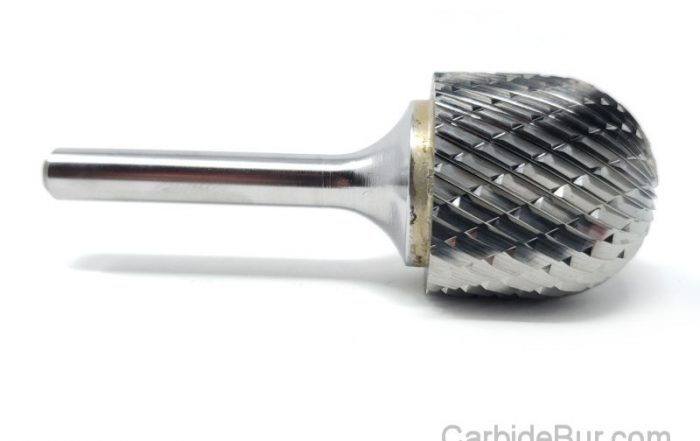
A carbide burr is a rotary cutting tool designed to remove material from metal and other compatible materials. Its cutting head features flutes that cut as the burr rotates, making it useful for deburring, shaping, smoothing edges, and refining metal surfaces.
A long-shank carbide burr has an extended shank that provides additional reach between the cutting head and the tool’s collet. This extra length can be valuable when the target area sits behind an opening, inside a cavity, or beyond the reach of a standard burr.
Long-shank burrs are available in different cutting-head shapes, diameters, and cut styles. Selecting the right combination helps you reach the work area while maintaining access to the surface you need to machine.
1. Reaching Recessed Openings and Deep Cavities
Some metal components have openings that lead to recessed surfaces. These features can appear in castings, fabricated parts, machinery components, and automotive assemblies.
A standard-length burr may not reach far enough to contact the intended surface without the tool body or collet getting in the way. A long-shank carbide burr can help bridge that distance, allowing you to work on an accessible recessed surface while keeping the grinder farther from the opening.
Potential applications include:
- Removing burrs from recessed edges and openings.
- Refining accessible surfaces inside metal components.
- Smoothing transitions within fabricated parts.
- Cleaning up selected areas of castings and machined components.
Before starting, confirm that the burr’s cutting head can reach the target without contacting surrounding surfaces. A longer shank is useful only when it provides controlled access to the area you need to work on.
2. Working on Interior Surfaces
Interior surfaces can be challenging because the surrounding material restricts the angle at which you can approach the workpiece. This is especially common with hollow components, channels, brackets, and fabricated metal structures.
A long-shank burr may provide the additional clearance needed to reach an interior edge or surface. Depending on the shape of the cutting head, it can also help with localized material removal around corners, contours, and transitions.
For example, a cylindrical burr may be appropriate for certain accessible interior edges or flatter surfaces, while a rounded or oval profile may be better suited to curved transitions. The correct profile depends on the geometry and the material being worked.
Always check the clearance around the cutting head. The burr must have enough room to rotate without striking the opposite wall, an adjacent component, or another surface that should remain untouched.
3. Getting Access to Complex Fabricated Assemblies
Fabricated assemblies often contain overlapping plates, brackets, tubes, welds, and structural features that make tool access difficult. Even when a weld or rough edge is visible, the surrounding components may prevent a standard burr from reaching it at a useful angle.
A long-shank carbide burr can help with certain cleanup and finishing tasks in these restricted areas. It may be useful for removing small burrs, refining accessible edges, or reaching localized spots that would otherwise require a different tool position.
However, complex assemblies demand careful planning. Before grinding, consider whether the cutting head can reach the intended surface without contacting nearby components. Check for obstructions, inspect the work area, and secure the assembly so it cannot shift during machining.
A long-reach tool should not be used to force access to a surface that cannot be approached safely.
4. Long-Shank Carbide Burr vs. Die Grinder Extension
A long-shank burr and a die grinder extension can both help reach difficult areas, but they are not interchangeable in every situation.
A long-shank carbide burr has an extended shank built into the tool. A die grinder extension adds reach between a compatible grinder and a compatible burr.
Choose the option based on your setup, the required clearance, and the manufacturer’s compatibility specifications.
| Feature | Long-shank carbide burr | Die grinder extension |
|---|---|---|
| How it adds reach | Uses a burr with an extended shank | Adds length between the grinder and a compatible burr |
| Best suited for | Jobs where the burr itself needs additional reach | Setups where a compatible extension provides the required clearance |
| Main consideration | Shank compatibility, rigidity, and rated operating speed | Compatibility of the grinder, extension, burr, and collets |
| Important limitation | Extra length can increase flex and vibration | Additional connections and reach can increase setup complexity |
A 4-inch or 9-inch die grinder extension may be useful for specific jobs when the grinder needs to remain farther away from the work area. The correct choice depends on the required reach and the equipment manufacturer’s instructions.
Never assume that every burr, extension, and die grinder can be combined safely. Verify that each component is designed for the intended setup and operating speed.
5. Why Excessive Side Pressure Is Dangerous
Long-reach cutting tools require particular care because the cutting head is farther from the tool’s support point. As the unsupported length increases, the setup may become more susceptible to deflection, vibration, and loss of control.
Pressing too hard against the workpiece can make these problems worse. Excessive side pressure can cause the burr to chatter, bind, or deflect unexpectedly. It can also increase stress on the shank and create a greater risk of tool damage or breakage.
For safer operation:
- Use light, controlled pressure and let the cutting flutes do the work.
- Keep the tool aligned as closely as practical with the intended cutting direction.
- Avoid forcing the burr sideways into a tight opening.
- Use only the exposed shank length permitted by the manufacturer.
- Never compensate for insufficient reach by extending the burr excessively out of the collet.
- Stop immediately if you notice unusual vibration, chatter, bending, or a change in sound.
- Keep the workpiece securely clamped and wear appropriate eye and face protection.
Do not use a long-shank burr as a lever or pry bar. It is a cutting tool, not a device for forcing parts into position.
6. Choosing the Right Long-Shank Carbide Burr
The best long-shank carbide burr depends on the material, the shape of the work area, and the amount of material that needs to be removed.
Consider these factors before choosing a tool:
Cutting-head shape: Cylindrical heads can suit some flatter surfaces and edges, while ball, oval, and tree-shaped profiles can help with different contours and transitions.
Material compatibility: Select a burr designed for the metal you are working on. Aluminum, steel, stainless steel, and cast iron can require different cutting characteristics.
Reach and clearance: Measure or estimate how far the target surface sits from the accessible opening. Choose a tool that reaches the area without unnecessary extra length.
Shank and collet compatibility: Confirm that the shank fits the grinder or rotary tool’s collet and that the entire setup is approved for the intended application.
Operating speed: Follow the manufacturer’s maximum RPM and operating instructions for the burr and any extension. Do not assume that a long-reach setup is safe at the same speed as a short, rigid setup.
The goal is to choose a tool that reaches the surface while preserving as much control and stability as possible.
7. When a Different Approach Is Better
A long-shank carbide burr is not always the right solution. If the cutting head cannot be positioned safely, the workpiece may need to be repositioned, the assembly may need to be disassembled, or another tool may be more appropriate.
A die grinder extension can be helpful when it is specifically designed for the equipment and burr being used. In other situations, a shorter tool, a different cutting-head profile, or improved access to the workpiece may provide better control.
Do not use extra reach as a substitute for a safe working angle or adequate tool support. If the burr vibrates excessively or the cutting head cannot be seen or controlled adequately, stop and reconsider the setup.
Find Long-Reach Carbide Burrs and Die Grinder Extensions
Having the right tool can make difficult metalworking jobs more manageable. Long-shank carbide burrs can help reach recessed openings, interior surfaces, and selected areas within complex fabricated assemblies. Compatible die grinder extensions can provide another option when additional clearance is needed.
At CarbideBurr.net, you can explore USA-made carbide burr tools and die grinder extensions for metalworking, fabrication, and automotive applications. Choose the cutting profile and reach that fit your job, and verify compatibility with your equipment before use.
Whether you are cleaning up a fabricated part, refining an accessible interior edge, or working around a tight assembly, the right long-reach setup can help you reach the work area without sacrificing careful technique.
Explore long-shank carbide burrs and compatible die grinder extensions at CarbideBurr.net.
Looking for Carbide Bur Tools?
Check out our entire selection of USA made carbide bur die grinder tool bits
Follow us on Twitter

Return to CarbideBur.com
Carbide Burs – 1/4″ on 1/8″ Shanks – Accessories – Aluminum Cut – Bur Sets – End Mills – Long Shank – Solid Burs
Why Long-Shank Carbide Burrs Are Useful for Hard-to-Reach Areas
Why Long-Shank Carbide Burrs Are Useful for Hard-to-Reach Areas When working on metal parts, the area that needs grinding or shaping is not always easy to reach. Recessed openings, deep cavities, interior surfaces, and complicated [...]
Choosing Carbide Burrs for Stainless Steel Fabrication
Choosing Carbide Burrs for Stainless Steel Fabrication Stainless steel is widely used in fabrication because of its corrosion resistance, strength, and durability. However, those same properties can make it challenging to machine and finish. Removing [...]
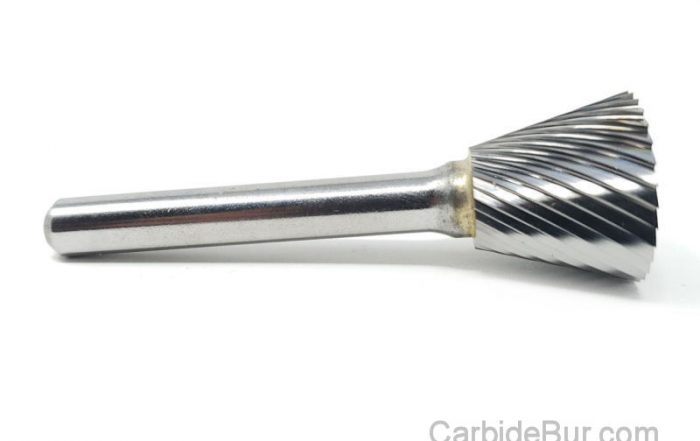
Can You Use Carbide Burrs in a Dremel? Shank Sizes Explained
Can You Use Carbide Burrs in a Dremel? Shank Sizes Explained If you use a Dremel or another rotary tool for detail work, metal shaping, or small fabrication projects, you may wonder whether you can [...]
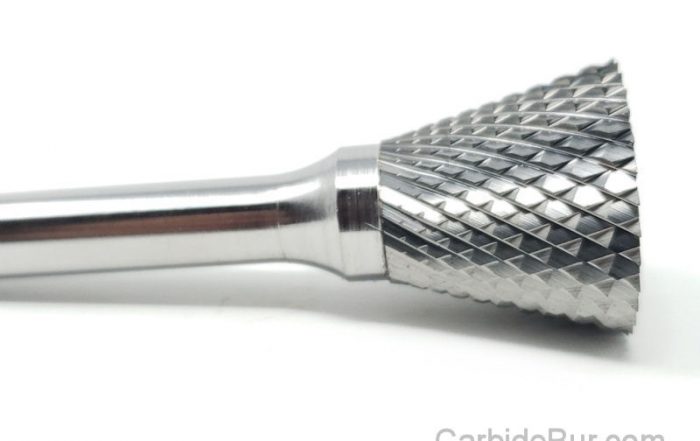
How to Choose the Best Carbide Burr for Welding and Metal Fabrication
How to Choose the Best Carbide Burr for Welding and Metal Fabrication Welding and metal fabrication often require more than joining two pieces of metal together. Once the welding is finished, fabricators frequently need to [...]
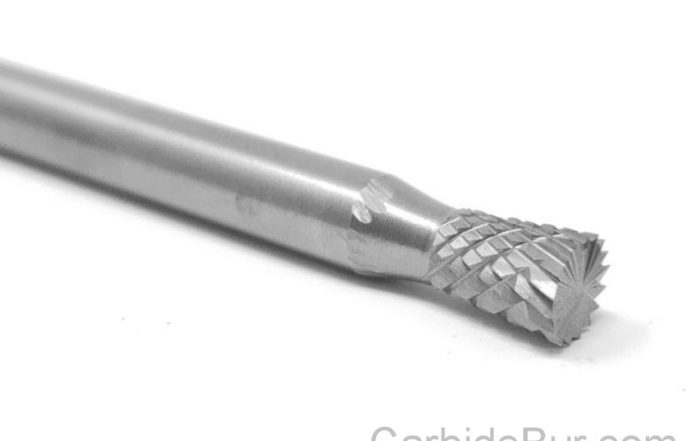
Carbide Burrs for Cylinder Heads: What Automotive Enthusiasts Need to Know
Carbide Burrs for Cylinder Heads: What Automotive Enthusiasts Need to Know Cylinder head work is an important part of engine building, restoration, and performance machining. Whether you are cleaning up casting imperfections, refining port surfaces, [...]
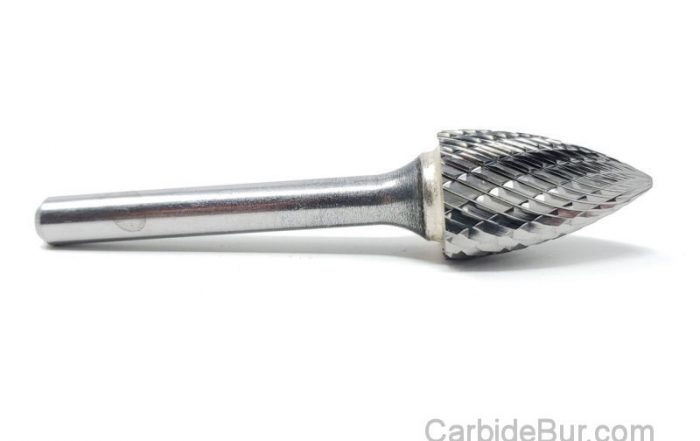
Engine Porting 101: How Carbide Burrs Help Shape Cylinder Head Ports
Engine Porting 101: How Carbide Burrs Help Shape Cylinder Head Ports Engine performance enthusiasts, automotive machinists, and engine builders often look for ways to improve airflow through an engine's cylinder heads. One technique used in [...]
When to Use a 4-Inch or 9-Inch Die Grinder Extension
When to Use a 4-Inch or 9-Inch Die Grinder Extension Metal fabrication, welding, automotive repair, and engine building often require working in places where a standard die grinder and carbide burr cannot easily reach. Recessed [...]
Why Buy USA-Made Carbide Burr Tools? What Buyers Should Compare
Why Buy USA-Made Carbide Burr Tools? What Buyers Should Compare When shopping for carbide burr tools, it's tempting to compare products based on price alone. However, professionals who use rotary cutting tools for welding, metal [...]
How to Use 1/8-Inch Rotary Bits with a Die Grinder
How to Use 1/8-Inch Rotary Bits with a Die Grinder Die grinders are popular tools for metalworking, fabrication, deburring, and precision material removal. However, many die grinders use a 1/4-inch collet, while smaller rotary tools [...]

Can You Use a Carbide Burr With an Electric Die Grinder?
Can You Use a Carbide Burr With an Electric Die Grinder? Most people don’t realize how much a carbide burr can change the way an electric die grinder works. Using the right burr type can [...]
How to Deburr Holes With a Carbide Burr
How to Deburr Holes With a Carbide Burr Most people think any tool will do for deburring holes. The truth is, using the right carbide burr with the correct size and shape changes everything. In [...]
How to Choose the Correct Carbide Burr Shank Size
How to Choose the Correct Carbide Burr Shank Size Many machinists lose hours troubleshooting tool issues caused by the wrong carbide burr shank size. Using a shank that doesn’t fit your grinder can lead to [...]