Are Expensive Carbide Burrs Worth It? Comparing Price and Performance
When shopping for carbide burrs, it’s easy to assume that the cheapest option saves money. But if you use rotary cutting tools regularly for welding, metal fabrication, automotive work, or industrial maintenance, the purchase price is only part of the equation.
The best carbide burrs for the money are the ones that deliver the right combination of cutting performance, useful service life, proper fit, and availability for your specific job. A more expensive burr is not automatically better, just as a less expensive tool is not automatically a poor choice.
Understanding what to compare can help you avoid paying for features you don’t need while making sure the tools you buy are suitable for the work you perform.

Do you need a longer reach for your die grinder tool bits?
1. Does a More Expensive Carbide Burr Cut Better?
Price alone does not determine cutting performance. The design of the cutting head, quality of the cutting edges, material compatibility, and manufacturing consistency can all affect how a carbide burr performs.
A well-matched burr should remove material effectively when used with the appropriate grinder, operating speed, and technique.
When comparing carbide burrs, consider:
- Cutting-head design: The shape and flute geometry influence how the burr contacts the workpiece and removes material.
- Material suitability: A burr intended for one material may not perform as well on another.
- Cutting-edge condition: Clean, properly formed cutting edges are important for effective material removal.
- Tool compatibility: The shank must fit the correct collet or approved adapter securely.
- Application: A burr for detailed finishing may not be the best choice for aggressive material removal.
A higher price may reflect manufacturing processes, product specifications, sourcing, or other business costs. However, you should not assume that a more expensive burr will cut faster or last longer without supporting evidence.
The best approach is to compare actual specifications and evaluate how well each tool performs in your application.
2. Compare Tool Life, Not Just the Initial Price
One of the most useful ways to compare carbide burrs is to consider how much work you can complete before a tool needs replacement.
A low-cost burr may be a good purchase if it performs reliably for occasional work. For a busy fabrication shop using the same profile every day, tool life and replacement frequency may matter much more.
Several factors affect how long a carbide burr remains useful:
- The material being cut.
- The burr’s cutting design and condition.
- Operating speed and cutting pressure.
- Whether the tool is used with the correct technique.
- Heat buildup, contamination, and material loading.
- Storage and handling between jobs.
Even a well-made burr can wear prematurely when used incorrectly. Excessive pressure, unsuitable speed, or using the wrong cutting profile can reduce performance regardless of the original price.
Rather than relying on a manufacturer’s general durability claims, compare tools under similar working conditions. Consider how consistently they cut, how frequently they need replacement, and whether the results justify the cost.
3. Calculate the Cost per Job
The initial purchase price becomes more meaningful when you compare it with the amount of useful work the tool completes.
For example, imagine two carbide burrs used for the same type of job:
| Comparison | Burr A | Burr B |
|---|---|---|
| Purchase price | $10 | $20 |
| Comparable jobs completed | 10 | 25 |
| Tool cost per job | $1.00 | $0.80 |
In this hypothetical example, Burr B costs twice as much initially but has a lower tool cost per completed job.
These numbers are illustrative, not measured performance claims about any specific product.
Use this simple formula:
Cost per job = Burr purchase price ÷ Number of comparable jobs completed
For a more complete comparison, include other relevant expenses, such as time spent changing tools, shipping costs, or production delays caused by unavailable replacements.
This approach can be especially helpful for businesses that use carbide burrs regularly. However, if two tools produce different finishes or require different amounts of operator time, compare the total cost of achieving the same acceptable result rather than counting jobs alone.
4. Make Sure the Burr Fits Your Equipment
A carbide burr that does not fit your tool correctly is poor value, regardless of its price.
Before ordering, confirm the shank diameter and compatibility with your die grinder or rotary tool.
Common sizes include:
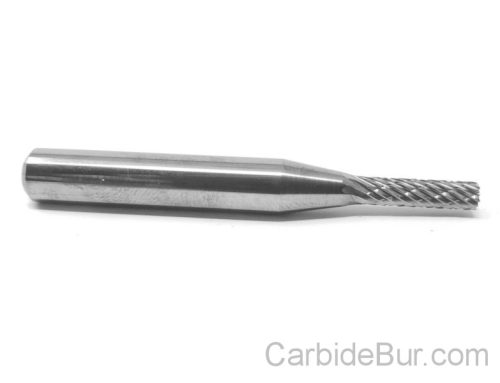
- 1/8-inch shank: Often used with small rotary tools and compatible accessories.
- 1/4-inch shank: Commonly used with many die grinders.
These sizes are not interchangeable without a compatible holding system. If you need to use a 1/8-inch rotary bit in a die grinder designed for a different shank size, verify whether the grinder supports an appropriate reducing collet or adapter.
Also check the burr’s overall length, cutting-head dimensions, and maximum rated RPM. Any collet, adapter, or extension must be compatible with the tool and accessory and rated for the intended operating conditions.
Buying the correct burr the first time helps avoid unnecessary returns, delays, and unsafe attempts to make incompatible components fit.
5. Choose the Right Burr Shape for the Job
Buying the wrong profile can waste money even when the burr itself is well made.
Different shapes are designed to suit different workpiece geometries and cutting tasks.
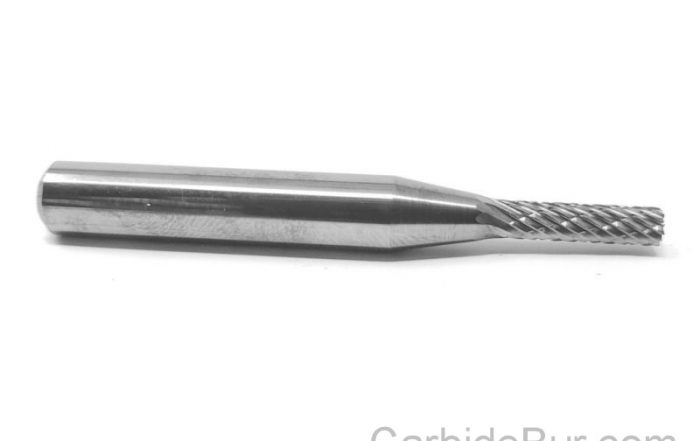
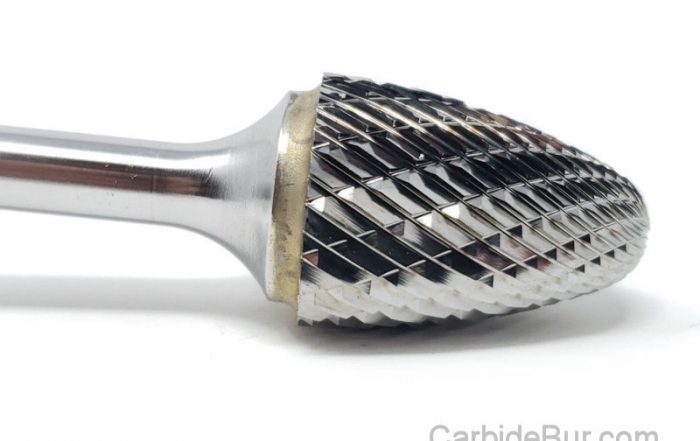
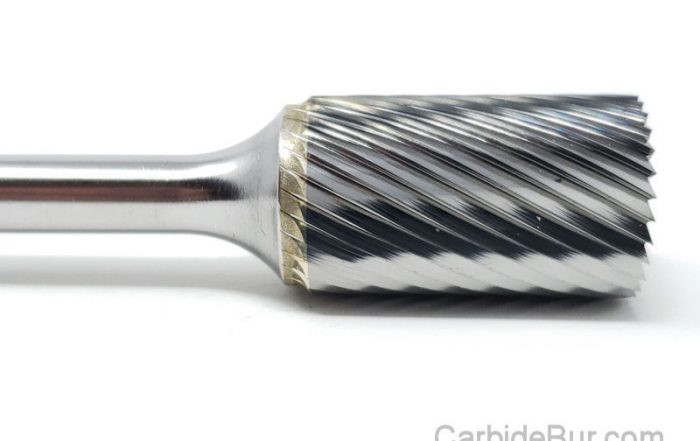
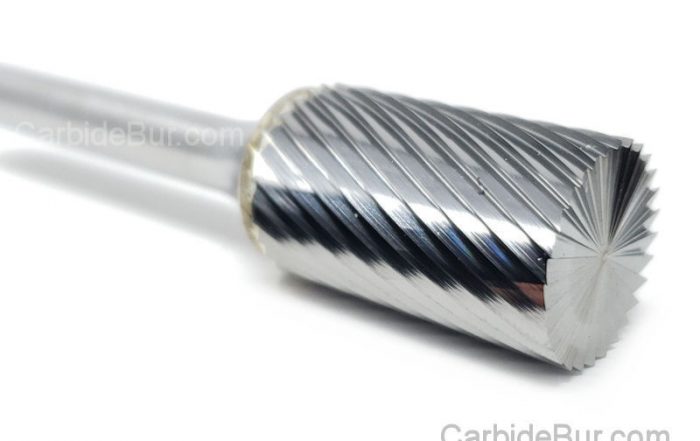
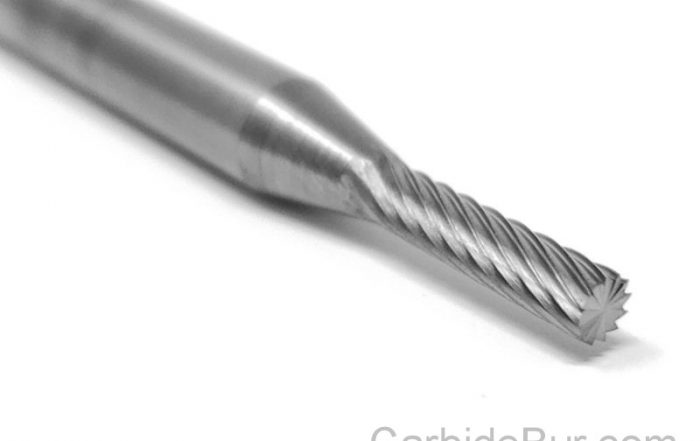
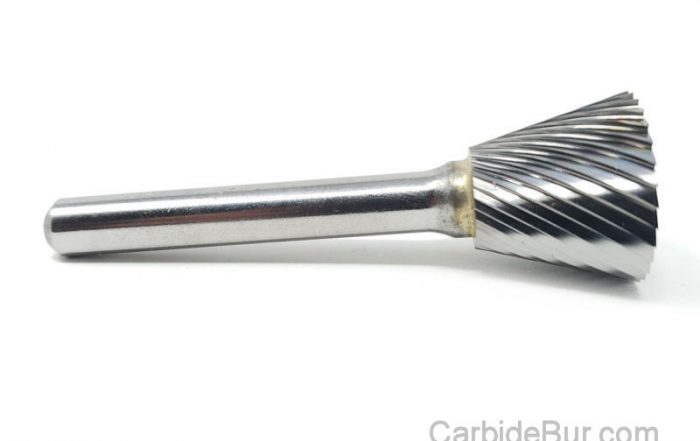
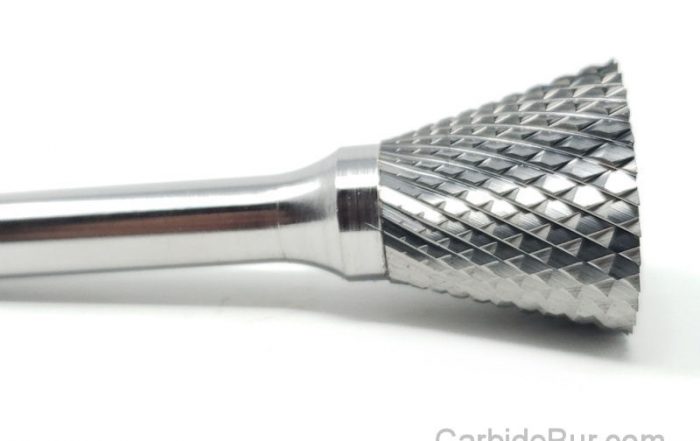
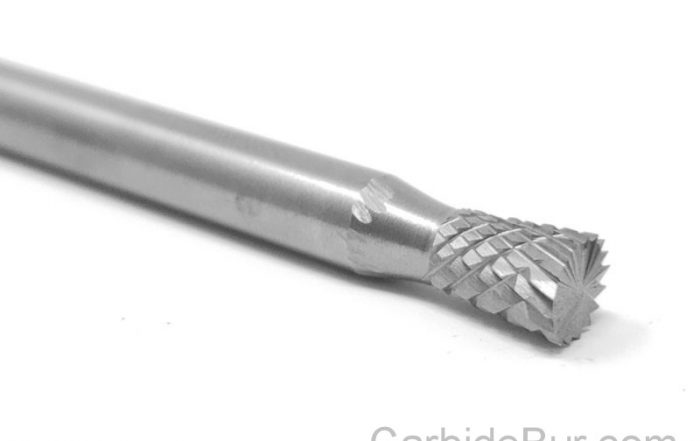
<AsyncImageGroup query={[“cylindrical carbide burr metal cutting tool isolated white background”,”ball nose carbide burr rotary cutting tool isolated white background”,”oval carbide burr rotary tool bit isolated white background”,”tapered tree carbide burr rotary cutting tool isolated white background”]} aspectRatio=”1:1″ layout=”carousel” />
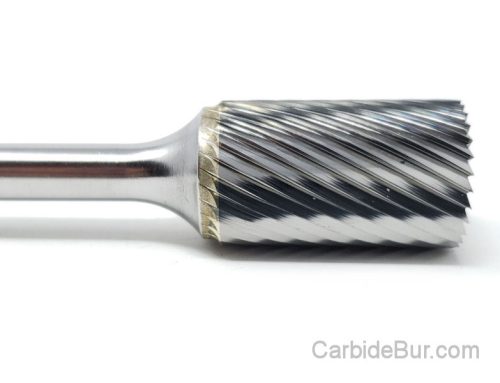
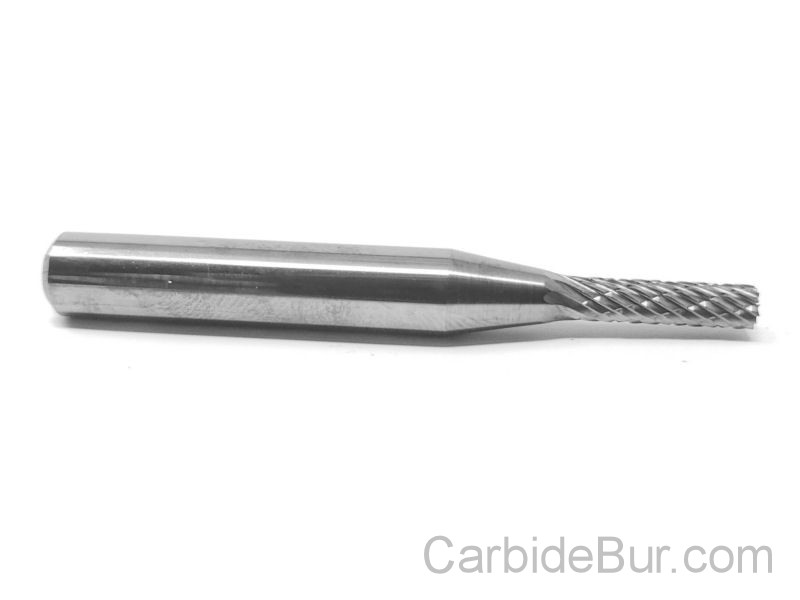
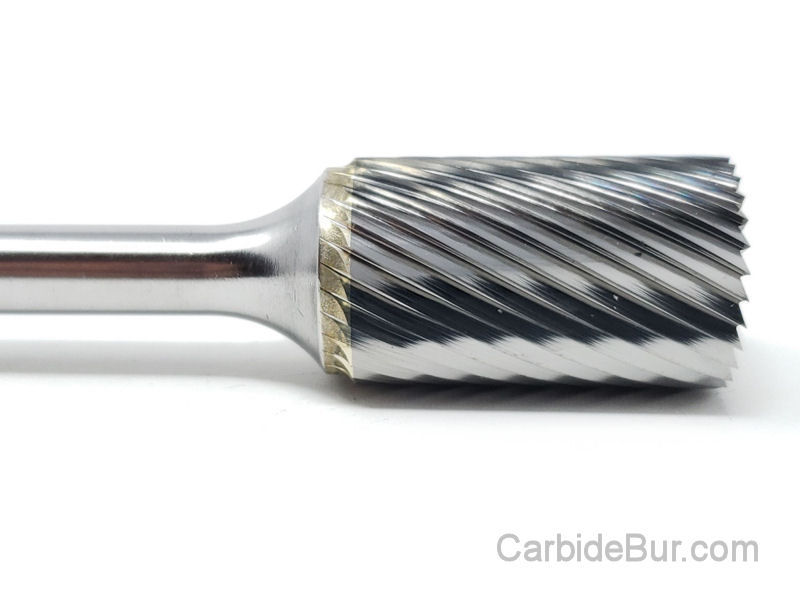
Cylindrical burrs
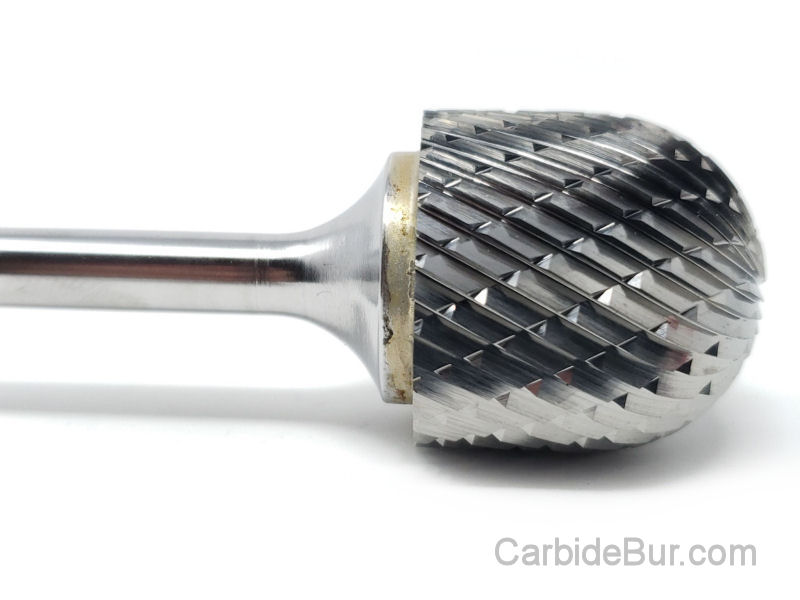
Cylindrical profiles can be useful for selected edges, flatter surfaces, and localized material removal where the shape allows controlled contact.
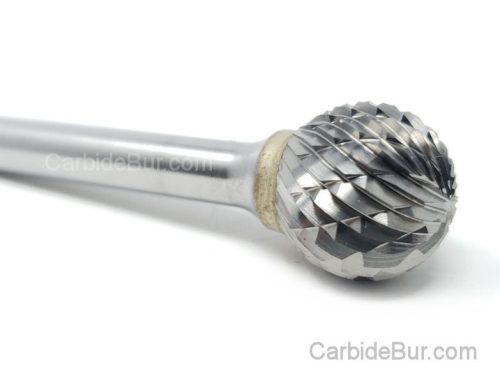
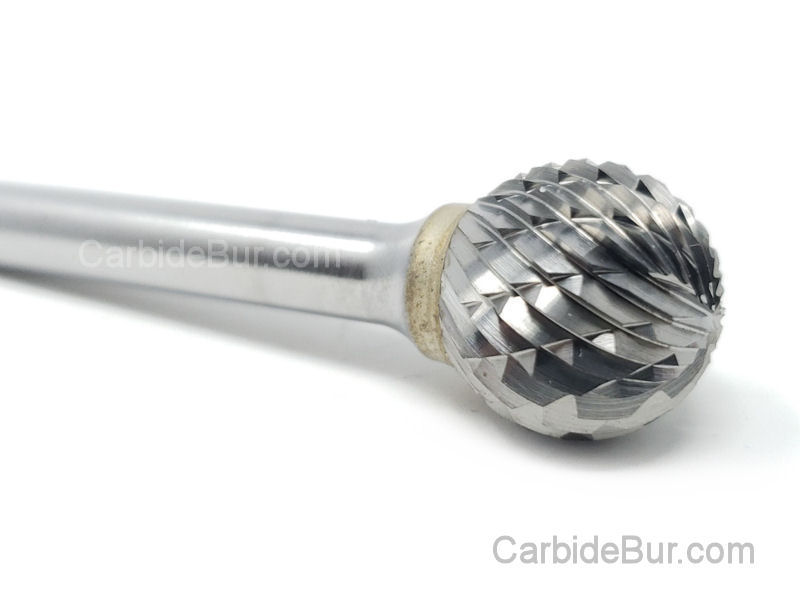
Ball burrs
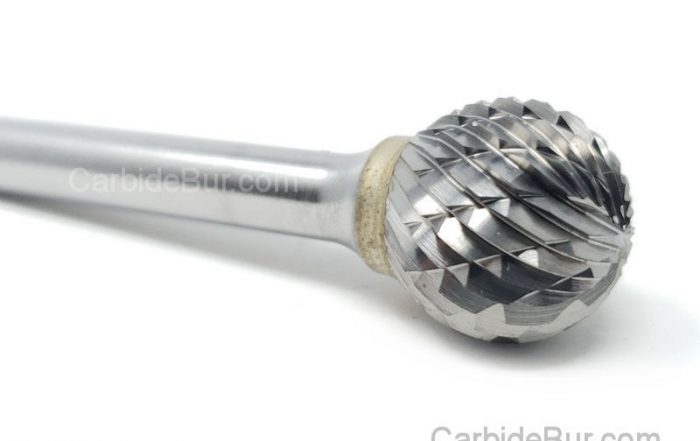
Ball-shaped burrs can help with rounded contours, curved transitions, and accessible recessed surfaces.
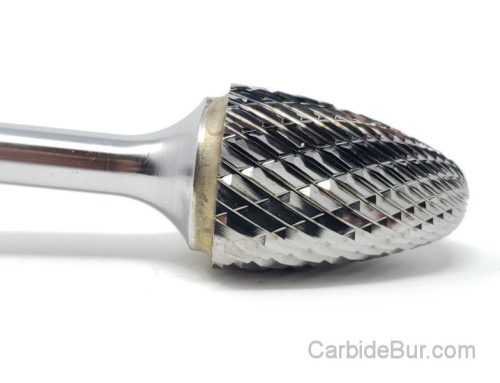
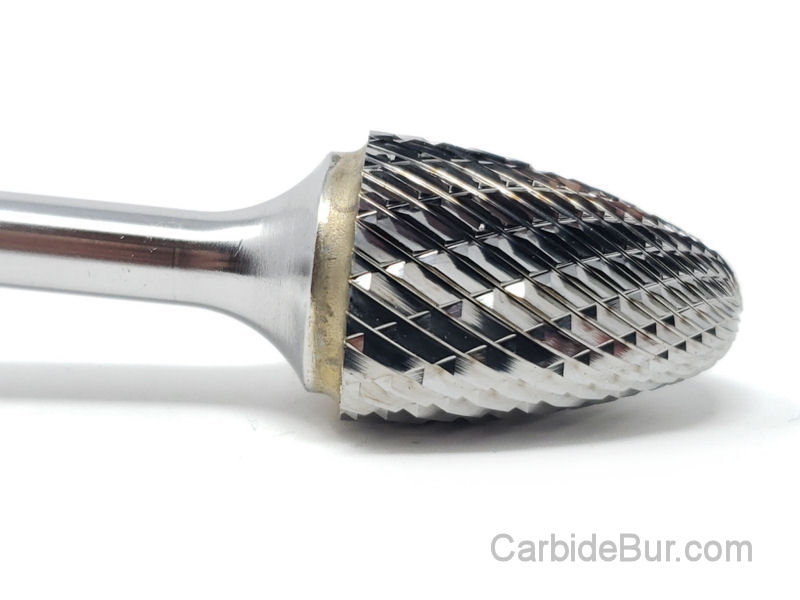
Oval burrs
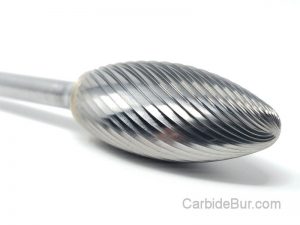
Oval profiles may be useful for refining curved surfaces and blending certain transitions.
Tree-shaped and tapered burrs
These profiles can help reach selected corners, angled surfaces, and narrow transitions.
Choose the shape according to the actual task, not simply the price or number of burrs included in a package. A well-matched individual burr may be more useful than a larger assortment containing profiles you rarely need.
6. Consider Material-Specific Performance
A carbide burr that performs well on one material may not be the right choice for another. Material compatibility is an important part of value because the wrong tool can cut poorly, load up with material, or wear prematurely.
Aluminum
Aluminum can build up on cutting flutes, reducing cutting efficiency. Burrs designed for aluminum may help reduce material loading when used correctly.
Stainless steel
Stainless steel requires suitable tooling and technique. Avoid excessive pressure and prolonged rubbing, and follow the manufacturer’s speed guidance to help manage heat and maintain effective cutting action.
Cast iron
Cast-iron cleanup may involve removing casting irregularities, deburring edges, and refining selected contours. Choose a suitable cutting profile and control the dust produced during grinding.
General steel and fabrication work
Weld cleanup, edge finishing, and shaping require a burr that matches the geometry and material-removal requirements of the job.
Choosing a burr designed for your material can be more valuable than paying extra for a general-purpose tool that is not optimized for your application.
7. Factor in Availability and Replacement Time
Tool cost is not limited to the amount you pay at checkout. If a frequently used burr is unavailable when you need it, the delay can disrupt your work.
For professional users, consistent access to commonly used sizes and profiles can simplify purchasing and inventory planning.
Before choosing a supplier, check:
In-stock availability: Is the exact size and profile available now?
Order processing: When are orders normally processed and shipped?
Shipping costs: Does the final order total remain competitive after shipping?
Repeat ordering: Can you easily find the same specification again when you need a replacement?
Product selection: Does the supplier carry the different profiles and accessories required for your work?
A tool that is readily available may be more practical for a shop that needs dependable replenishment. However, verify current stock and shipping terms rather than assuming every item is immediately available.
8. Is Buying USA-Made Carbide Burrs Worth the Extra Cost?
Some buyers specifically prefer USA-made carbide burrs because they want to support domestic manufacturing or purchase tools with a clearly identified manufacturing origin.
That preference can be an important part of the buying decision. However, country of origin alone does not guarantee a particular cutting performance, service life, or price-to-performance ratio.
When comparing American-made tools with alternatives, consider:
- Whether the product’s manufacturing origin is clearly stated and verifiable.
- Whether the dimensions and cutting specifications meet your needs.
- Whether the supplier provides useful product information.
- Whether the tool is suitable for your material and equipment.
- Whether the overall purchase cost fits your budget.
A higher price may be worthwhile if the product better meets your purchasing priorities or offers measurable value in your application. But the decision should be based on the actual product and your requirements, not an assumption that price or origin automatically guarantees superior performance.
9. What to Look for When Buying Carbide Burrs
Before placing an order, compare the details that matter most to your work.
| Factor | What to look for |
|---|---|
| Cutting performance | A suitable profile and cutting design for the material |
| Service life | Consistent performance under comparable working conditions |
| Fit | Correct shank diameter and compatible holder |
| Safety | Verified speed rating and compatible equipment |
| Availability | Clear in-stock status for the required size |
| Manufacturing origin | Accurate country-of-origin information |
| Price | Total cost, including shipping and replacement frequency |
| Support | Clear product specifications and responsive assistance |
This checklist helps separate measurable purchasing factors from assumptions. It also makes it easier to compare products from different suppliers without relying solely on advertising claims.
10. Why Consider Carbide Burrs from CarbideBurr.net?
At CarbideBurr.net, we offer USA-made carbide burr tools for metalworking, welding cleanup, automotive applications, and general fabrication.
Our product selection includes options for different cutting tasks, so you can compare profiles and sizes according to your specific requirements. We also offer specialized options, including aluminum-cut burrs and compatible accessories for certain die grinder setups.
When shopping with us, consider the product specifications, shank dimensions, cutting profile, and intended application before ordering. Our website is designed to help you explore the available options and identify the tools that fit your work.
We also emphasize in-stock availability and same-day shipping for qualifying orders, subject to current stock and order-processing terms. Checking the product listing and shipping information before checkout will help you understand what to expect.
The goal is to help you find a suitable tool for the job, rather than encouraging you to pay more than necessary for features you may not need.
Find the Best Carbide Burrs for the Money
So, are expensive carbide burrs worth it? Sometimes—but the answer depends on what you receive for the additional cost.
The best carbide burrs for the money offer a practical balance of cutting performance, service life, compatibility, availability, and total cost per completed job. A cheaper burr can be excellent value for occasional use, while a higher-priced tool may make sense when it delivers a demonstrable advantage for frequent or demanding work.
At CarbideBurr.net, you can explore our USA-made carbide burr tools, compare available profiles and specifications, and choose a tool suited to your application.
Shop carbide burrs at CarbideBurr.net and compare the features that matter most for your next metalworking project.
Looking for Carbide Bur Tools?
Check out our entire selection of USA made carbide bur die grinder tool bits
Follow us on Twitter

Return to CarbideBur.com
Carbide Burs – 1/4″ on 1/8″ Shanks – Accessories – Aluminum Cut – Bur Sets – End Mills – Long Shank – Solid Burs
Are Expensive Carbide Burrs Worth It? Comparing Price and Performance
Are Expensive Carbide Burrs Worth It? Comparing Price and Performance When shopping for carbide burrs, it's easy to assume that the cheapest option saves money. But if you use rotary cutting tools regularly for welding, [...]
Carbide Burr vs. Grinding Stone: Which Is Better for Metal Removal?
Carbide Burr vs. Grinding Stone: Which Is Better for Metal Removal? When you need to remove metal, smooth a rough edge, or shape a metal component, two common options are carbide burrs and grinding stones. [...]
Carbide Burr Safety: RPM, Eye Protection, and Common Mistakes
Carbide Burr Safety: RPM, Eye Protection, and Common Mistakes Carbide burrs are versatile cutting tools used for metal fabrication, welding cleanup, engine porting, deburring, and general material removal. When used correctly, they can help remove [...]
How to Stop Aluminum from Clogging Your Carbide Burr
How to Stop Aluminum from Clogging Your Carbide Burr Aluminum is widely used in automotive work, welding, metal fabrication, aerospace components, and general machining. It is lightweight, relatively easy to machine, and versatile across many [...]
Carbide Burrs for Intake Manifolds: Shaping, Cleanup, and Fitment
Carbide Burrs for Intake Manifolds: Shaping, Cleanup, and Fitment Intake manifold work often involves more than simply bolting a component onto an engine. Depending on the application, metal intake components may have casting irregularities, rough [...]
Why Long-Shank Carbide Burrs Are Useful for Hard-to-Reach Areas
Why Long-Shank Carbide Burrs Are Useful for Hard-to-Reach Areas When working on metal parts, the area that needs grinding or shaping is not always easy to reach. Recessed openings, deep cavities, interior surfaces, and complicated [...]
Choosing Carbide Burrs for Stainless Steel Fabrication
Choosing Carbide Burrs for Stainless Steel Fabrication Stainless steel is widely used in fabrication because of its corrosion resistance, strength, and durability. However, those same properties can make it challenging to machine and finish. Removing [...]
Can You Use Carbide Burrs in a Dremel? Shank Sizes Explained
Can You Use Carbide Burrs in a Dremel? Shank Sizes Explained If you use a Dremel or another rotary tool for detail work, metal shaping, or small fabrication projects, you may wonder whether you can [...]
How to Choose the Best Carbide Burr for Welding and Metal Fabrication
How to Choose the Best Carbide Burr for Welding and Metal Fabrication Welding and metal fabrication often require more than joining two pieces of metal together. Once the welding is finished, fabricators frequently need to [...]
Carbide Burrs for Cylinder Heads: What Automotive Enthusiasts Need to Know
Carbide Burrs for Cylinder Heads: What Automotive Enthusiasts Need to Know Cylinder head work is an important part of engine building, restoration, and performance machining. Whether you are cleaning up casting imperfections, refining port surfaces, [...]
Engine Porting 101: How Carbide Burrs Help Shape Cylinder Head Ports
Engine Porting 101: How Carbide Burrs Help Shape Cylinder Head Ports Engine performance enthusiasts, automotive machinists, and engine builders often look for ways to improve airflow through an engine's cylinder heads. One technique used in [...]
When to Use a 4-Inch or 9-Inch Die Grinder Extension
When to Use a 4-Inch or 9-Inch Die Grinder Extension Metal fabrication, welding, automotive repair, and engine building often require working in places where a standard die grinder and carbide burr cannot easily reach. Recessed [...]