Carbide Burr Shapes Explained: Cylindrical, Ball, Oval, and Tree Burrs
Choosing the right carbide burr shape can make metalworking easier, improve control, and help you remove material where it is actually needed. Whether you are cleaning up welds, shaping metal, smoothing rough edges, or working inside a narrow opening, the shape of your burr matters.
Different carbide burr shapes and uses are suited to different jobs. A cylindrical burr can help with flat surfaces and edges, while a ball burr is useful for rounded contours and recessed areas. Oval and tree-shaped burrs offer other options for curved surfaces, corners, and detailed shaping.
Instead of buying a random assortment of burrs, start by considering the surfaces you need to work on, the amount of material you want to remove, and the access your tool requires.

Do you need a longer reach for your die grinder tool bits?
Why Carbide Burr Shape Matters
Carbide burrs are rotary cutting tools with fluted cutting edges that remove material as the burr spins. They are commonly used for metal fabrication, welding cleanup, automotive work, casting cleanup, and general metal shaping.
The cutting head’s geometry determines how it contacts the workpiece. A broad cylindrical head behaves differently from a rounded ball or a tapered tree shape. Selecting the right profile can help you reach specific areas while maintaining better control over material removal.
Three factors should guide your choice:
- Workpiece geometry: Are you working on a flat face, rounded contour, internal corner, or narrow groove?
- Access: Can the burr reach the area without the shank or tool body interfering?
- Cutting requirements: Do you need to remove material, refine a contour, or clean up an edge?
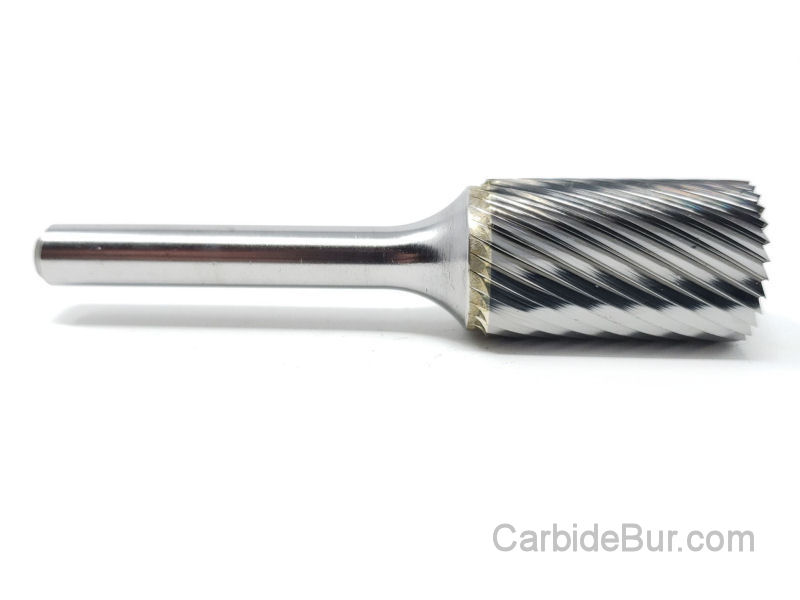
1. Cylindrical Carbide Burrs: Flat Surfaces, Edges, and Grooves
Best for: Flat areas, straight edges, slots, and controlled material removal.
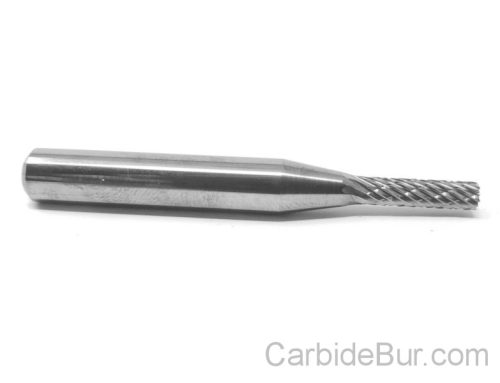
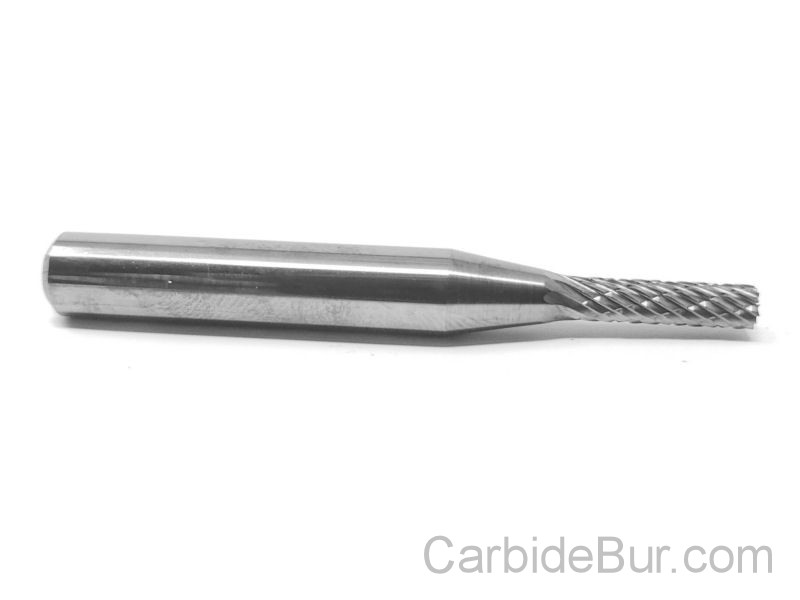
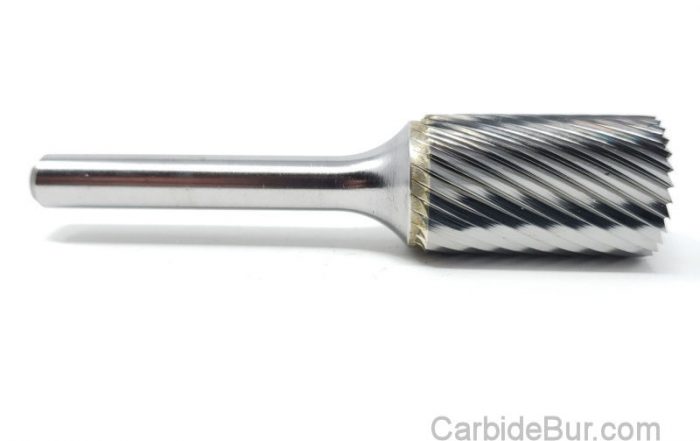
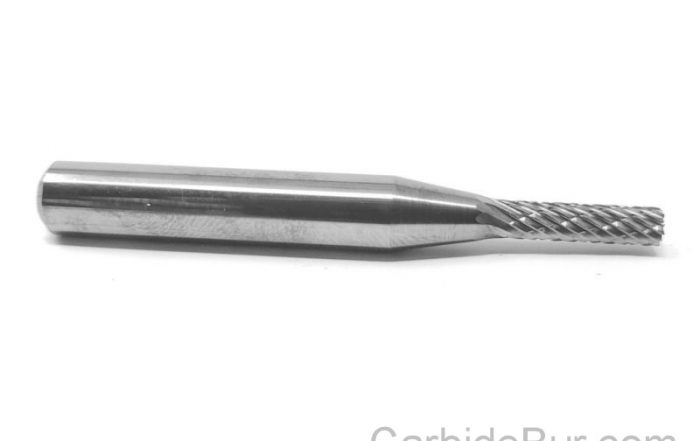
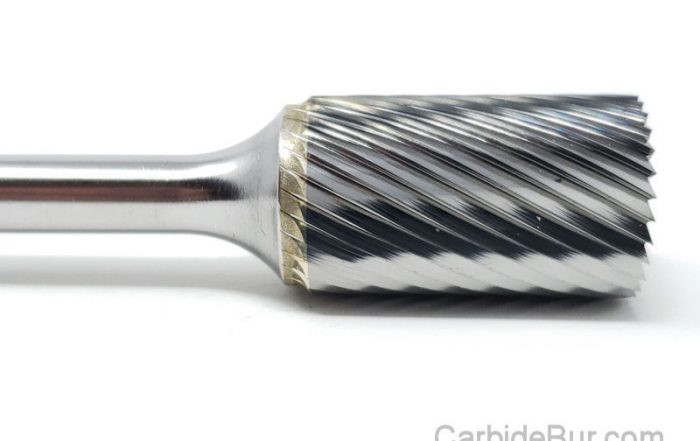
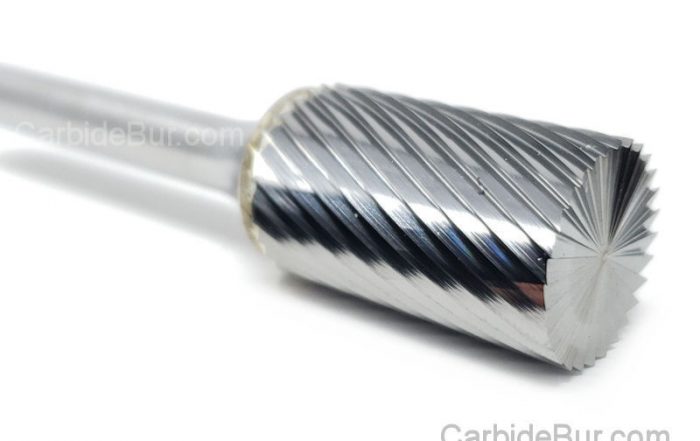
Cylindrical carbide burrs have a straight-sided cutting head. Depending on the exact profile, the end may be flat or shaped differently, so check the specific product before selecting one.
The straight sides make cylindrical burrs useful when you need to work along a flat surface or refine an edge. They can also help with shaping grooves and openings when the burr’s diameter and head length are appropriate for the job.
Common applications include:
- Removing localized high spots from metal
- Cleaning up edges after cutting or fabrication
- Refining slots and openings
- Working on selected areas of cast metal
- Shaping flat or relatively straight surfaces
Selection tip: Match the head diameter to the area you need to reach. A burr that is too large may remove material from neighboring surfaces, while one that is too small may require more passes.
2. Ball Carbide Burrs: Rounded Contours and Recessed Areas
Best for: Curved contours, rounded recesses, and concave areas.
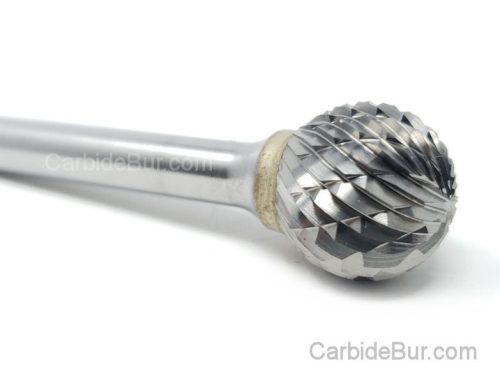
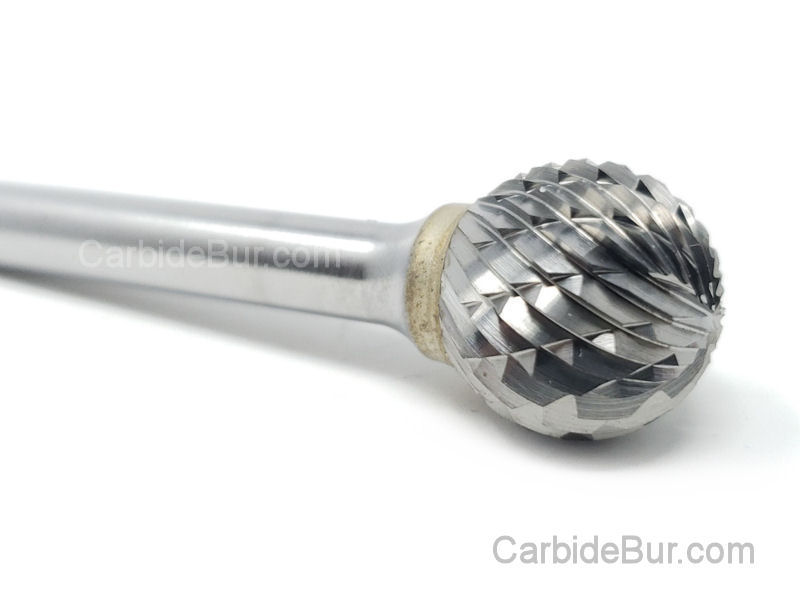
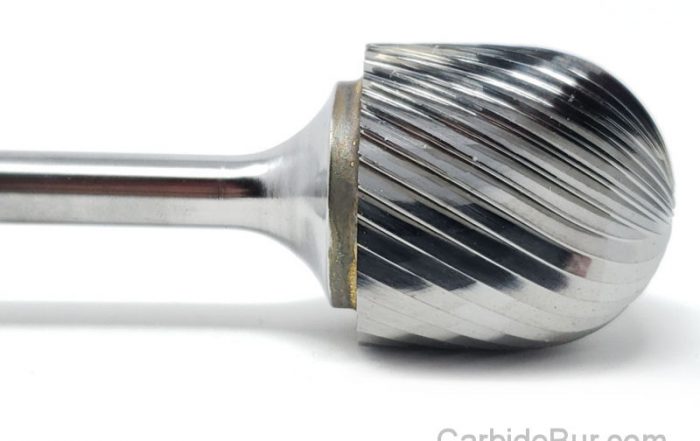
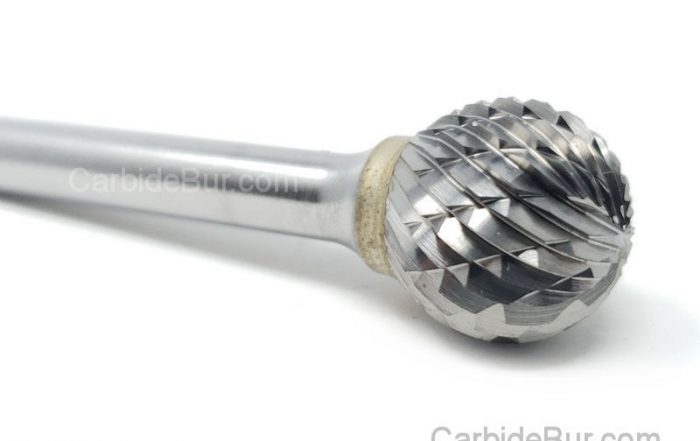
Ball burrs have a rounded cutting head that can work along curved surfaces and inside rounded recesses. Their shape makes them useful when a straight-sided tool would not follow the contour as naturally.
Metalworkers may use ball burrs for:
- Shaping rounded contours
- Working inside curved recesses
- Refining concave areas
- Creating or modifying rounded transitions
- Removing small amounts of material from localized areas
Ball burrs can also be useful for detail work where the cutting area is curved rather than flat. The diameter of the ball determines how tightly it can fit into a recess.
Selection tip: Choose a ball diameter that fits the target area while leaving enough clearance for safe, controlled operation. Avoid using a large ball burr in a small opening where it cannot move freely.
3. Oval Carbide Burrs: Curves and Smooth Transitions
Best for: Curved surfaces, blended contours, and rounded transitions.
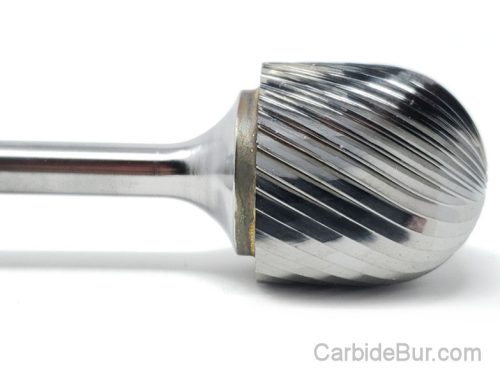
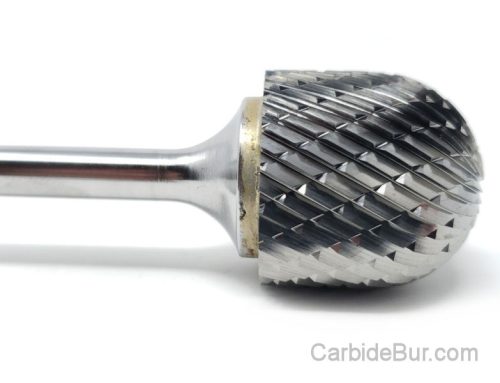
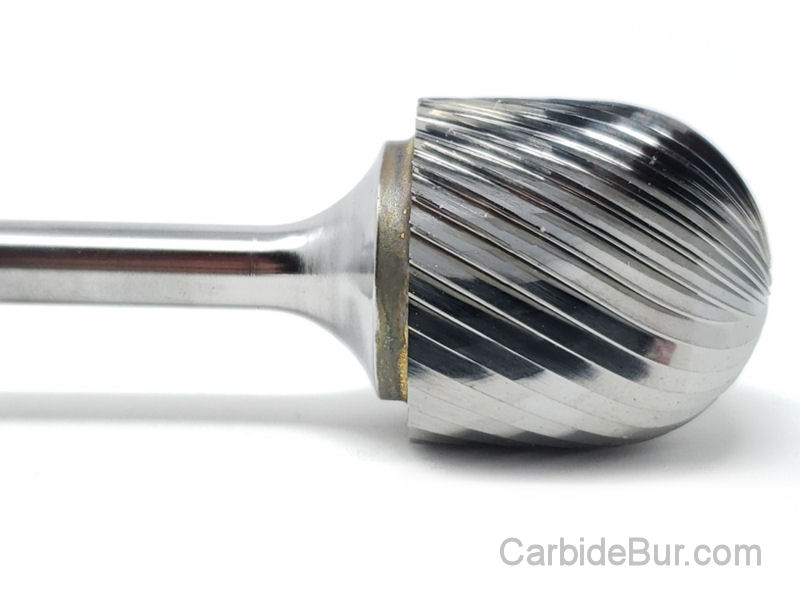
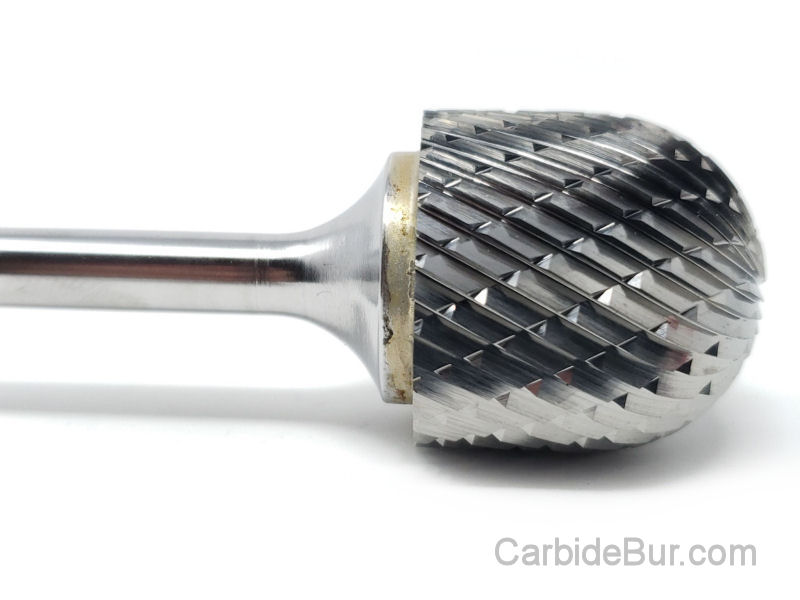
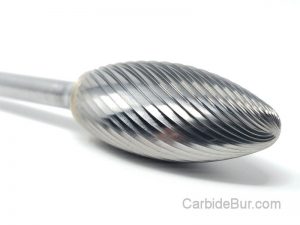
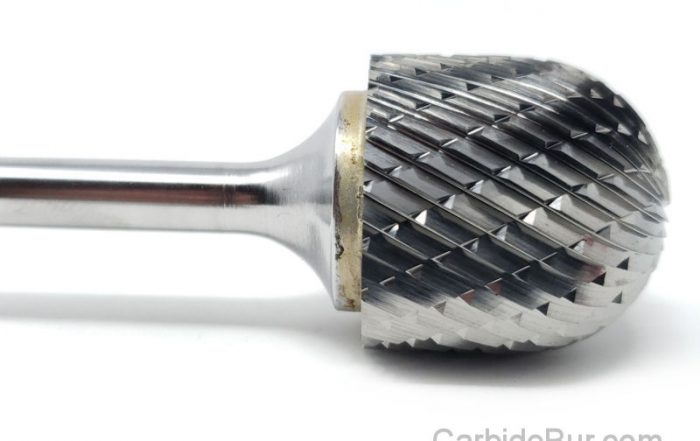
Oval carbide burrs have an elongated, rounded cutting head. They combine a curved profile with a longer working surface than a small ball burr, making them useful for certain contouring tasks.
Typical applications include:
- Shaping curved metal surfaces
- Refining transitions between adjoining areas
- Working on rounded edges
- Removing material from irregular contours
- Cleaning up selected areas of castings and fabricated parts
An oval burr may be a practical choice when a ball burr is too localized for the area and a cylindrical burr is too straight-sided for the contour.
Selection tip: Consider both the head’s width and length. A longer head can contact more of the workpiece, but it also requires adequate room to maneuver without touching nearby surfaces.
4. Tree-Shaped Carbide Burrs: Angles, Corners, and Narrow Areas
Best for: Angled surfaces, selected internal corners, tapered contours, and detailed shaping.
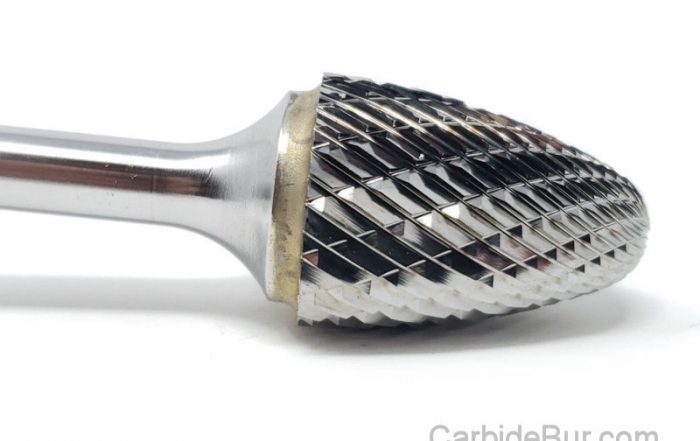
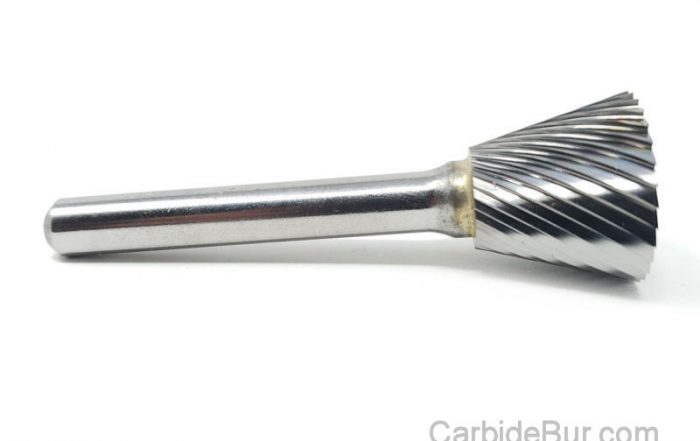
Tree-shaped burrs have a tapered or pointed profile, although the exact geometry varies by design. Their narrower end can help access areas that a broad cylindrical burr cannot reach as easily.
They can be useful for:
- Shaping angled surfaces
- Refining selected internal corners
- Working along tapered contours
- Reaching narrow areas when the profile and dimensions allow
- Removing material around complex edges
Tree burrs are available in different tapers and tip shapes. A pointed tree profile may reach certain corners more effectively, while a rounded-end version may be more appropriate when you do not want a sharp point contacting the workpiece.
Selection tip: Match the taper to the angle and clearance of the area. Do not assume every tree burr will fit every narrow opening; check the head diameter, tip dimensions, and overall length.
Quick Guide: Which Carbide Burr Shape Should You Choose?
| Your task | Shape to consider | Why |
|---|---|---|
| Working on a flat area | Cylindrical | Straight-sided cutting surface |
| Refining a straight edge | Cylindrical | Useful for localized edge cleanup |
| Shaping a rounded recess | Ball | Rounded head follows curved areas |
| Refining a curved transition | Oval | Elongated, rounded profile |
| Working along a tapered contour | Tree | Tapered head can reach angled areas |
| Reaching a specific internal corner | Tree or cylindrical | Depends on corner geometry and clearance |
| Working in a narrow opening | Smaller suitable profile | Head dimensions must fit the opening |
These are starting points, not rigid rules. The best choice depends on the exact burr profile, workpiece geometry, material, and the result you need.
Don’t Forget the Cutting Profile
Shape is only one part of choosing a carbide burr. The cutting profile also matters.
Single-cut and double-cut burrs have different flute patterns and cutting characteristics. Depending on the material and technique, one may provide a more suitable cutting action or level of control than the other.
Material compatibility is important, too. Aluminum can build up on unsuitable cutting flutes, so consider a burr specifically designed for aluminum when working with that metal.
Before ordering, check:
- Burr head shape and diameter
- Cutting profile and intended material
- Shank diameter and tool compatibility
- Maximum rated operating speed
- Overall length and working clearance
A well-matched burr is generally more useful than buying several shapes without a clear application in mind.
How to Choose the Right Carbide Burr for Your Work
If you regularly work with metal, start by identifying the tasks you perform most often.
For flat surfaces and straight edges, consider a cylindrical profile. For rounded recesses, look at ball burrs. If you frequently refine curved transitions, an oval profile may suit your work. For tapered contours and certain corners, a tree-shaped burr may offer better access.
Think about your equipment, too. The burr must have a compatible shank and be rated for the tool’s operating speed. A longer burr or a different head diameter may help with reach, but only if the accessory is appropriate for the tool and the application.
Use controlled pressure, secure the workpiece, and avoid forcing the burr into the material. Wear appropriate eye and face protection, and follow the safety instructions supplied with your tool and accessory.
Shop Carbide Burr Shapes and Cutting Profiles at CarbideBurr.net
The right carbide burr can help you approach a metalworking task with more control and less guesswork. Choosing the correct shape helps you focus on the area that needs attention, whether you are smoothing an edge, shaping a contour, or working in a recessed area.
At CarbideBurr.net, explore our USA-made carbide burr tools and available shapes and cutting profiles for metalworking applications.
Rather than purchasing a random assortment, choose the profiles that match the jobs you perform most often. Check the product specifications to confirm the shape, size, shank compatibility, and cutting profile before ordering.
Find the right carbide burr for your next project at CarbideBurr.net.
Looking for Carbide Bur Tools?
Check out our entire selection of USA made carbide bur die grinder tool bits
Follow us on Twitter

Return to CarbideBur.com
Carbide Burs – 1/4″ on 1/8″ Shanks – Accessories – Aluminum Cut – Bur Sets – End Mills – Long Shank – Solid Burs
Carbide Burr Shapes Explained: Cylindrical, Ball, Oval, and Tree Burrs
Carbide Burr Shapes Explained: Cylindrical, Ball, Oval, and Tree Burrs Choosing the right carbide burr shape can make metalworking easier, improve control, and help you remove material where it is actually needed. Whether you are [...]
How to Get More Life from Your Carbide Burrs
How to Get More Life from Your Carbide Burrs Carbide burrs are valuable tools for welders, fabricators, machinists, automotive enthusiasts, and anyone who regularly works with metal. They can remove material, shape edges, clean up [...]
Are Expensive Carbide Burrs Worth It? Comparing Price and Performance
Are Expensive Carbide Burrs Worth It? Comparing Price and Performance When shopping for carbide burrs, it's easy to assume that the cheapest option saves money. But if you use rotary cutting tools regularly for welding, [...]
Carbide Burr vs. Grinding Stone: Which Is Better for Metal Removal?
Carbide Burr vs. Grinding Stone: Which Is Better for Metal Removal? When you need to remove metal, smooth a rough edge, or shape a metal component, two common options are carbide burrs and grinding stones. [...]
Carbide Burr Safety: RPM, Eye Protection, and Common Mistakes
Carbide Burr Safety: RPM, Eye Protection, and Common Mistakes Carbide burrs are versatile cutting tools used for metal fabrication, welding cleanup, engine porting, deburring, and general material removal. When used correctly, they can help remove [...]
How to Stop Aluminum from Clogging Your Carbide Burr
How to Stop Aluminum from Clogging Your Carbide Burr Aluminum is widely used in automotive work, welding, metal fabrication, aerospace components, and general machining. It is lightweight, relatively easy to machine, and versatile across many [...]
Carbide Burrs for Intake Manifolds: Shaping, Cleanup, and Fitment
Carbide Burrs for Intake Manifolds: Shaping, Cleanup, and Fitment Intake manifold work often involves more than simply bolting a component onto an engine. Depending on the application, metal intake components may have casting irregularities, rough [...]
Why Long-Shank Carbide Burrs Are Useful for Hard-to-Reach Areas
Why Long-Shank Carbide Burrs Are Useful for Hard-to-Reach Areas When working on metal parts, the area that needs grinding or shaping is not always easy to reach. Recessed openings, deep cavities, interior surfaces, and complicated [...]
Choosing Carbide Burrs for Stainless Steel Fabrication
Choosing Carbide Burrs for Stainless Steel Fabrication Stainless steel is widely used in fabrication because of its corrosion resistance, strength, and durability. However, those same properties can make it challenging to machine and finish. Removing [...]
Can You Use Carbide Burrs in a Dremel? Shank Sizes Explained
Can You Use Carbide Burrs in a Dremel? Shank Sizes Explained If you use a Dremel or another rotary tool for detail work, metal shaping, or small fabrication projects, you may wonder whether you can [...]
How to Choose the Best Carbide Burr for Welding and Metal Fabrication
How to Choose the Best Carbide Burr for Welding and Metal Fabrication Welding and metal fabrication often require more than joining two pieces of metal together. Once the welding is finished, fabricators frequently need to [...]
Carbide Burrs for Cylinder Heads: What Automotive Enthusiasts Need to Know
Carbide Burrs for Cylinder Heads: What Automotive Enthusiasts Need to Know Cylinder head work is an important part of engine building, restoration, and performance machining. Whether you are cleaning up casting imperfections, refining port surfaces, [...]