Carbide Burrs for Cylinder Heads: What Automotive Enthusiasts Need to Know
Cylinder head work is an important part of engine building, restoration, and performance machining. Whether you are cleaning up casting imperfections, refining port surfaces, or preparing a cylinder head for further machining, choosing the right cutting tool matters.
Cylinder head carbide burrs are commonly used by automotive enthusiasts, machinists, and engine builders for controlled material removal in aluminum and cast-iron cylinder heads. The right burr can help you work on specific areas with precision, but success depends on more than the tool itself. Burr selection, technique, port geometry, and accurate measurements all play important roles.
In this guide, we will cover how to choose carbide burrs for cylinder head work, what beginners should know before getting started, and how experienced engine builders can select tools for specific machining tasks.

Do you need a longer reach for your die grinder tool bits?
What Are Cylinder Head Carbide Burrs?
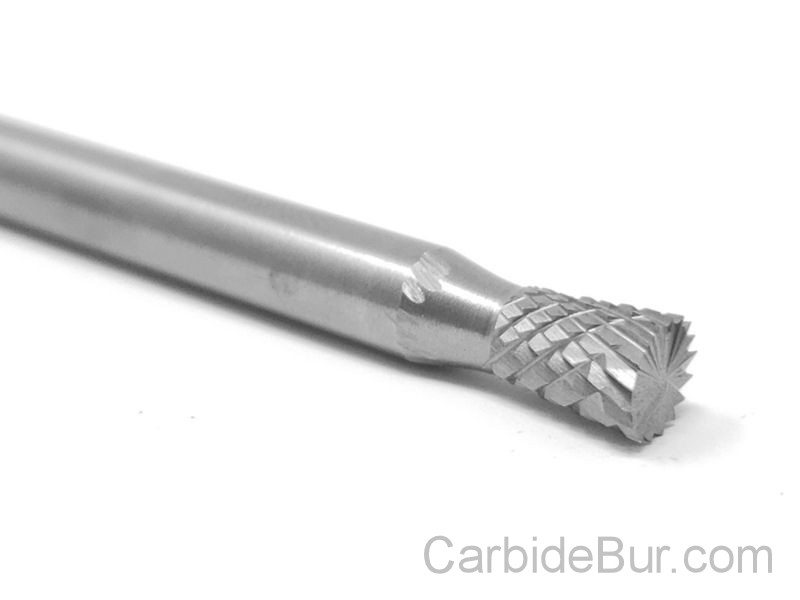
Carbide burrs are rotary cutting tools with fluted cutting edges designed to remove material as they rotate. They are commonly used with compatible die grinders for automotive machining, metal fabrication, and engine work.
In cylinder head applications, a suitable carbide burr may be used for tasks such as:
- Removing selected casting imperfections
- Refining port surfaces where appropriate
- Working on localized areas of an intake or exhaust port
- Cleaning up certain edges and transitions
- Performing controlled material removal during approved porting procedures
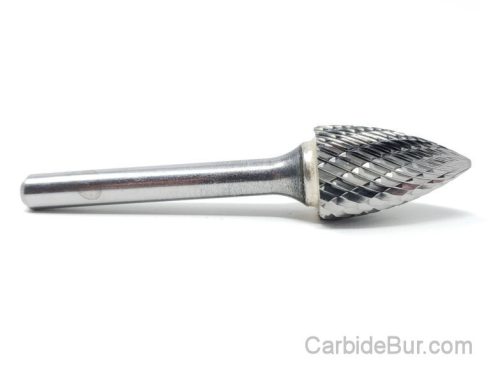
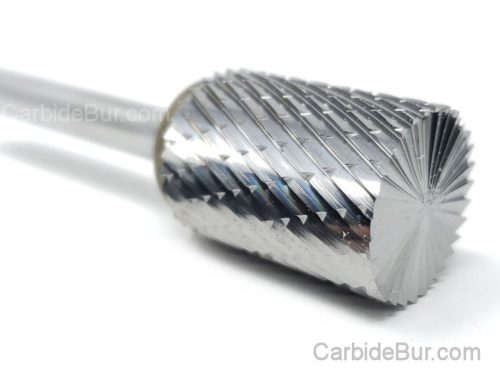
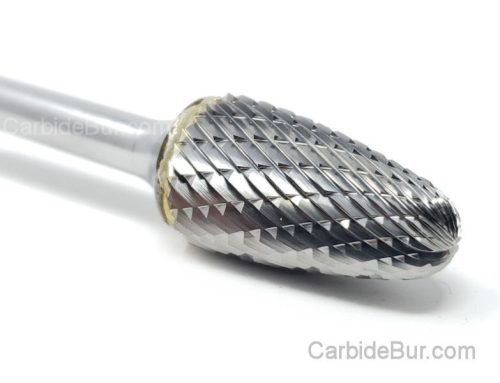
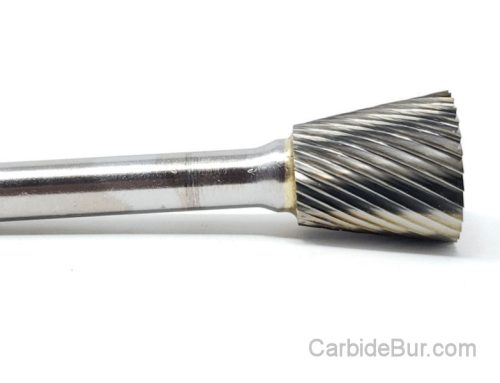
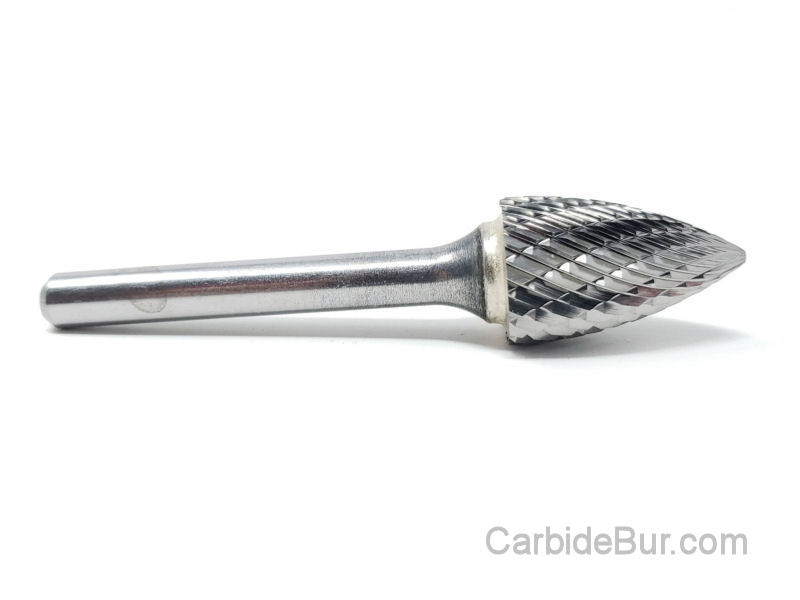
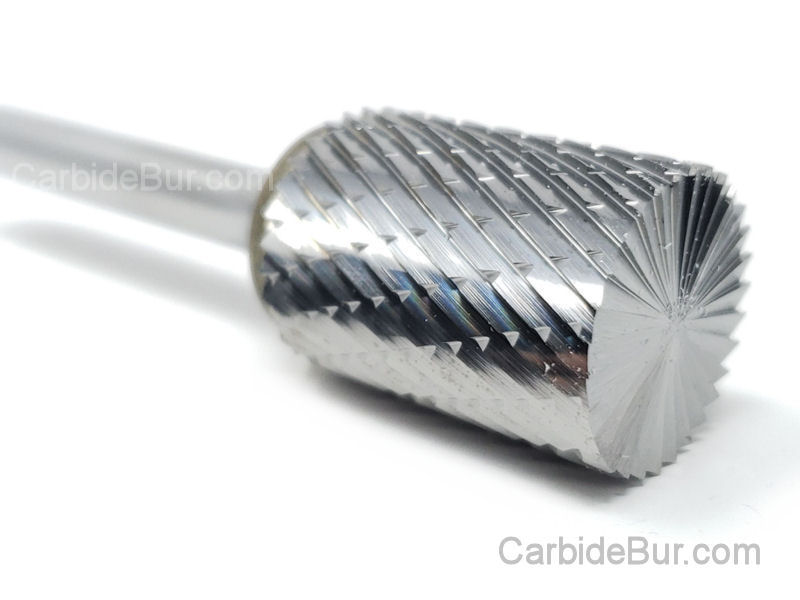
Different burr shapes and cutting profiles serve different purposes. A cylindrical burr may be useful for working on relatively flat areas, while ball, oval, or tree-shaped burrs can help with certain curved surfaces and transitions.
The objective is not to remove as much metal as possible. It is to remove the correct amount of material from the correct location while preserving the cylinder head’s intended geometry and structural integrity.
Choosing a Carbide Burr for Aluminum Cylinder Heads
Many modern cylinder heads are made from aluminum alloys. Aluminum is relatively soft compared with many steels, but it presents its own challenges during rotary cutting.
One common issue is aluminum buildup on the cutting flutes. When material accumulates on the burr, cutting performance can deteriorate, heat can increase, and the tool may become harder to control.
When choosing a burr for an aluminum cylinder head, consider the following factors.
1. Choose a Burr Designed for Aluminum
A carbide burr with cutting geometry intended for aluminum can help reduce material buildup and improve cutting performance. Specialized aluminum-cut profiles are designed to handle the material differently from general-purpose burrs.
Check the product specifications to confirm that the burr is appropriate for your aluminum alloy and application.
2. Match the Shape to the Port Area
Burr geometry influences how the cutting head contacts the metal.
- Cylindrical burrs may be useful for selected flatter surfaces and relatively straight sections.
- Ball burrs can help work on rounded areas and concave contours.
- Oval burrs may suit curved transitions and blended surfaces.
- Tree-shaped burrs can help with certain angled areas and tapered contours.
The exact dimensions matter. A head that is too large may not provide the clearance needed inside a port, while a head that is too small may require additional passes and careful control.
3. Avoid Excessive Pressure
Aluminum can be removed quickly with an appropriate cutting tool. Applying excessive pressure can make it harder to control the burr and may increase heat or cause unwanted gouges.
Use a controlled approach, keep the tool moving as appropriate for the operation, and inspect the surface frequently. Follow the burr and die grinder manufacturers’ guidance for operating speed and technique.
Choosing a Carbide Burr for Cast-Iron Cylinder Heads
Cast-iron cylinder heads have different cutting characteristics from aluminum heads. Cast iron is generally harder and more abrasive on cutting tools, and machining can produce substantial dust and debris.
When working on cast iron, choose a carbide burr rated for the material and intended application. The cutting profile, burr dimensions, tool speed, and condition of the cutting edges all influence performance.
Consider these practical points:
- Use a suitable cutting profile. Choose a burr intended for cast iron or the specific material being machined.
- Inspect the cutting edges. A worn or damaged burr can cut poorly and may be more difficult to control.
- Control dust and debris. Use appropriate eye, face, and respiratory protection based on the work and the applicable safety guidance.
- Avoid unnecessary material removal. Removing too much metal can change port geometry or compromise the component.
- Check for existing damage. Cracks, corrosion, and other defects may require professional assessment before any material is removed.
Aluminum and cast iron should not automatically be approached with the same burr selection or technique. Match the tool to the head material and the specific machining task.
Why Port Shape Matters More Than Simply Removing Metal
One of the most important principles of cylinder head work is understanding that bigger ports are not automatically better ports.
Intake and exhaust ports are designed to manage airflow through the engine. Their cross-sectional area, shape, transitions, and relationship to the valves all influence flow behavior. Removing material without understanding those factors can make a port less effective rather than more effective.
For example, enlarging a port may increase its cross-sectional area but can also change air velocity and flow characteristics. A poorly shaped transition or an unnecessarily enlarged section may negatively affect performance under some operating conditions.
A carbide burr is simply a cutting tool. It cannot determine the ideal port shape or guarantee a performance improvement.
Before modifying a cylinder head, understand the intended engine combination, the manufacturer’s specifications, and the goals of the build. For performance-oriented work, flow-bench testing, accurate measurements, and guidance from an experienced cylinder head specialist can help inform decisions.
Protect Critical Dimensions and Sealing Surfaces
Cylinder heads contain areas where small changes can have serious consequences. These include valve seats, valve guides, combustion chambers, gasket sealing surfaces, and other features that must maintain specific dimensions and relationships.
When using carbide burrs near these areas, material removal must be carefully controlled.
Areas That Require Particular Care
Valve seats: Unintended contact can damage the sealing surface or alter its geometry. Valve-seat work often requires specialized equipment and precise machining.
Valve guides: Excessive material removal or accidental damage can affect guide condition and valve alignment.
Combustion chambers: Removing material can change chamber volume and may affect compression ratio or other engine characteristics.
Gasket surfaces: These surfaces must remain within specified flatness and finish requirements to seal correctly.
Port walls: Excessive grinding can create thin areas or break through the casting, depending on the head design and the amount of material removed.
If you are uncertain about wall thickness, machining limits, or the function of a particular feature, stop and consult a qualified machinist or cylinder head specialist. A burr should not be used to make critical changes by guesswork.
Carbide Burr Selection for Beginners and Experienced Engine Builders
The right approach depends on your experience level and the type of work being performed.
If You Are New to Cylinder Head Work
Start by learning the head’s design before touching the casting with a cutting tool. Identify the ports, valve seats, guides, sealing surfaces, and areas that should not be altered.
Practice tool control on scrap material of a similar type before working on an actual cylinder head. Learn how different burr shapes behave, how much material they remove, and how to maintain a stable grip.
For your first project, avoid aggressive port enlargement or changes to critical surfaces. If the job requires changes to port dimensions, valve-seat geometry, or combustion chamber volume, consider working with an experienced machinist.
If You Are an Experienced Engine Builder
Experienced builders may select specific burr geometries and cutting profiles for different areas of the port or casting. Tool choice should be based on the target shape, access, material, and machining plan.
A useful selection process includes:
- Inspecting the casting and documenting existing dimensions.
- Identifying the specific areas that need modification.
- Selecting a burr shape and cutting profile appropriate for those areas.
- Confirming shank compatibility and rated operating speed.
- Removing material gradually while monitoring the shape.
- Measuring the result and checking that critical features remain within specification.
Where performance is the goal, evaluate the complete engine combination rather than assuming that a particular burr or porting step will produce a specific horsepower increase.
Safety Tips for Cylinder Head Porting
Cylinder head work involves rotating cutting tools, sharp chips, metal dust, and potentially significant noise. Use appropriate safety equipment and follow the instructions for your die grinder and carbide burr.
- Wear suitable eye and face protection.
- Use hearing protection and appropriate respiratory protection for the material and work environment.
- Secure the cylinder head so it cannot shift during cutting.
- Confirm that the burr’s shank fits the tool’s collet correctly.
- Never exceed the rated operating speed of the accessory.
- Inspect burrs for damage or excessive wear before use.
- Keep loose clothing, hair, and other objects away from rotating equipment.
- Clean the work area using methods appropriate for the type of metal dust and debris produced.
Never use an improvised setup or force an incompatible burr into a tool. Proper equipment compatibility is essential for safe operation.
Find Carbide Burrs for Automotive Machining at CarbideBurr.net
Whether you are restoring an older engine, working on a performance build, or performing general automotive machining, choosing the right cutting tool is an important step.
At CarbideBurr.net, you can explore USA-made carbide burr tools for metalworking and automotive applications. Different shapes and cutting profiles can help you select an accessory suited to the material, work area, and type of material removal required.
Before ordering, check the burr’s shape, dimensions, cutting profile, shank size, and material compatibility. For cylinder head work, use the tool as part of a careful machining process that protects port geometry and critical engine dimensions.
Explore our USA-made carbide burr tools at CarbideBurr.net and choose the cutting tools that fit your automotive machining needs.
Remember: a carbide burr can help you shape metal, but successful cylinder head work depends on sound machining practices, accurate measurements, and an understanding of the engine’s design.
Looking for Carbide Bur Tools?
Check out our entire selection of USA made carbide bur die grinder tool bits
Follow us on Twitter

Return to CarbideBur.com
Carbide Burs – 1/4″ on 1/8″ Shanks – Accessories – Aluminum Cut – Bur Sets – End Mills – Long Shank – Solid Burs
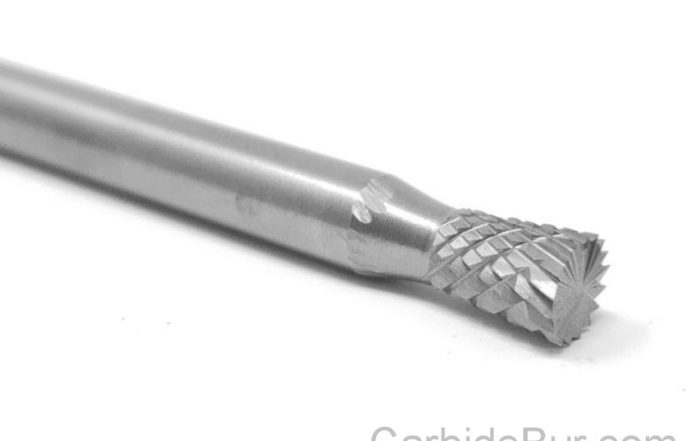
Carbide Burrs for Cylinder Heads: What Automotive Enthusiasts Need to Know
Carbide Burrs for Cylinder Heads: What Automotive Enthusiasts Need to Know Cylinder head work is an important part of engine building, restoration, and performance machining. Whether you are cleaning up casting imperfections, refining port surfaces, [...]
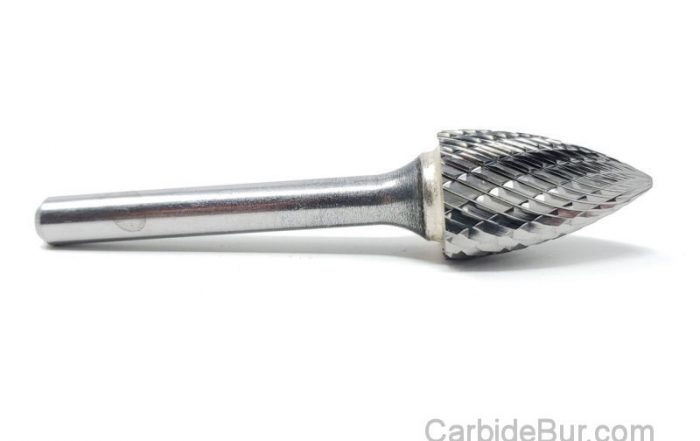
Engine Porting 101: How Carbide Burrs Help Shape Cylinder Head Ports
Engine Porting 101: How Carbide Burrs Help Shape Cylinder Head Ports Engine performance enthusiasts, automotive machinists, and engine builders often look for ways to improve airflow through an engine's cylinder heads. One technique used in [...]
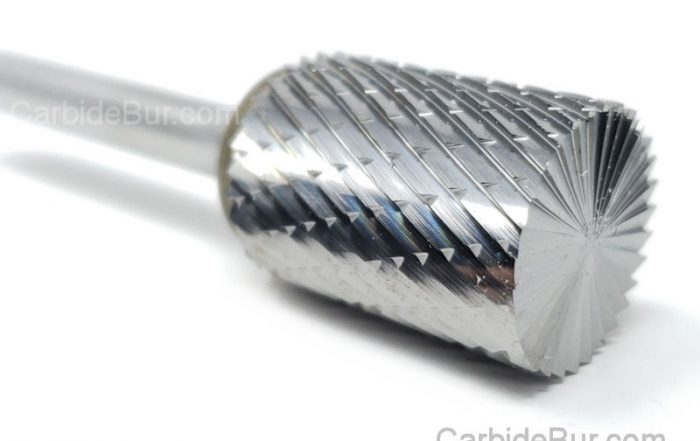
When to Use a 4-Inch or 9-Inch Die Grinder Extension
When to Use a 4-Inch or 9-Inch Die Grinder Extension Metal fabrication, welding, automotive repair, and engine building often require working in places where a standard die grinder and carbide burr cannot easily reach. Recessed [...]
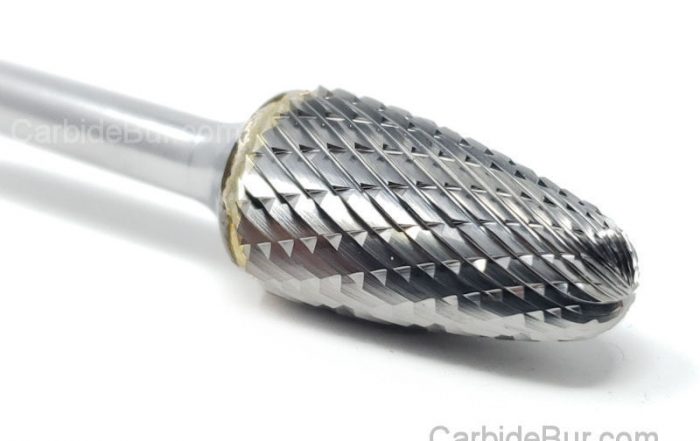
Why Buy USA-Made Carbide Burr Tools? What Buyers Should Compare
Why Buy USA-Made Carbide Burr Tools? What Buyers Should Compare When shopping for carbide burr tools, it's tempting to compare products based on price alone. However, professionals who use rotary cutting tools for welding, metal [...]
How to Use 1/8-Inch Rotary Bits with a Die Grinder
How to Use 1/8-Inch Rotary Bits with a Die Grinder Die grinders are popular tools for metalworking, fabrication, deburring, and precision material removal. However, many die grinders use a 1/4-inch collet, while smaller rotary tools [...]

Can You Use a Carbide Burr With an Electric Die Grinder?
Can You Use a Carbide Burr With an Electric Die Grinder? Most people don’t realize how much a carbide burr can change the way an electric die grinder works. Using the right burr type can [...]
How to Deburr Holes With a Carbide Burr
How to Deburr Holes With a Carbide Burr Most people think any tool will do for deburring holes. The truth is, using the right carbide burr with the correct size and shape changes everything. In [...]
How to Choose the Correct Carbide Burr Shank Size
How to Choose the Correct Carbide Burr Shank Size Many machinists lose hours troubleshooting tool issues caused by the wrong carbide burr shank size. Using a shank that doesn’t fit your grinder can lead to [...]
How to Remove Casting Flash With a Carbide Burr
How to Remove Casting Flash With a Carbide Burr Casting flash ruins the look and fit of your metal parts. You’ve tried sanding or grinding, but the results aren’t clean or fast enough. Learning how [...]
Best Carbide Burr for Enlarging a Hole in Metal
Best Carbide Burr for Enlarging a Hole in Metal When you need to enlarge a hole in metal, grabbing the wrong carbide burr can turn a simple task into a frustrating mess. Picking the best [...]
Carbide Burr Safety: 15 Mistakes That Can Cause Injury or Damage
Carbide Burr Safety: 15 Mistakes That Can Cause Injury or Damage Carbide burr safety is often overlooked until a costly mistake happens. Many metalworkers and DIYers make the same errors that lead to injuries or [...]
Can You Use a Carbide Burr in a Drill?
Can You Use a Carbide Burr in a Drill? Most people think a standard drill can’t handle a carbide burr, but that’s not true. Using carbide burr in the right drill can speed up your [...]