
Engineering
Our USA made carbide bur cutting tools and die grinder bits are extremely important in the engineering industry. We explain below what engineering is to give you a better understanding what this industry consists of.
What is Engineering?
Engineering is the use of scientific principles to design and build machines, structures, and other items, including bridges, tunnels, roads, vehicles, and buildings. The discipline of engineering encompasses a broad range of more specialized fields of engineering, each with a more specific emphasis on particular areas of applied mathematics, applied science, and types of application. See glossary of engineering.
The term engineering is derived from the Latin ingenium, meaning “cleverness” and ingeniare, meaning “to contrive, devise”.
History
Relief map of the Citadel of Lille, designed in 1668 by Vauban, the foremost military engineer of his age.
Engineering has existed since ancient times, when humans devised inventions such as the wedge, lever, wheel and pulley, etc.
The term engineering is derived from the word engineer, which itself dates back to the 14th century when an engine’er (literally, one who builds or operates a siege engine) referred to “a constructor of military engines.” In this context, now obsolete, an “engine” referred to a military machine, i.e., a mechanical contraption used in war (for example, a catapult). Notable examples of the obsolete usage which have survived to the present day are military engineering corps, e.g., the U.S. Army Corps of Engineers.
The word “engine” itself is of even older origin, ultimately deriving from the Latin ingenium (c. 1250), meaning “innate quality, especially mental power, hence a clever invention.”
Later, as the design of civilian structures, such as bridges and buildings, matured as a technical discipline, the term civil engineering entered the lexicon as a way to distinguish between those specializing in the construction of such non-military projects and those involved in the discipline of military engineering.
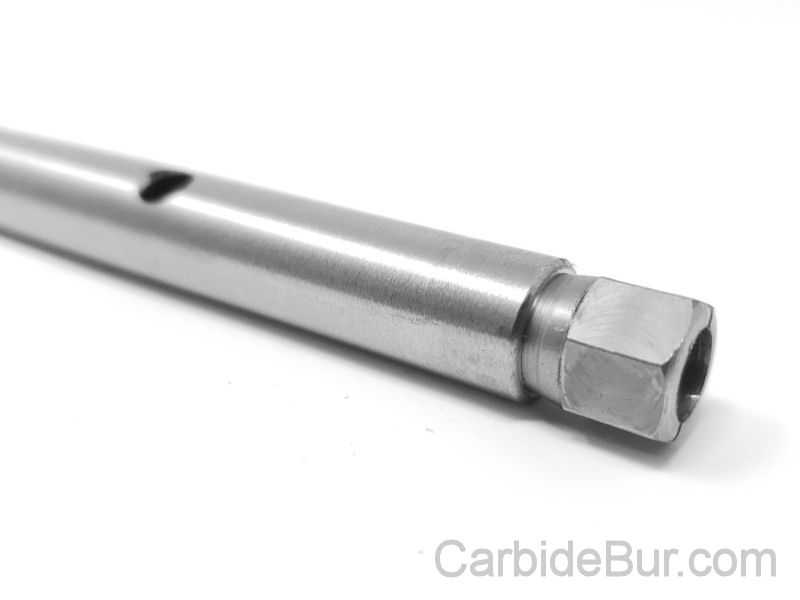
Need a longer reach?
Try our 4″ and 9″ extension tool for your carbide bur bits

Modern era
The science of classical mechanics, sometimes called Newtonian mechanics, formed the scientific basis of much of modern engineering. With the rise of engineering as a profession in the 18th century, the term became more narrowly applied to fields in which mathematics and science were applied to these ends. Similarly, in addition to military and civil engineering, the fields then known as the mechanic arts became incorporated into engineering.
Canal building was an important engineering work during the early phases of the Industrial Revolution.
John Smeaton was the first self-proclaimed civil engineer and is often regarded as the “father” of civil engineering. He was an English civil engineer responsible for the design of bridges, canals, harbors, and lighthouses. He was also a capable mechanical engineer and an eminent physicist. Using a model water wheel, Smeaton conducted experiments for seven years, determining ways to increase efficiency.:127 Smeaton introduced iron axles and gears to water wheels.:69 Smeaton also made mechanical improvements to the Newcomen steam engine. Smeaton designed the third Eddystone Lighthouse (1755–59) where he pioneered the use of ‘hydraulic lime’ (a form of mortar which will set under water) and developed a technique involving dovetailed blocks of granite in the building of the lighthouse. He is important in the history, rediscovery of, and development of modern cement, because he identified the compositional requirements needed to obtain “hydraulicity” in lime; work which led ultimately to the invention of Portland cement.
Applied science lead to the development of the steam engine. The sequence of events began with the invention the barometer and the measurement of atmospheric pressure by Evangelista Torricelli in 1643, demonstration of the force of atmospheric pressure by Otto von Guericke using the Magdeburg hemispheres in 1656, laboratory experiments by Denis Papin, who built experimental model steam engines and demonstrated the use of a piston, which he published in 1707. Edward Somerset, 2nd Marquess of Worcester published a book of 100 inventions containing a method for raising waters similar to a coffee percolator. Samuel Morland, a mathematician and inventor who worked on pumps, left notes at the Vauxhall Ordinance Office on a steam pump design that Thomas Savery read. In 1698 Savery built a steam pump called “The Miner’s Friend.” It employed both vacuum and pressure. Iron merchant Thomas Newcomen, who built the first commercial piston steam engine in 1712, was not known to have any scientific training.
The Role of Carbide Bur Tools in Modern Engineering
In the fast-paced world of modern engineering, staying ahead of the curve demands tools that offer precision, versatility, and efficiency. Carbide bur tools have become indispensable assets in the quest for engineering innovations, providing unmatched capabilities in diverse manufacturing processes. These precision tools are pivotal in streamlining operations like shaping and grinding, enabling engineers to craft intricate designs with unparalleled accuracy. As the demand for advanced engineering solutions grows, carbide bur tools empower you to push the boundaries of creativity and functionality in your projects. Join us as we delve into the transformative impact of these tools, setting the stage for the future of engineering excellence. For more information, visit Syndent.
Unmatched Versatility in Manufacturing
Carbide bur tools are renowned for their versatility in manufacturing. Their role extends beyond simple applications, allowing for precision and adaptability in various processes. This section explores how these tools contribute to manufacturing excellence.
Precision Tools for Intricate Designs
Carbide bur tools are essential in crafting intricate designs. These precision tools enable engineers to achieve complex geometries with high accuracy. Their sharp edges and durable composition allow for smooth and detailed work, reducing material waste and enhancing product quality.
-
High precision: Achieve detailed work without compromising quality.
-
Versatility: Adaptable to various materials, including metals and plastics.
-
Durability: Long-lasting performance even under strenuous conditions.
Incorporating carbide bur tools into your workflow can revolutionize your approach to design. For more details, visit CarbideBur.com.
Shaping and Grinding with Ease
When it comes to shaping and grinding, carbide bur tools excel in efficiency and effectiveness. These tools allow engineers to streamline their processes by offering consistency and control over the workpiece. Here’s how they do it:
-
Material removal: Achieve precise cuts with minimal effort.
-
Surface finishing: Obtain smooth surfaces with high-quality finishes.
-
Reduced vibration: Enhance user comfort and control.
Whether you’re working with hard metals or delicate plastics, carbide bur tools ensure optimal results in shaping and grinding tasks. Discover more at CarbideBurr.net.
Driving Engineering Innovations
Carbide bur tools are at the forefront of engineering innovations, assisting in the continuous evolution of manufacturing processes. This section highlights their impact on streamlining operations and providing advanced engineering solutions.
Streamlining Manufacturing Processes
Streamlining manufacturing processes is crucial for maintaining competitiveness. Carbide bur tools assist in this by offering reliability and precision. They make it possible to reduce production times while maintaining high standards.
-
Efficiency: Lower production times with consistent output.
-
Automation: Integrate easily into automated systems for enhanced productivity.
-
Quality control: Maintain stringent quality standards with every use.
These tools empower engineers to innovate and refine their processes. For further insights, explore ZZBuyTopZZ.
Advanced Engineering Solutions
In the realm of advanced engineering solutions, carbide bur tools provide significant advantages. Their adaptability to various applications makes them invaluable for tackling complex challenges.
-
Customization: Tailor solutions to specific engineering needs.
-
Flexibility: Use across diverse industries, from aerospace to automotive.
-
Cost-effectiveness: Reduce costs through prolonged tool life and efficiency.
These attributes make carbide bur tools a staple in modern engineering. To learn more, visit CarbideBur.com.
Enhancing Efficiency in Engineering
Efficiency is the cornerstone of successful engineering practices. Carbide bur tools enhance efficiency by empowering creativity and paving the way for the future of manufacturing tools.
Empowering Creativity and Functionality
Carbide bur tools empower engineers to push the limits of creativity. Their ability to handle complex tasks with ease allows for more functional and innovative designs.
-
Design freedom: Explore new possibilities with fewer constraints.
-
Functional improvements: Enhance product functionality through precise engineering.
-
Innovation: Stimulate new ideas and techniques in your projects.
These tools are key to unlocking new levels of creativity and functionality. For more information, explore Syndent.
The Future of Manufacturing Tools
The future of manufacturing lies in the continued evolution of tools like carbide burs. As technology advances, these tools will play a pivotal role in shaping the next generation of engineering solutions.
-
Sustainability: Contribute to eco-friendly manufacturing practices.
-
Integration with technology: Seamlessly blend with modern manufacturing technologies.
-
Global impact: Influence manufacturing standards worldwide.
Carbide bur tools are set to revolutionize the industry with their innovative features and sustainable benefits. For more insights, visit CarbideBurr.net.
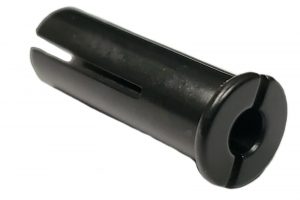
Try our 1/4” to 1/8” Collet Reducer
Allows you to use 1/8” shank carbide bits in your 1/4” die grinder
All our USA made carbide bur cutting tools ship SAME DAY ordered by USPS Mail with online tracking.
We can also dropship the carbide bur die grinder bits, if interested in joining our FREE dropship program.

We accept debit and all major credit card payments including Visa, MasterCard, Discover, American Express and PayPal. Fast and easy secure checkout with no account or login required. If you have any questions, visit our FAQ page or contact us here.

Follow us on Twitter

Return to CarbideBur.com
Carbide Burs – 1/4″ on 1/8″ Shanks – Accessories – Aluminum Cut – Bur Sets – End Mills – Long Shank – Solid Burs
What RPM Should You Use for a 1/4 Inch Carbide Burr?
What RPM Should You Use for a 1/4 Inch Carbide Burr? Most machinists guess the right speed for a 1/4 inch carbide burr and hope for the best. Using the wrong carbide burr RPM can [...]
Long Shank Carbide Burrs: When Do You Need One?
Long Shank Carbide Burrs: When Do You Need One? Most machinists overlook the power of long shank carbide burrs until a project demands precision in tight spaces. When your usual tools can’t reach intricate contours, [...]
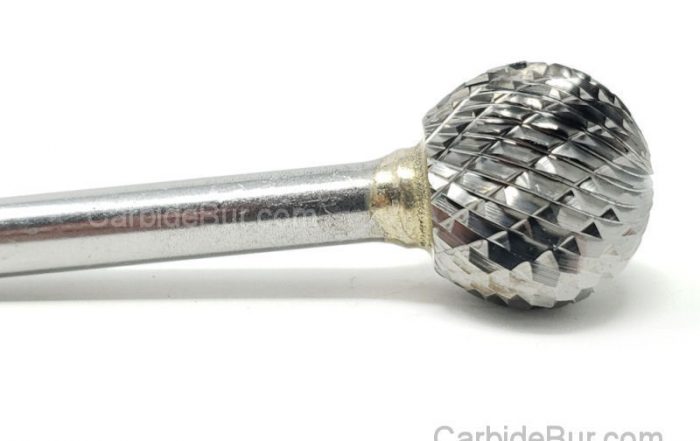
How Deep Can a Carbide Burr Cut Metal?
How Deep Can a Carbide Burr Cut Metal? Carbide burrs often get praised for their precision, but many users hit a wall wondering how deep they can actually cut metal. The truth is, cutting depth [...]
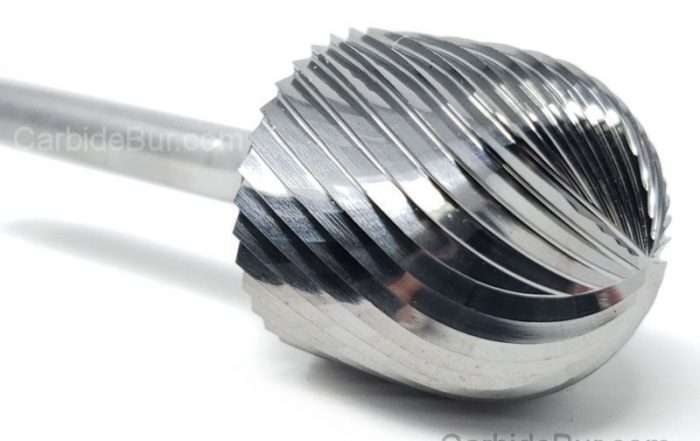
How to Use Carbide Burrs for Port Matching
How to Use Carbide Burrs for Port Matching Most engine builds hit a wall when airflow doesn’t flow smoothly between the ports and manifolds. If your engine isn’t breathing right, your performance stalls. Using the [...]
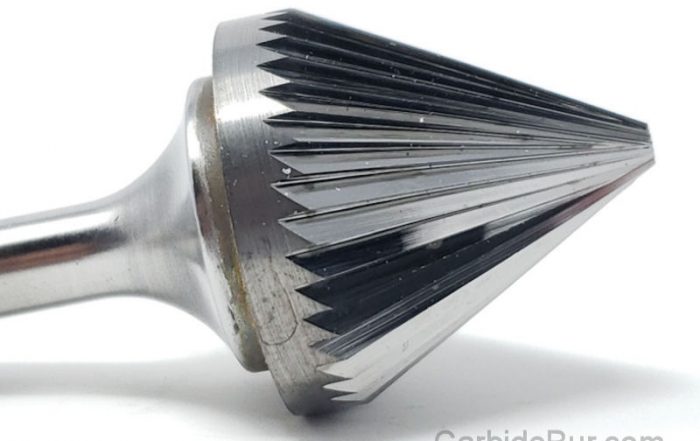
Best Carbide Burr for Porting Intake Manifolds
Best Carbide Burr for Porting Intake Manifolds Porting intake manifolds can make or break your engine’s airflow, yet many struggle with the right tools for the job. Choosing the best carbide burrs is key to [...]
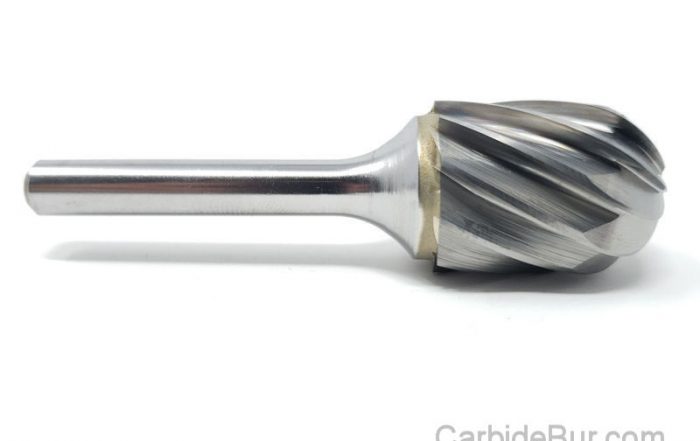
Best Carbide Burr for Concave Surfaces
Best Carbide Burr for Concave Surfaces Concave surfaces can turn a straightforward project into a frustrating challenge if you don’t have the right tool. Carbide burrs designed for these tricky curves make all the difference [...]
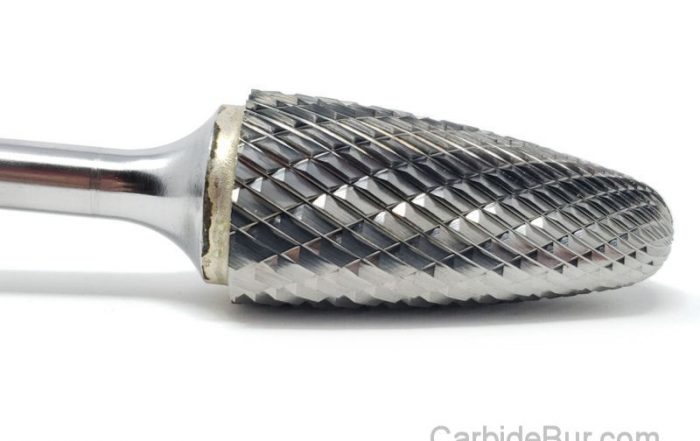
How to Grind a Slot in Metal With a Carbide Burr
How to Grind a Slot in Metal With a Carbide Burr Grinding a precise slot in metal can feel like a tricky task, especially if you’re unsure which tools to trust. Carbide burr grinding offers [...]

Best Carbide Burr for Inside Corners
Best Carbide Burr for Inside Corners Working in tight inside corners can turn even simple projects into frustrating tasks. Many carbide burrs just don’t fit or cut cleanly where you need them most. The best [...]
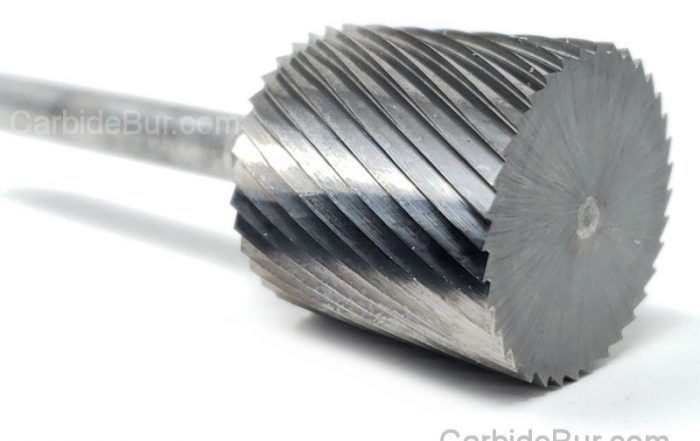
What Size Carbide Burr Do I Need?
What Size Carbide Burr Do I Need? Picking the wrong carbide burr can turn a simple project into a frustrating mess. You might have the best machining tools but still miss the mark if your [...]
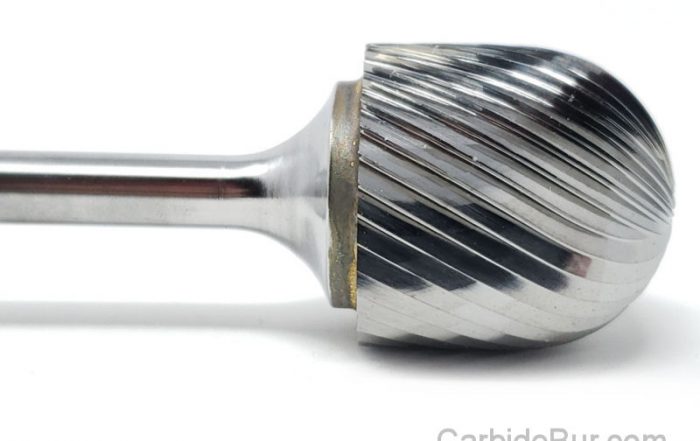
How to Smooth Sharp Metal Edges With a Carbide Burr
How to Smooth Sharp Metal Edges With a Carbide Burr Sharp metal edges can turn your project from professional to risky in seconds. If you’ve struggled with smoothing metal edges without scratching or weakening the [...]

Best Carbide Burr for Porting and Polishing Engine Heads
Best Carbide Burr for Porting and Polishing Engine Heads You’ve spent hours porting engine heads, only to find the finish isn’t quite right. Choosing the right carbide burr for porting and polishing can make all [...]
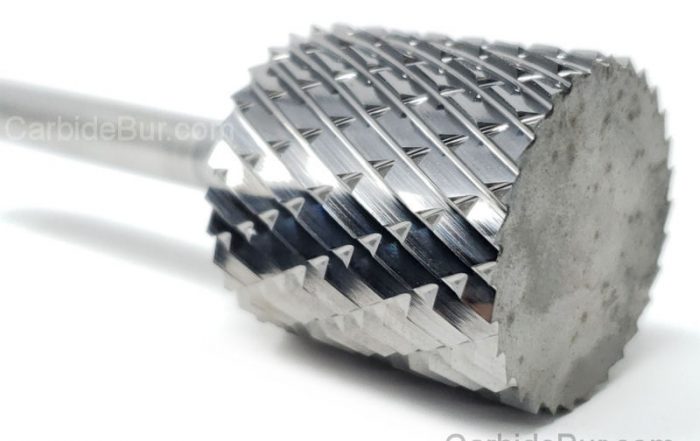
What Is a Cylinder Carbide Burr Used For?
What Is a Cylinder Carbide Burr Used For? Most metalworking tools and woodworking tools promise precision but fall short when handling tough shaping and finishing tasks. If you’ve struggled with rough edges or uneven cuts, [...]