
SC-9 Carbide Bur Tool
Our SC-9 carbide bur tool die grinder bit is in stock and ships SAME DAY ordered. We manufacture all our tungsten carbide bur cutting tools right here in the USA.
USA made cylindrical radius end SC-9 carbide bur tool die grinder bit on 1/4″ shank
Cylindrical Radius End Carbide Bur Cutting Tool
Diameter: 1″
Length of Flute: 1″
Shank Diameter: 1/4″
Overall Length: 2 3/4″
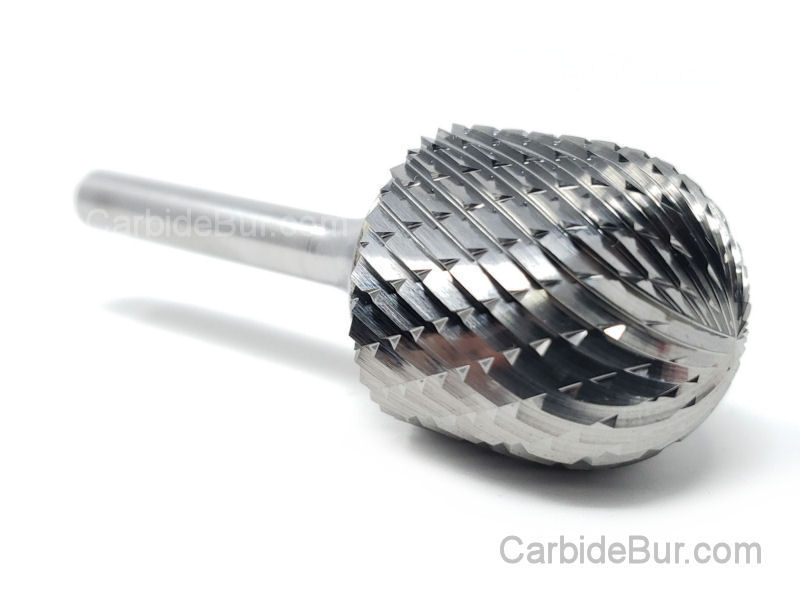
Available in single and double cut
Click here to order our USA made SC-9 Carbide Bur

Carbide burs (burrs) are tools that are used for precision in cutting, grinding, and shaping the material
with which they are being worked. Additionally, they are used for deburring, where burrs, excess
materials, sharp edges, and weld beads are removed. Use carbide burs in industrial tools, such as air
tools (e.g., die grinders), engravers, flexible shafts, and pendant drills, as well as for hobbies (e.g.,
Dremel tools). Their uses are varied and diverse, such as jewelry work, metalworking, welding,
woodworking, and cover a range of industries, including aeronautics, aviation, automotive, dentistry,
and metal and stone working.
Carbide burs (burrs) are generally composed of titanium or tungsten; diamond is the only material on
the Mohs scale that is harder and also used for drill tips. This means they are ideal for multiple purposes
due to the fact that they maintain sharper cutting edges for longer periods of time due, and tolerate
higher temperatures without warping when you apply friction. Carbide burs (burrs) maintain their sharp edges 10-20 times longer than a stainless-steel bur (burr), depending on the
frequency of use and the materials used with.
Carbide Bur Cutting Tools can be used on:
Aluminum
Brass
Bronze
Carbon fiber
Cast iron
Ceramics
Copper
Fiberglass
Gold
Hard rubber
Plastic
Platinum
Silver
Steel
Stone
Titanium
Wood
Zinc
Burs (burrs) come in a variety of shapes and sizes, each of which can be used for different purposes:
Arch ball/pointed nose – engraving, texturing, increasing hole size
Ball – concave cuts, hollowing, shaping, carving. Useful for wood, stone, metal engraving.
Ball nose cone – rounding edges, surface finishing, tight spaces, and angles.
Carbide Ball nose cylinder – contour finishing
Ball nose tree (also known as tapered) – concave cuts and rounding edges
Cone – rounding edges, surface finishing, tight spaces, hard to reach areas.
Cylindrical – contour finishing and right-angled corners
Cylindrical end cut – contour finishing
Carbide Cylindrical no end cut – contour finishing
Flame – channel work and shaping
Inverted cone – v-cuts and rear-side chamfering
Oval – die grinding and engraving
Pointed tree – concave cuts, rounding edges, access to hard-to-reach areas, and acute angles.
Rounded tree – concave cuts and rounding edges
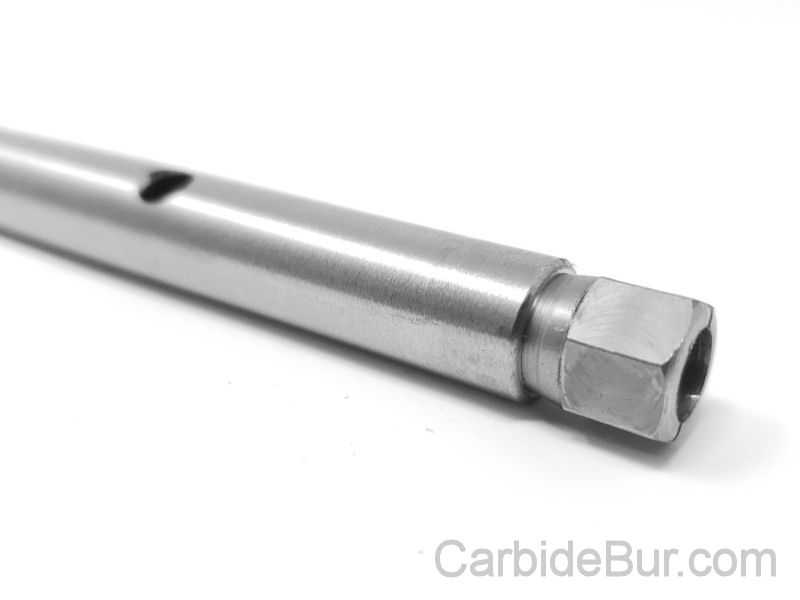
Need a longer reach?
Try our 4″ and 9″ extension tool for your carbide bur bits
Burs (burrs) also come in a variety of ranges, each of which has a specific benefit in their use:
Alloy-specific – heads have varying shapes used with certain metal alloys – used in the
aerospace/aviation industry
Base metal range – used for deburring on softer metals
Bolt remover range – used for the removal of broken studs
Foundry metal range – used for deburring on harder metals, stone, etc.
Inox range – specifically used with stainless steel
Locksmith range – used by locksmiths
Long shank range – general-purpose; long shafts useful for deeper, hard-to-reach areas
Miniature range – miniature heads useful for engraving and fine detail work
New geometry range – used for all general metal removal
Steel range – heads have specialized fluting to cut stainless steel
Universal range – general-purpose, best on metals such as copper, iron, nickel, and steel
Carbide burs (burrs) require a bit of special care to keep them performing optimally. To preserve the life
of your carbide burs, ensure your handpiece does not wobble. The speed of your rotary tool
should not exceed 35,000 RPMs, and speed should be gradually increased. Please note, however,
that higher speeds will prevent flute clogging inside the bur. If you apply too much pressure to the
bur (burr), the edges may chip, resulting in premature dulling.
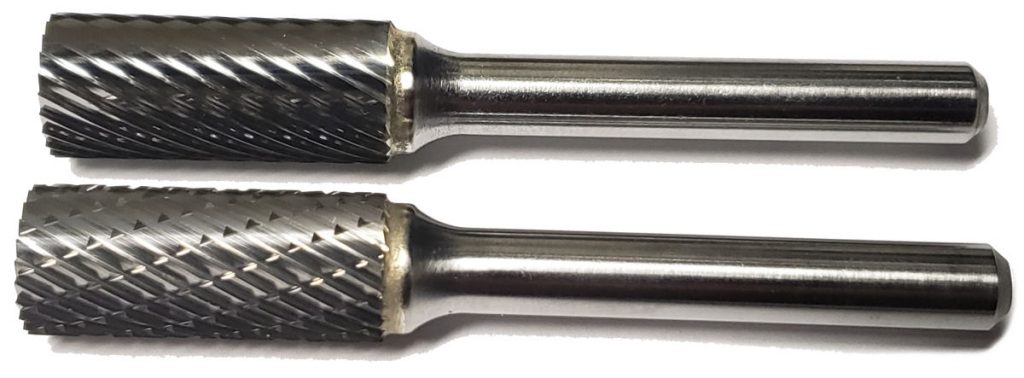
Choose Double Cut or Single Cut SC-9 Carbide Bur?
Our double cut carbide burs allow for rapid stock removal in harder materials. The addition of the left hand flutes reduces the pulling action, allowing better operator control. Double cut reduces the size of the chips and can be used at slower than normal speeds.
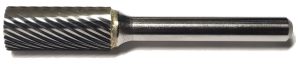
Our single cut carbide burs are for general purpose and designed for cast iron, steel, some copper and brass, and other ferrous materials. Single cut will give good material removal and good workpiece finishes.
Non-Ferrous Aluminum Cut Carbide Burs
Use our aluminum cut carbide burs on non-ferrous materials such as aluminum, copper and magnesium.
Our USA made carbide burs are used on hard materials including steel, aluminum and cast iron, all types of stone, ceramic, porcelain, hard wood, acrylics, fibreglass and reinforced plastics. When using aluminum cut burs on soft metals such as gold, platinum and silver, our burs are perfect because they will last a long time with no breaking or chipping.
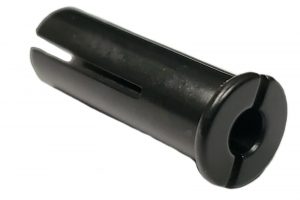
Try our 1/4” to 1/8” Collet Reducer
Allows you to use 1/8” shank carbide bits in your 1/4” die grinder
Uses for SC-9 Carbide Bur Die Grinder Bits
Carbide burs are widely used in metalworking, tool and die making, engineering, model engineering, wood carving, jewelry making, welding, chamferring, casting, deburring, grinding, cylinder head porting and sculpting. Carbide burs can be used in the aerospace, automotive, dentistry, stone and metalsmith industries.
All our USA made carbide bur cutting tools ship SAME DAY ordered by USPS Mail with online tracking.
We can also dropship the SC-9 carbide bur tool die grinder bit for you, if interested in joining our FREE dropship program.

We accept debit and all major credit card payments including Visa, MasterCard, Discover, American Express and PayPal. Fast and easy secure checkout with no account or login required. If you have any questions, visit our FAQ page or contact us here.

Follow us on Twitter

Return to CarbideBur.com
Carbide Burs – 1/4″ on 1/8″ Shanks – Accessories – Aluminum Cut – Bur Sets – End Mills – Long Shank – Solid Burs
Tips for Welders to Extend Tool Life
Mastering Carbide Burs Maintenance: Tips for Welders to Extend Tool Life You spend hours welding only to find your carbide burs dull and clogged. Neglecting proper carbide burs maintenance cuts their lifespan and drags down [...]
Pro Tips for Carbide Bur Maintenance in Your Dental Practice
Maximize Your Savings: Pro Tips for Carbide Bur Maintenance in Your Dental Practice Replacing carbide burs too often drains your budget and wastes time. Most dental practices overlook simple steps that could extend carbide bur [...]
The Role of Advanced Carbide Burs in Carpal Tunnel Prevention
Protect Your Hands: The Role of Advanced Carbide Burs in Carpal Tunnel Prevention Welding puts serious strain on your hands, and ignoring that can lead to carpal tunnel syndrome. High-quality carbide burs offer smoother cuts [...]
How Carbide Burs Transform Custom Fabrication in Specialized Welding
The Art of Precision: How Carbide Burs Transform Custom Fabrication in Specialized Welding Custom fabrication often hits a wall when precision tools fall short. You need more than basic welding techniques to shape materials exactly [...]
Finding the Best Carbide Burs for Your Practice
Unbiased Dental Burs Review: Finding the Best Carbide Burs for Your Practice Choosing the right carbide bur brands can feel like a gamble when every product claims to be the best. You need tools that [...]
A Guide to Carbide Bur Shapes and Sizes
Mastering Welding Precision: A Guide to Carbide Bur Shapes and Sizes Most welders struggle to pick the right carbide bur for each job, wasting time and risking sloppy results. Choosing between cylindrical, ball, and flame [...]
The Benefits of Carbide Burs for Podiatrists
Step Up Your Foot Care: The Benefits of Carbide Burs for Podiatrists Traditional tools for nail trimming and callus removal can slow your foot care routine and leave patients less satisfied. You need precision and [...]
The Ultimate Beginner’s Guide to Carbide Burs in Industry
Empower Your Craft: The Ultimate Beginner's Guide to Carbide Burs in Industry Carbide burs might seem like just another tool, but picking the right one can make or break your work. If you’re new to [...]
Organize Your Workspace for Safer Carbide Bur Operations
Organize Your Workspace for Safer Carbide Bur Operations Most injuries with carbide burs happen because of overlooked safety steps. You might think wearing gloves or adjusting speed is enough, but small mistakes still cause serious [...]
Understanding the Evolution of Carbide Burs
From Manufacturing History to Bur Design: Understanding the Evolution of Carbide Burs Carbide bur technology didn’t emerge overnight—it’s the product of decades of manufacturing history pushing the limits of precision tools. If you’re working with [...]
Selecting the Right Burr Types for Your Needs
Maximize Your Machinist Tools: Selecting the Right Burr Types for Your Needs Picking the wrong carbide bur can waste hours and wear down your tools fast. Many machinists struggle to find burs tough enough for [...]
Your Go-To Guide for Injury-Free Cylinder Head Porting
Mastering RPM Safety Tips: Your Go-To Guide for Injury-Free Cylinder Head Porting Most cylinder head porting mishaps happen because safety takes a backseat. You might think you know how to handle carbide burs, but skipping [...]